What Makes a Copenhagen Restaurant Cosy and Genuinely Good at the Same Time
Hygge gets used to sell candles and blankets, but in a Copenhagen dining room it means something more specific: warm, small, unpretentious, and no excuse at all for the cooking to be careless.
Hygge means warmth, closeness and comfort, not luxury, and on its own it says nothing about how seriously a kitchen actually cooks. Slurp's two small rooms, 22 seats at Nansensgade and 36 at Borgergade, get their cosiness from scale alone. The craft doesn't relax just because the room does: broths simmer for hours to days and noodles are cut fresh each morning on Suzy, the kitchen's noodle machine. No reservations at either room means no countdown on your table, part of what makes the room feel easy. A relaxed room isn't automatically a cheap one; Slurp's bowls run 175 to 210 DKK regardless of the atmosphere.
Hygge gets used to sell candles and blankets, but in a Copenhagen dining room it means something more specific: warm, small, unpretentious, and no excuse at all for the cooking to be careless.
Hygge shows up on candle packaging and in airport gift shops so often that it's easy to stop believing it means anything specific. In a Copenhagen dining room, it does. It describes a particular kind of warmth: small rooms, low light, closeness, and an atmosphere where nobody's dressed up to be there. None of that says anything about the cooking. A relaxed room and a serious kitchen aren't in tension, and Slurp's two rooms are built on the idea that they shouldn't be.
What does hygge actually mean in a Danish eating context?
It means comfort and closeness, not luxury. The Cambridge Dictionary defines hygge as "a quality of cosiness (feeling warm, comfortable, and safe) that comes from doing simple things such as lighting candles, baking, or spending time at home with your family," and VisitDenmark frames it around simple, concrete things: warmth, light, good company, seasonal food eaten without ceremony. Applied to a restaurant, that's a room where you can hear the person next to you without straining, where the lighting is warm rather than bright, and where nothing about the layout is trying to impress you. It's a feeling built from small, ordinary details rather than one big gesture.
Why do small, warm rooms feel more hyggeligt than big ones?
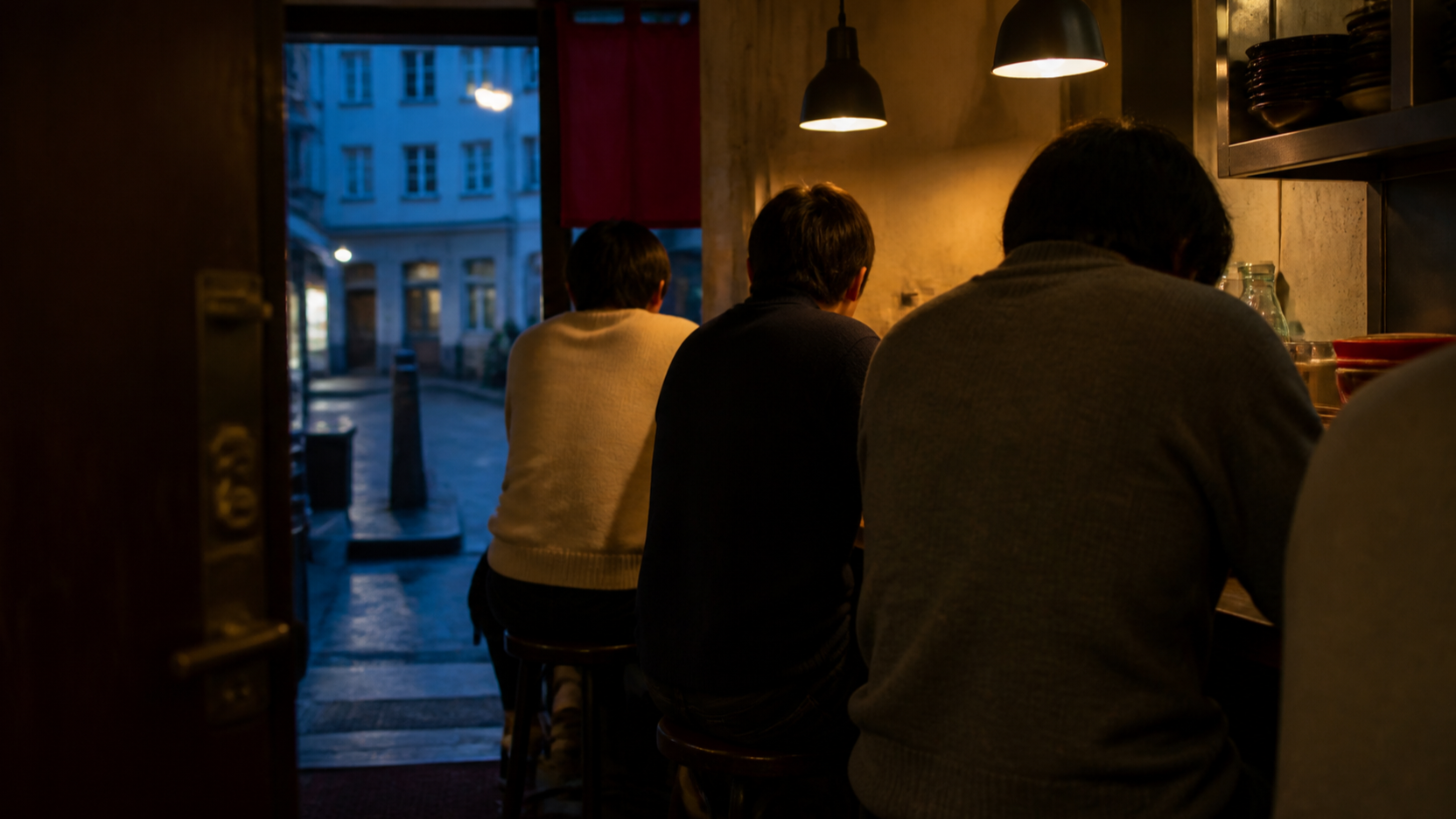
Because scale is most of what hygge is measuring. A large dining room, however well designed, puts distance between tables and between the kitchen and the guest, and that distance reads as formality even when nobody intends it to. A small room collapses that distance by default. Conversations overlap, the kitchen is close enough to see and hear, and the room fills with noise and warmth simply because there isn't much air to absorb it. Slurp Nansensgade seats 22 and Slurp Borgergade seats 36. Neither is a small restaurant by accident. Both are loud, full and close because that's what a room this size does when it's busy, and busy is the normal state for both of them.
Does relaxed have to mean the cooking is careless?
No, and treating those two things as linked is the actual mistake worth naming here. Relaxed describes the room, the noise level and how little ceremony surrounds getting seated. It says nothing about what's happening in the kitchen. A restaurant can run a completely serious kitchen inside a completely unpretentious room, and that combination is exactly what a lot of people mean when they ask for a place that's special but not stiff. The opposite assumption, that a cosy room signals a casual kitchen, doesn't hold up against how Slurp actually cooks.
What's genuinely happening in the kitchen while the room feels relaxed?
Real work that doesn't announce itself. Slurp's broths simmer for hours to days depending on the style, built from scratch rather than shortcut. The noodles are cut fresh each morning on Suzy, the kitchen's custom-built noodle machine, using flour milled on the Danish island of Bornholm. None of that requires a hushed room or a tasting menu format to matter. It shows up in the bowl exactly the same whether the room around it is quiet or loud. A cosy room doesn't lower the bar in the kitchen. It just means nobody's making you notice the work being done to clear it.
Does a loud room contradict the idea of hygge?
No. Hygge is about warmth and closeness, not silence, and a lot of Copenhagen's cosiest small rooms are genuinely loud. The noise usually comes from a room being full rather than from poor design, and a full, noisy room reads as alive rather than chaotic once you're inside it. Slurp's two rooms are loud on a busy service, simply because 22 or 36 people talking, eating and moving in a small space makes noise. That's part of the atmosphere, not a flaw in it. A hushed dining room and a hyggeligt one aren't the same thing, and treating quiet as a requirement misses what the word is actually describing.
Does a simple, one-dish menu help keep a small room relaxed?
Yes, in a fairly direct way. Ordering is simple when there's one format to choose from rather than a long menu to negotiate. Slurp's four shared bowls, Shoyu, Shio, Veggie and Nduja Miso, run 175 to 195 DKK at both rooms, with one bowl unique to each address on top of that. Nobody at the table needs to agree on shared plates or pace courses against each other. Each person picks a bowl, it arrives, and the meal doesn't need choreography to work. That simplicity takes pressure off the room in a way a long, multi-course menu can't, and it leaves more of the evening for the actual point of a relaxed meal, which is the company and the food rather than the ordering process.
Is a relaxed, cosy room automatically a cheap one?
Not necessarily, and the two shouldn't be confused. Slurp's bowls run 175 to 210 DKK depending on the style and the room, a moderate price for a scratch-cooked meal in central Copenhagen, but the atmosphere isn't relaxed because it's inexpensive. It's relaxed because the room is small, the format is simple, and nobody's booked in for a fixed evening slot. A restaurant can be cosy at any price point, and a cheap restaurant isn't automatically hyggeligt just because it's affordable. The two ideas, cost and comfort, are worth keeping separate when you're actually looking for a relaxed place to eat.
What does a cosy, serious-about-food room actually look like in Copenhagen?
Small, warm, a little loud, and unfussy about how you're dressed or how long you stay. It's a room built around one good thing done well rather than a long menu built to impress on paper. Service is quick and direct rather than performed, and there's no expectation that a meal here needs to be an occasion to justify itself. That's a genuinely Danish read on hospitality: the comfort comes first, and the craft is proven in the food rather than in the ceremony around it.
How do Slurp's two rooms compare on the details that make a room feel cosy?
Here's what actually differs between the two, and what stays the same.
| Detail | Slurp Nansensgade | Slurp Borgergade |
|---|---|---|
| Seats | 22 | 36 |
| Hours | 11:30 to 15:00 and 16:00 to 21:00 | 11:30 to 15:00 and 17:00 to 22:00 |
| Reservations | None | None |
| Dogs | Welcome | Welcome |
| Opened | The original room, founded 2017 | January 2025 |
Borgergade is the larger of the two, but 36 seats is still a small room by any normal restaurant standard. Both share the identical no-reservations, dogs-welcome approach, and both run on the same walk-in format that keeps the room feeling like somewhere you dropped into rather than somewhere you booked months out.
Why does no reservations make a room feel more relaxed, not less?
Because a table that isn't held for a set hour doesn't come with a countdown attached. In a booked restaurant, there's a clock running somewhere, whether it's stated out loud or not. A walk-in room doesn't carry that pressure. You sit down, you eat, and nobody's waiting on the turn. That absence of a schedule is a real part of what makes a small room feel easy rather than tense, on top of the warmth that comes from the size itself.
Does a small room mean you have to wait a long time to get in?
Sometimes, since a 22 or 36 seat room fills up faster than a larger one purely on the numbers. The trade-off is the room itself: the same smallness that occasionally means a short wait is what makes the meal feel close and warm once you're seated. Arriving close to opening, for either lunch or dinner service, is the simplest way to avoid a wait at either address.
What should you actually expect walking into a room like this?
Noise, warmth, and a kitchen that isn't performing for you. Expect to be seated quickly once there's a seat, expect the room to be a little loud, and expect the food to arrive without a long explanation attached to it. That's the whole idea. The comfort is in the room and the pace, and the seriousness is in the bowl, and neither one is standing in for the other.
Sources
Frequently Asked Questions
It means warmth, closeness and ease rather than luxury or formality. In a Copenhagen dining room, hygge shows up as small rooms, low light, and an atmosphere where nobody feels like they need to perform for the table.
No. Relaxed describes the room and the service style, not the kitchen's standards. A cosy room can still run broths that simmer for hours to days and noodles cut fresh every morning, the same as a much more formal kitchen would.
Slurp Nansensgade seats 22 and Slurp Borgergade seats 36. Both are genuinely small rooms, which is a large part of why they feel warm and close rather than cavernous.
No, neither room does. Both are walk-in only, every day, which keeps the room feeling like a neighbourhood spot rather than a booked-out event.