Copenhagen Counter Dining in 2026: 11 Counters, From Booked Omakase to a Walk-In Bowl
Copenhagen has quietly become a counter city, and the seat is the least interesting thing about it. What actually separates these eleven rooms is whether the kitchen cooks you a sequence it planned weeks ago, or one plate you chose thirty seconds before it was made.


TL;DR
The money is the tell. JATAK's Solar menu is 1,700 DKK and 3,200 with the seven-glass pairing, akmē's set menu and pairing come to 2,400, and a bowl of ramen at Slurp is 185.
Five counters want a booking weeks out: Sushi Anaba for Edomae nigiri, Aotori for yakitori over binchotan, akmē for French sauce work, JATAK for Danish vegetables read through Cantonese and Vietnamese flavours, Magny for a sixteen seat set menu.
Four take nothing at all, including both Slurp restaurants and the Omegn and Venner stall in Torvehallerne. Goldfinch and Kødbyens Fiskebar keep Cantonese sharing plates and the day's oysters open to anyone who did not plan.
Updated 2 October 2026
Copenhagen took to the counter the way other cities took to the tasting menu. A generation of cooks trained in the city's big kitchens left to open small rooms of their own, and the wall between the kitchen and the dining room came down with them.
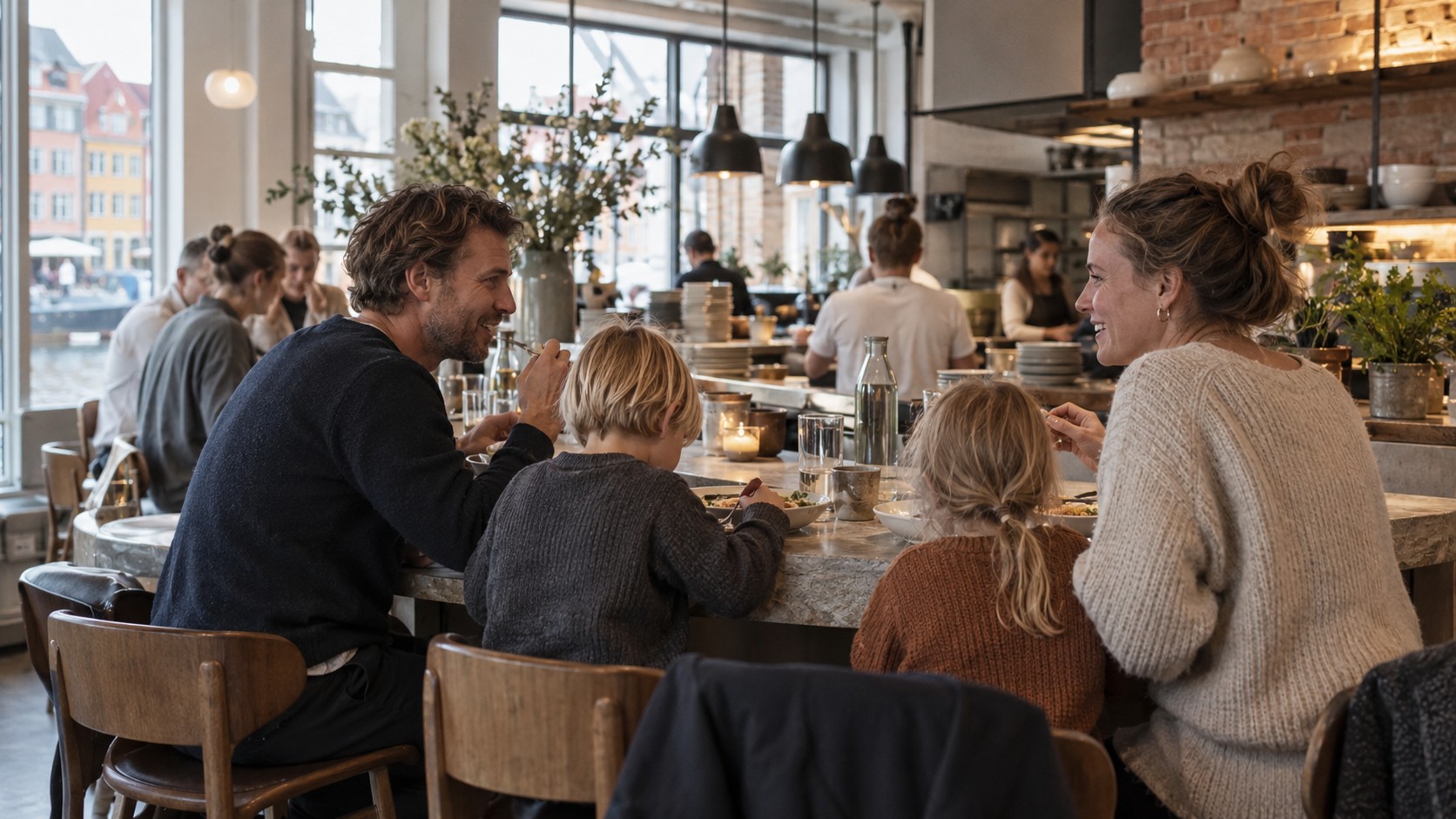
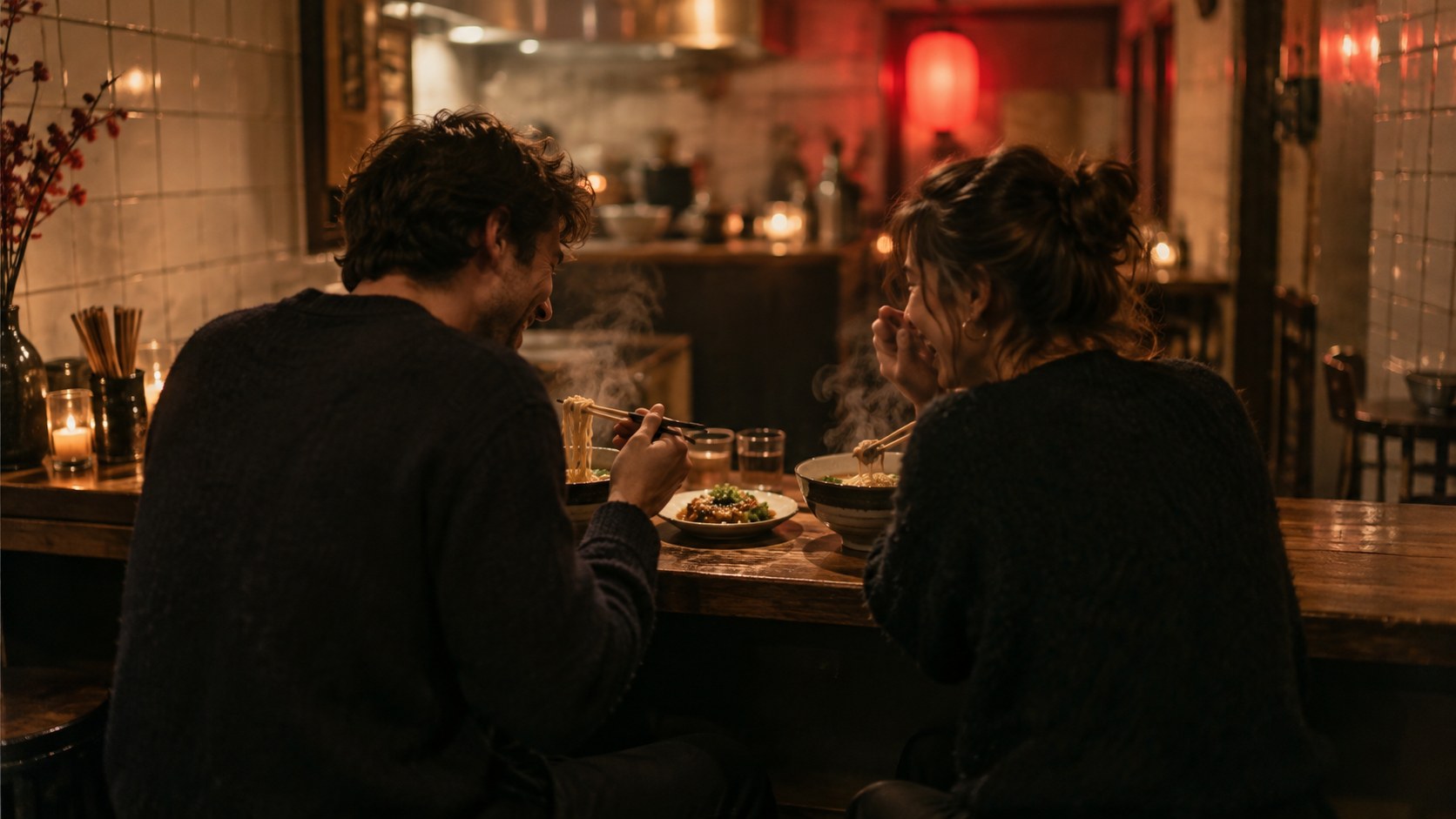
Sit at one tonight and you eat in the same room as the person cooking, close enough to watch a piece of fish portioned or a bowl finished and wiped. That is the whole appeal, and it now runs from 185 kroner to well over three thousand.
What the word hides is that it covers two completely different evenings. One is a fixed sequence a kitchen planned weeks ago for a known number of guests. The other is a stool, a short menu and no idea you were coming.
Get that wrong and you are standing outside Sushi Anaba on a Friday without a booking, or paying three thousand kroner for a sequence when what you wanted was a bowl and a beer.
What Does a Copenhagen Counter Actually Buy You in 2026?
A chef's counter is a tasting-menu kitchen with the wall taken out. The sequence is fixed, the price is agreed before the first plate lands, and the room needs to know how many people are coming.
A bar counter is built for turnover. You order what you want, you pay for what you ordered, and nobody knew you were coming.
The two can look identical from the street. Sushi Anaba seats eight guests a seating and runs two seatings a night, so sixteen people see that counter in a day. Bar Vitrine, across town on Møntergade, also seats sixteen, around a single birch table, and has never taken a booking.
Same number, opposite deal.
The distance between those two bets is money, and a lot of it. JATAK in Nørrebro charges 1,700 DKK for its Solar menu and 1,500 more for the seven-glass pairing.
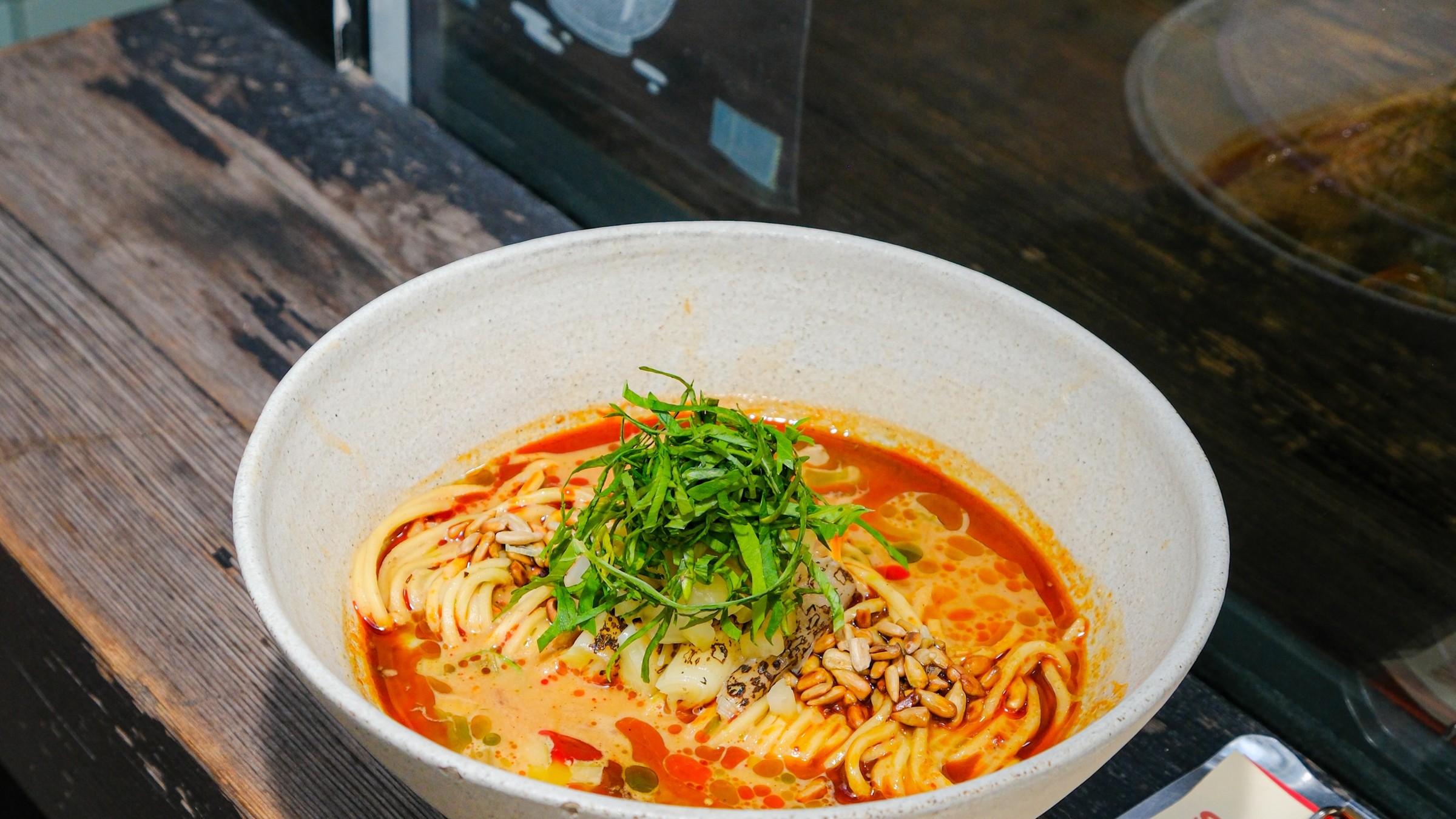
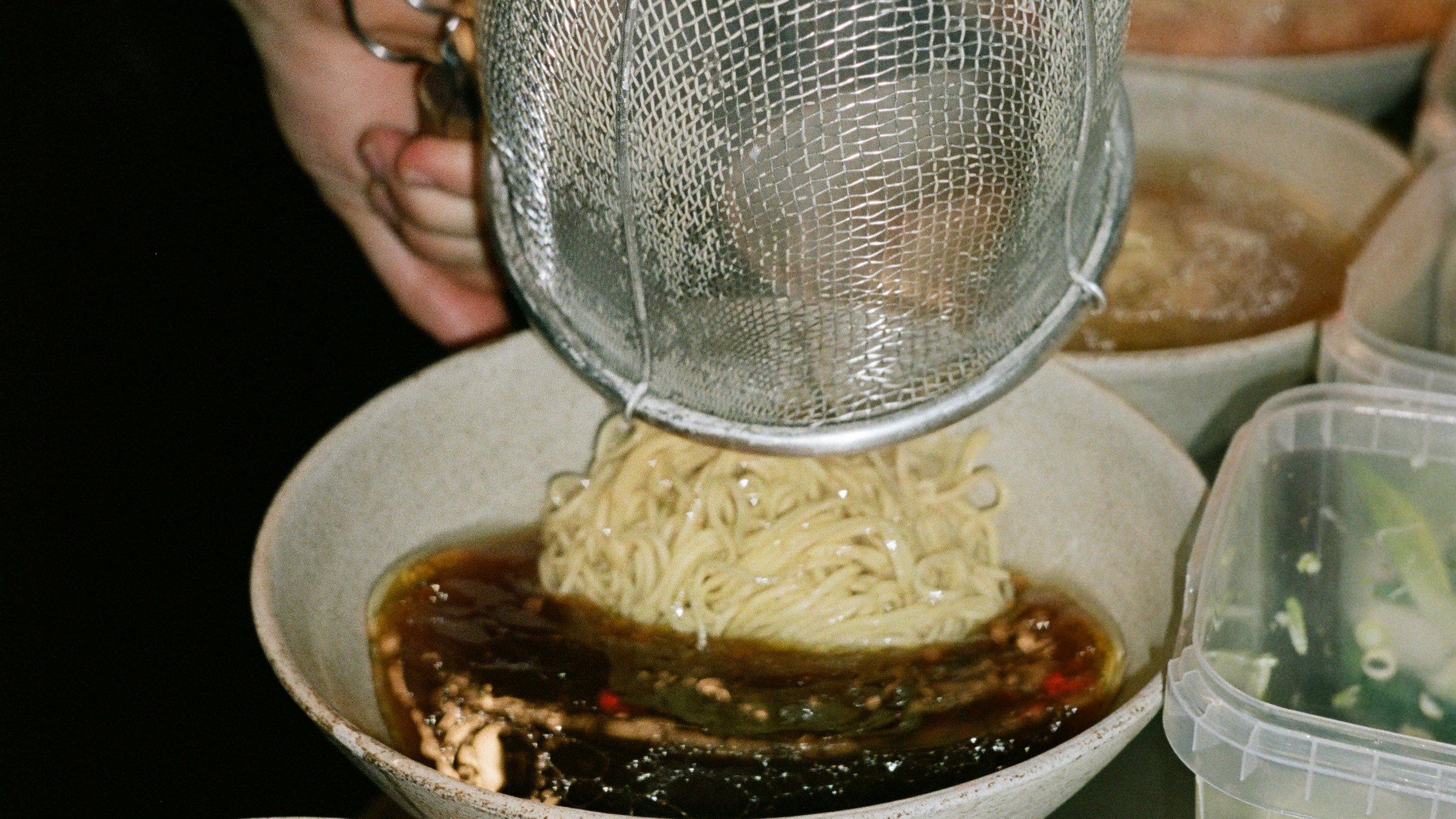
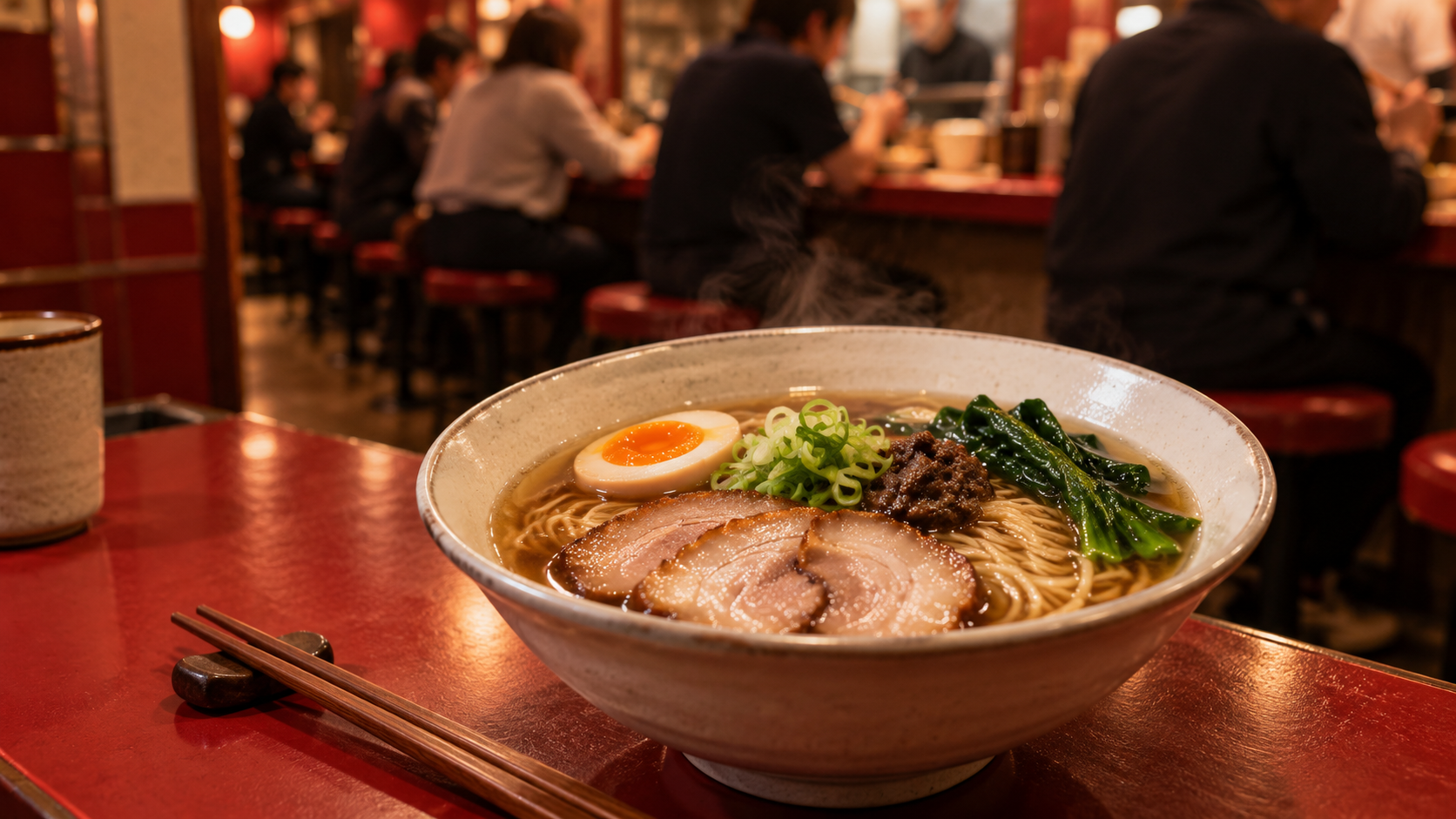
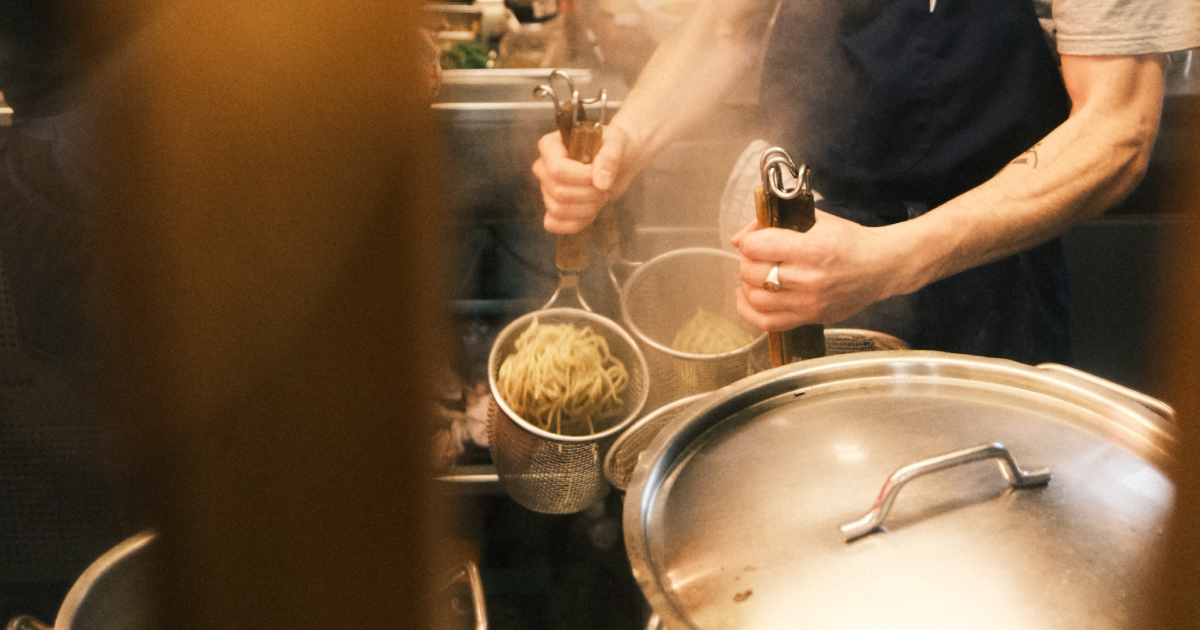
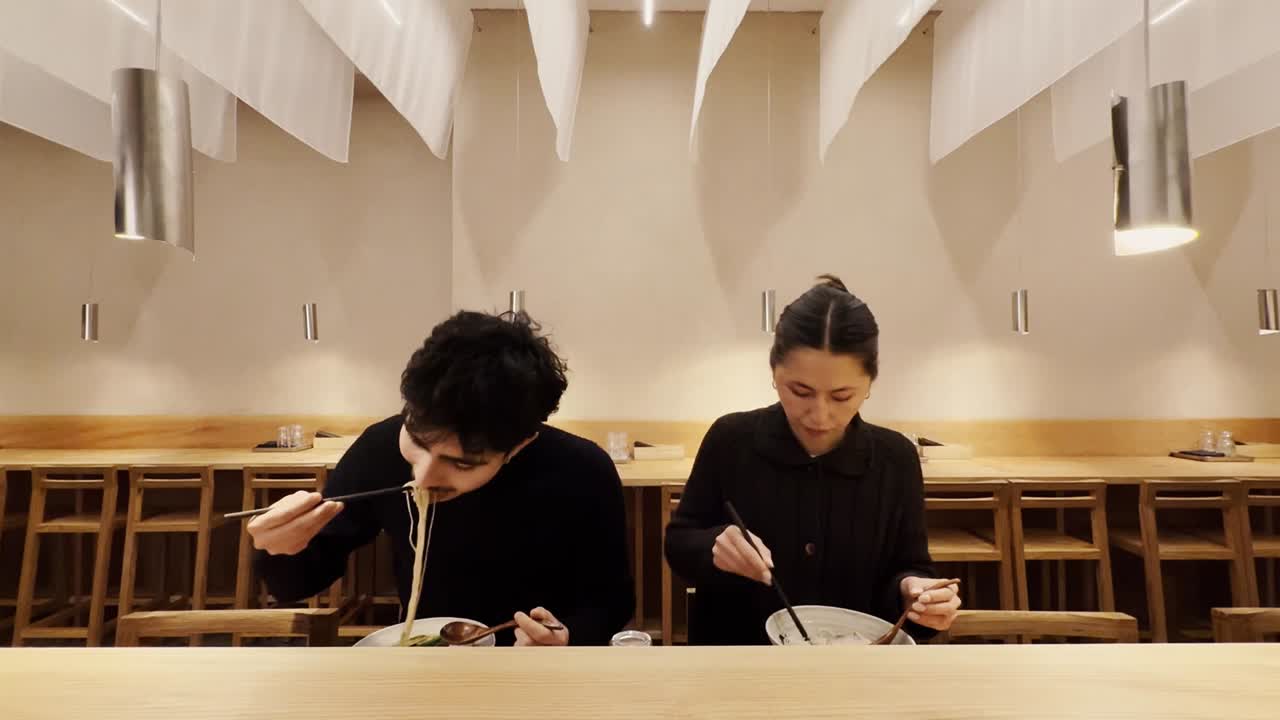
A bowl of shoyu ramen at Slurp, our own counter since 2017, is 185 DKK: a broth simmered for hours to entire days over noodles cut that morning. The stool is the same width.
Mads Battefeld puts the appeal of the expensive end plainly. "With sushi, there are no heavy sauces or excessive garnish to hide behind, and your guests are right across from you," he says. "It's incredibly difficult."
That exposure is what a booked counter sells. A walk-in counter sells the opposite: proximity without ceremony, and no obligation to have planned your evening.
How Do the 11 Counters Compare?
| Venue | Area | What they cook | Booking | Price | Kitchen view |
|---|---|---|---|---|---|
| Sushi Anaba | Nordhavn | Edomae nigiri, omakase | Bookable, very hard | High, not published | Yes, fully |
| Aotori | Østerbro | Yakitori over binchotan charcoal | Bookable, 8 seats | Not published | Yes, fully |
| akmē | Nordhavn | Japanese technique, French sauce work | Bookable | 1,300 or 1,500 DKK | Yes, fully |
| JATAK | Nørrebro | Danish produce, Cantonese and Vietnamese flavours | Bookable, Thu to Sun | 1,700 DKK | Yes, fully |
| Magny | Indre By | Seasonal set menu, tartare to pork neck | Bookable, 16 seats | Not published | Yes, fully |
| Slurp Nansensgade | Indre By | Ramen, noodles cut each morning | Walk-in only | 175 to 210 DKK a bowl | Yes, open kitchen |
| Slurp Borgergade | Indre By | Ramen, broths simmered for days | Walk-in only | 175 to 210 DKK a bowl | Yes, open kitchen |
| Omegn and Venner | Nørreport | Daily blackboard, Nordic small plates | Walk-in only | From about 100 DKK | Yes, the kitchen is the counter |
| Bar Vitrine | Indre By | Indian-leaning small plates, natural wine | Walk-in only, 16 seats | Not published | Partial |
| Goldfinch | Indre By | Cantonese, family style | Bookable, walk-ins held | 80 to 585 DKK a dish | Partial |
| Kødbyens Fiskebar | Vesterbro | Seafood and oysters, the day's catch | Tables bookable, bar is the ask | Not published | Partial |
Which 5 Counters Need a Booking Weeks Out?
Sushi Anaba, Aotori, akmē, JATAK and Magny all decide their covers in advance. None of them has a walk-in path published anywhere.
Sushi Anaba seats eight guests a seating across two seatings a night, at Mariehamngade 23 in the Nordhavn customs district. Battefeld works Edomae nigiri, rice cooked fresh up to three times through a single service and seasoned with a sake-based vinegar that turns it dark, balanced piece by piece against fish, soy and wasabi.
Booking is online only. Turn up without one and there is no seat, and no list to join.
There is a second exclusion most guides skip. Sushi Anaba cannot accommodate vegetarians, vegans, or any allergy except lactose, and cannot cater to coeliac guests at all, because soy sauce and miso run through the meal.
That is not a booking problem. That is a room some readers should not spend three weeks chasing.
Aotori is eight seats grilling premium chicken and vegetables over binchotan charcoal, run by chef Daichi Suminoe from Osaka on Øster Farimagsgade and co-owned by Battefeld. It opened in January 2026 and runs Wednesday to Saturday, with no price on the menu before you sit down.
It is the only counter in the city given over entirely to yakitori, and eight seats across four nights is not many.
How Do akmē and JATAK Split the Same Price Bracket?
akmē charges 1,300 DKK for its tasting menu, 1,500 for the longer set menu and 900 for the beverage pairing, which puts the full evening at 2,400 DKK a head before service. The cooking is Japanese in structure with French sauce work through it: a choux bun layered with a slice of buttery raw tuna to open, a nutty financier with vanilla ice cream and strawberries to close, in a shoebox of a room with two tables and a counter. Book two or three weeks out.
JATAK works the other side of the city and the opposite side of the counter question. Chef-owner Jonathan Tam came out of Noma and ran the kitchen at Relæ before opening on Rantzausgade in January 2022.
The Solar menu follows the Chinese solar season approach, Danish vegetables at their peak read through Cantonese and Vietnamese flavours, changing as the season turns rather than by the quarter.
Here is the detail worth the booking. Counter guests at JATAK get twelve dishes; the dining room a few metres away gets eight.
Same room, same night, four dishes of difference. Ask for the counter when you book, or do not bother booking.
Magny is the newest full-counter room in the centre. Sixteen seats at the counter on Ny Adelgade, plus a private room for five to eight, opened on 22 April 2026 by chef Jonas Mikkelsen, who had run the kitchen at Hotel Frederiksminde since 2010. It is a seasonal set menu and the counter is the restaurant, not a side option.
Which 4 Counters Take No Booking at All?
Bar Vitrine, Omegn and Venner and the two Slurp rooms remove the question entirely. There is nothing to reserve, so there is nothing to forget.
Bar Vitrine is sixteen seats around one birch table, a partnership between the design house FRAMA, restaurateur Riccardo Marcon and chef Dhriti Arora. The plates are Indian-leaning and made for sharing: a lentil pancake with spring greens and mint chutney, a spinach curry flatbread with mozzarella, poured against native-grape natural wine.
Walk-in only is the principle the room is built on, and it is not a soft landing. It will take some elbowing to get a seat. Sixteen places, one table, first come.
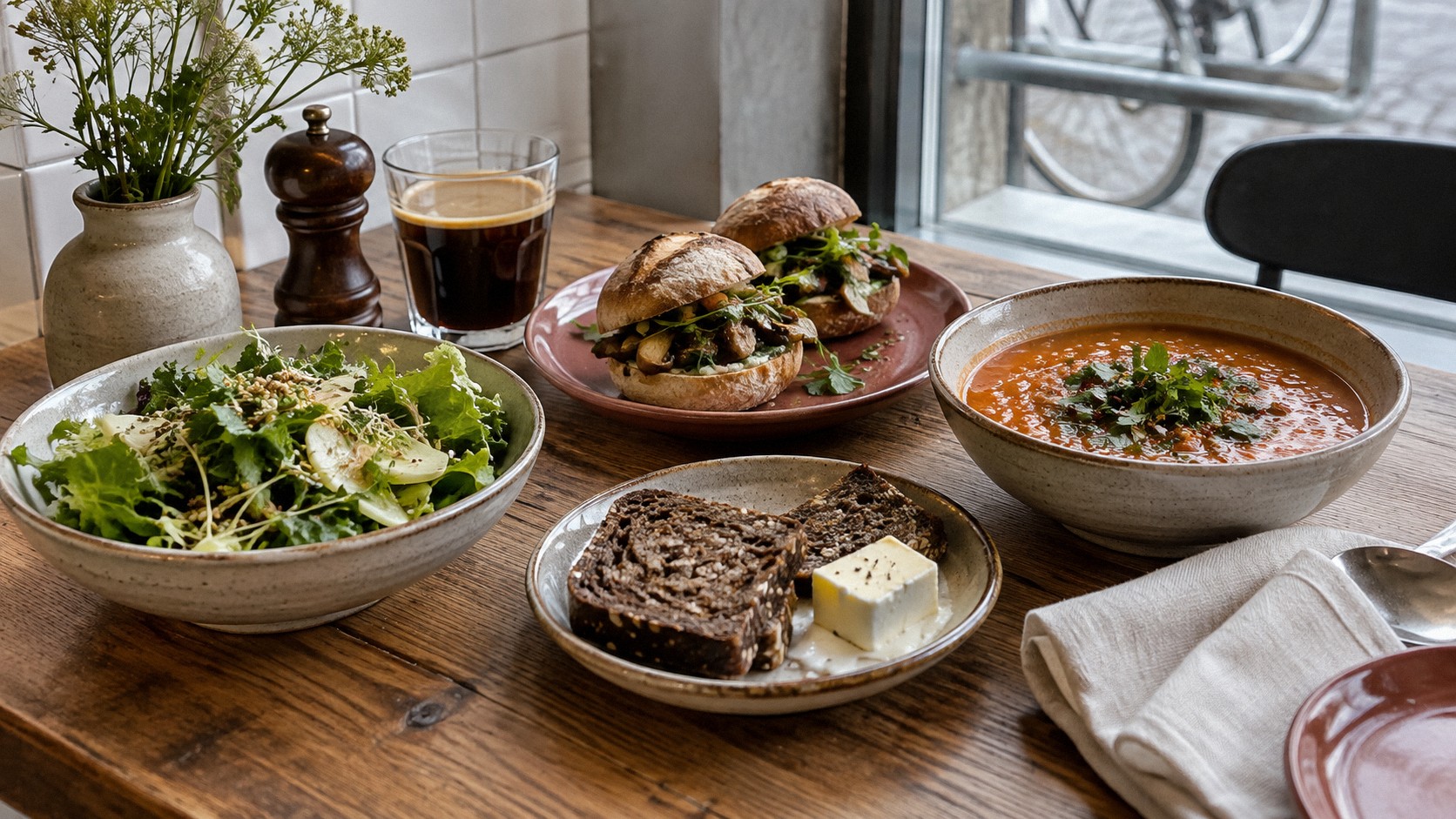
Omegn and Venner is a shop and an eating counter in the same stall, run by Denny and Sarah in Hall 1 at Torvehallerne since 2018. Whatever is on the shelves becomes that day's board: open sandwiches, chicken liver toast, an onion tart, pasta with kale and goat cheese, a cold fruit soup with Danish strawberries in season. Dishes start around 100 DKK.
The catch is the clock, not the queue. Torvehallerne runs 10:00 to 19:00 on weekdays and closes at 18:00 at weekends, so this is a lunch counter wearing a dinner counter's clothes. Turn up at 20:00 and the hall is dark.
Slurp is the fourth, and since it is our own counter it is worth saying plainly what it is. We opened on Nansensgade in 2017 after cooking at Noma and Relæ and then at RyuGin in Tokyo, and neither address has taken a booking since.
The cooking is ramen and nothing else. Broths simmer for hours to entire days, the noodles are cut in the room each morning with Øland flour milled on Bornholm, and the toppings move with the season rather than sitting fixed on a laminated menu.
How Do the 2 Slurp Rooms Sit in This Field?
Slurp Nansensgade is the original room, twenty two seats, no reservations. It is small and loud and the kitchen is open to the counter, which is the whole design.
Slurp Borgergade opened in January 2025 with thirty six seats and runs 11:30 to 15:00 and 17:00 to 22:00, seven days. No reservations there either, so turn up and expect a short wait if it is busy.
Our own Slurp rooms sit at the cheap end of this table on purpose, and the craft is where the money went instead. Shoyu and shio are 185 DKK, the veggie bowl 175 and vegan without the egg, an nduja miso 195, and a dinner-only tonkotsu 210.
We cut the noodles fresh every morning on a machine built for it, using Øland flour milled on Bornholm, and the broths simmer for hours to entire days rather than being reduced to a shortcut.
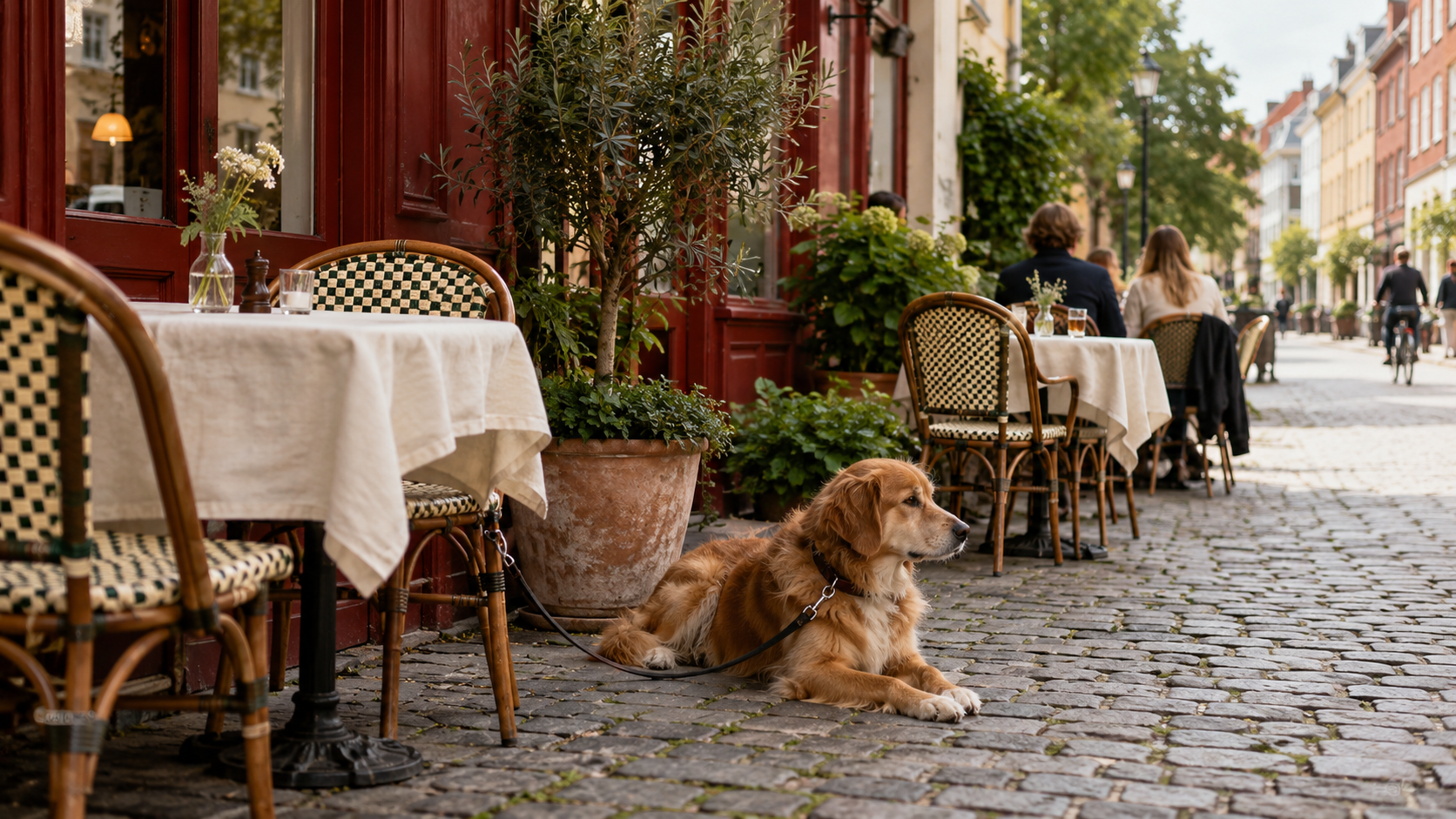
Dogs are welcome at both counters. Giraffes too, up to 3.25 metres.
How Do Goldfinch and Kødbyens Fiskebar Hold Seats Back?
Two rooms here take bookings and still keep a route in. That makes them the most useful entries for anyone deciding at 18:00 on a Thursday.
Goldfinch always leaves room for walk-ins. It sits in a backyard behind Esmée off Kongens Nytorv, down a passageway, with a U-shaped counter round an open kitchen and turntables on the tables for sharing.
The food is Cantonese and priced across a wide arc: char siu bao at 80 DKK, scallop toast at 110, dan dan noodles and char siu pork at 195, a half roasted Danish duck at 585, finishing on Hong Kong style French toast. Chef Will King-Smith cooked at Geranium before opening the room in 2022.
The trap at Goldfinch is time, not seats. The room runs to midnight most nights and to 02:00 on Friday and Saturday, but the full menu stops at 22:00.
Kødbyens Fiskebar takes bookings for its tables and holds nothing back at the bar. The bar is the ask, and it is an ask rather than a promise.
What it cooks is the day's catch in a converted butcher's hall, with oysters available across the whole opening, which matters because the kitchen runs 11:30 to 14:30 and again 17:30 to 23:00 while the doors stay open to midnight. Arrive at 15:30 and you get oysters and a drink. You do not get dinner.
Which Counter Works Best for a Solo Diner?
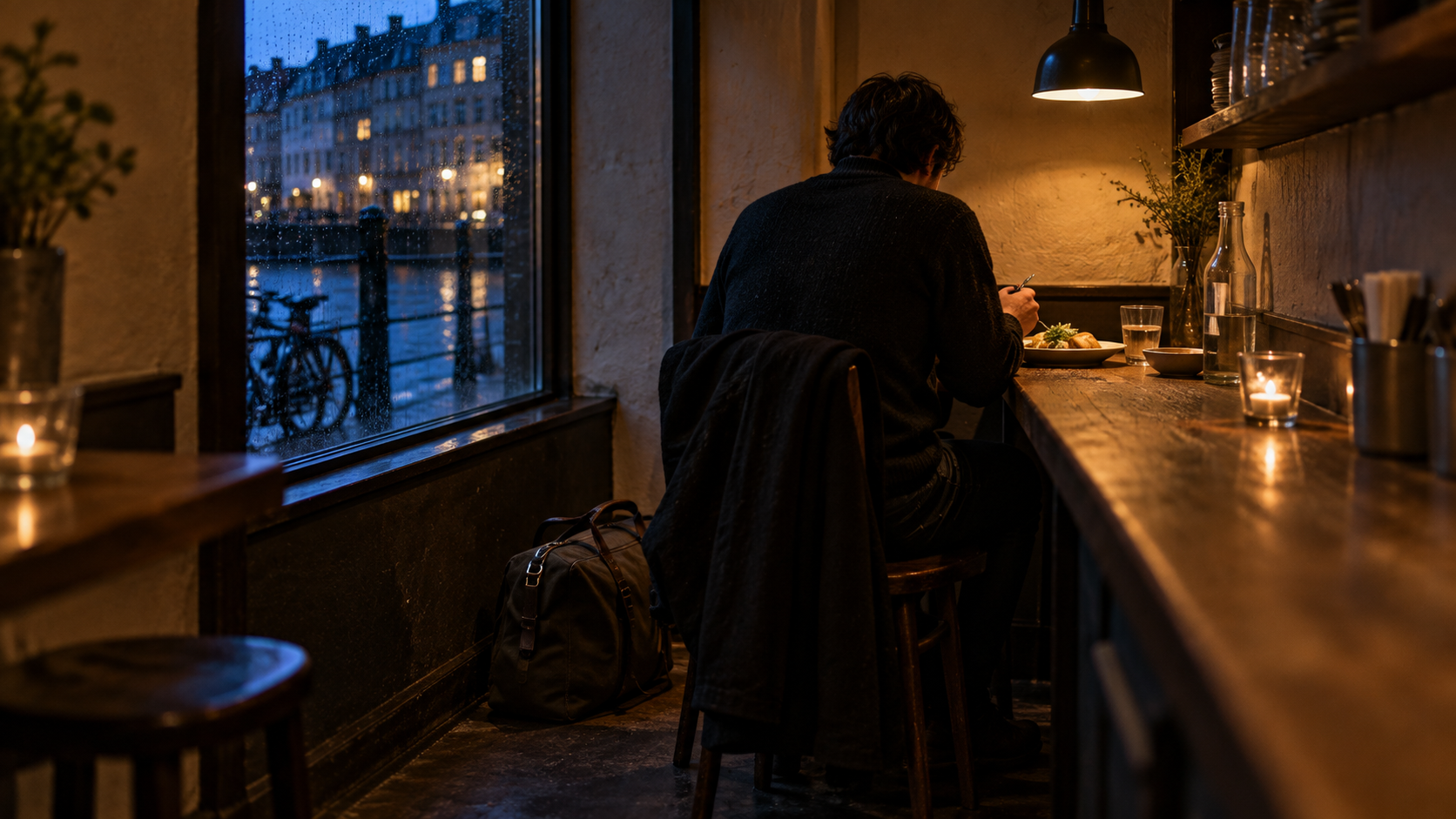
A counter solves the problem a table for one creates. The seat already faces the work, so nobody has to justify a party of one to a host with a floor plan.
For a planned solo night, Aotori's eight seats give every guest the same skewers off the same grill, and JATAK's counter is the better half of that room by four dishes. Both are a full evening and a serious bill.
For an unplanned one, Bar Vitrine, Omegn and Venner, Kødbyens Fiskebar's bar and either Slurp room all work without a plan. A single seat at a walk-in counter is exactly as available as a table for four, and a bowl of ramen is a complete meal rather than a compromise ordered alone.
Where Does a Counter Night Go Wrong in 2026?
Three ways, and all of them are avoidable. The first is arriving at a booked counter without a booking, which at Sushi Anaba, Aotori, akmē, JATAK or Magny simply ends the evening.
The second is the closed day. JATAK runs Thursday to Sunday only, and Aotori's building runs Wednesday to Saturday only.
The third is the kitchen clock. Goldfinch, Fiskebar, Bar Vitrine and Torvehallerne all keep hours that outlast their kitchens, and a counter with no cooking behind it is just a bar.
How Should You Choose Between the 11?
Start with the food, then let the booking policy decide the date. If you want raw fish handled at the highest level in the city, that is Sushi Anaba, and it costs you three weeks of planning.
If you want fire and skewers, Aotori. If you want French sauces under Japanese structure, akmē. If you want Danish vegetables read through Cantonese and Vietnamese flavours, JATAK, and take the counter seats.
If you want to eat tonight, the field is genuinely broad: Indian small plates and natural wine at Bar Vitrine, a Nordic market board at Omegn and Venner before 18:00, Cantonese sharing plates at Goldfinch, oysters and the day's catch at Kødbyens Fiskebar, or a bowl of ramen at Slurp Nansensgade or Slurp Borgergade.
The best counter is the one whose cooking you actually want, on a night its booking policy will let you have it. Everything else on this table is detail.
Sources
- Sushi Anaba, menu and dietary policy, and VisitCopenhagen, Sushi Anaba
- Craving Copenhagen, interview with Mads Battefeld
- Washoku Guide, Aotori
- akmē, menu and prices, and The Infatuation, akmē
- JATAK, menu, prices and hours; VisitCopenhagen, JATAK; The Infatuation, JATAK
- Mig og København, Magny opening report
- Slurp, Nansensgade, Borgergade and the menu
- Torvehallerne and Omegn and Venner
- FRAMA, Bar Vitrine; VisitCopenhagen, Bar Vitrine; The Infatuation, Bar Vitrine
- Goldfinch, official site and menu; Anders Husa, Goldfinch
- Kødbyens Fiskebar, official site and food, wine and hours
Frequently Asked Questions
Not at the five booked counters here. Sushi Anaba, Aotori, akmē, JATAK and Magny all set their covers in advance and publish no walk-in route, so the seat has to be arranged before the day.
A plate off the daily board at Omegn and Venner in Torvehallerne starts around 100 DKK, and a bowl of ramen at Slurp Nansensgade or Slurp Borgergade runs 175 to 210 DKK, with noodles cut that morning.
No. Neither Slurp restaurant has ever taken one. A seat opens or it does not, and a solo diner has exactly the same chance as a group of four.
Goldfinch, Kødbyens Fiskebar, Omegn and Venner and both Slurp restaurants. JATAK runs Thursday to Sunday and Aotori runs Wednesday to Saturday, so Monday rules several of the booked counters out.