7 Places to Eat Near Copenhagen Landmarks in 2026, With Booking Notes
A landmark day is easier to plan when you know what is nearby and how each place handles seating. These seven stops range from stand-up hot dogs and walk-in counters to rooms where booking ahead is the safer plan.

TL;DR
DØP grills organic sausages at Købmagergade 52, beside the Round Tower at 52A, and has nowhere at all to sit. Bar Vitrine is a short walk east: sixteen seats at a birch communal table and by the windows, with Indian-leaning small plates.
Ved Stranden 10 pours natural wine across the canal from Christiansborg, with cheese and a croque monsieur, and currently takes no reservations. At Slurp Borgergade, we serve ramen near Amalienborg, with thirty six seats and no booking.
Two of the seven need the right day. Choushoku at Admiralgade 26 runs Saturday only, 445 DKK for nine servings, and Ved Stranden 10 is closed on Sunday.
A sightseeing day can change direction quickly. A nearby lunch counter may take walk-ins, while another room may expect a reservation; the practical difference is worth checking before you set off.
The practical choice is a shorter walk and a clear idea of what each kitchen actually cooks. These seven places sit across the central landmark clusters, with a booking note for each.
After Rosenborg, DØP at Rundetårn is the fast no-booking stop; Restaurant Schønnemann publishes fixed lunch seatings, so reserve if it matters to the day. From Nyhavn, step back from the canal to Den Vandrette, where booking is available but unreserved seating is not promised. At Slurp, we have served walk-in ramen since opening on Nansensgade in 2017. Near Marmorkirken and Amalienborg, our Borgergade room has 36 seats and no bookings; we simmer broths for hours to days and cut house-made noodles each morning with Suzy, our custom-built machine. The seven-place guide distinguishes stops with no reservations from those to reserve in advance; no walk-in policy guarantees a seat.
How Do the 7 Landmark Stops Compare?
| Landmark | Where to eat | What they cook | Booking | Price |
|---|---|---|---|---|
| Rundetårn | DØP, Købmagergade 52 | Organic sausages, wholegrain bun, remoulade and fried onions | None, and no seats to book | Budget |
| Rundetårn and Strøget | Bar Vitrine, Møntergade 5 | Indian-leaning small plates and natural wine | Walk-in only, 16 seats | Mid |
| Christiansborg and Børsen | Ved Stranden 10 | Natural wine, cheese, charcuterie, croque monsieur | No reservations | Mid |
| Gammel Strand | Admiralgade 26 | Wine bar and bistro, and a Saturday Japanese breakfast | Bookable, no walk-in policy published | 445 DKK for Saturday choushoku |
| Nyhavn and Inderhavnsbroen | Den Vandrette, Havnegade 53A | Small sharing plates and natural wine by style | Bookable; check current walk-in policy | Mid |
| Marmorkirken and Amalienborg | Slurp Borgergade | Ramen, house-made noodles cut each morning by Suzy, Slurp's custom-built noodle machine, broths simmered for days | No reservations | 175 to 210 DKK a bowl |
| Kastellet and the Little Mermaid | Seaside Toldboden, Nordre Toldbod | Seven kitchens: pasta, fire-grilled meat, sushi, seafood | Booking foregrounded | Mid |
What Can You Eat at the Foot of Rundetårn?
Rundetårn was built between 1637 and 1642 with a 210 metre helical ramp inside it, wide enough for a horse and cart rather than stairs. It anchors the top of Strøget.
DØP's stand is listed at Købmagergade 52, beside the Round Tower at 52A. You eat standing, at the foot of the ramp.
What you get is an organic sausage on a wholegrain bun topped with linseed, with organic remoulade and fried onions, from a cart Claus Christensen built around the idea that a Danish hot dog could be made properly. There is a vegetarian version and a spicy organic beef sausage served with mashed potato and turnip. A second stand stands further down Strøget by Helligåndskirken.
DØP is a stand-up hot-dog stop rather than a seated meal.
Where Do You Sit Down Near Strøget?
Ten minutes east of the tower, Møntergade gives you the opposite format. Bar Vitrine has sixteen seats at a birch communal table and by the windows, a collaboration between FRAMA, restaurateur Riccardo Marcon and chef Dhriti Arora.
The cooking is Indian-leaning and built for sharing. An earlier review described a lentil pancake with spring greens and mint chutney, and a spinach curry flatbread with mozzarella; those are examples from a changing menu, not a promise for today. The wine list favours native grape varieties.
The room is walk-in only, with sixteen seats total. You cannot reserve; a seat depends on availability when you arrive.
What Is Open by Christiansborg and Børsen in 2026?
Børsen burned on 16 April 2024 and is now a reconstruction site with a free visitor centre looking out over the work through first-floor windows, open weekday afternoons and late weekend mornings.
Across the canal from Slotsholmen sits the answer to the eating question. Ved Stranden 10 has poured wine since 2009 and currently takes no reservations, in either language, and there is no wine list either. You say what you feel like and someone opens something.
The food is deliberately small: cheese, charcuterie and a croque monsieur, built to sit under natural wine from small European growers in cold-climate regions rather than to compete with it.
The Wednesday tasting is 150 DKK for four to six wines from 17:00, also first come. It runs 15:00 to 22:00 on weekdays and from noon on Saturday, and it is closed on Sunday, so check the day before walking over.
Where Do You Eat at Gammel Strand?
Admiralgade 26 sits in a neoclassical house from 1795 and 1796, a wine bar and bistro run by Christian Nedergaard and Sebastian Nellemann, the same pair behind Ved Stranden 10.
The reason to come here is a Saturday one, and it is the most specific recommendation in this guide. Choushoku, a Japanese breakfast, runs on Saturdays only from 11:30 to 14:00 at 445 DKK for nine servings, built around rice, miso soup and egg with generous plates of greens and fish to share. If that Saturday meal is the reason for your walk, reserve a place rather than assuming an open seat.
The rest of the week the kitchen is Nordic with a Japanese lean: mullet with cucumber, meunière-fried sole, smoked duck heart, hummus with socca. Lunch runs Monday to Friday and dinner Wednesday to Saturday, and it is closed on Sundays.
Admiralgade 26 is a planned stop for Saturday choushoku, and Seaside Toldboden also foregrounds booking. Reserve either when it matters to your day; Ved Stranden 10 nearby takes no reservations, with a seat subject to availability.
What Works Near Nyhavn and Kongens Nytorv?
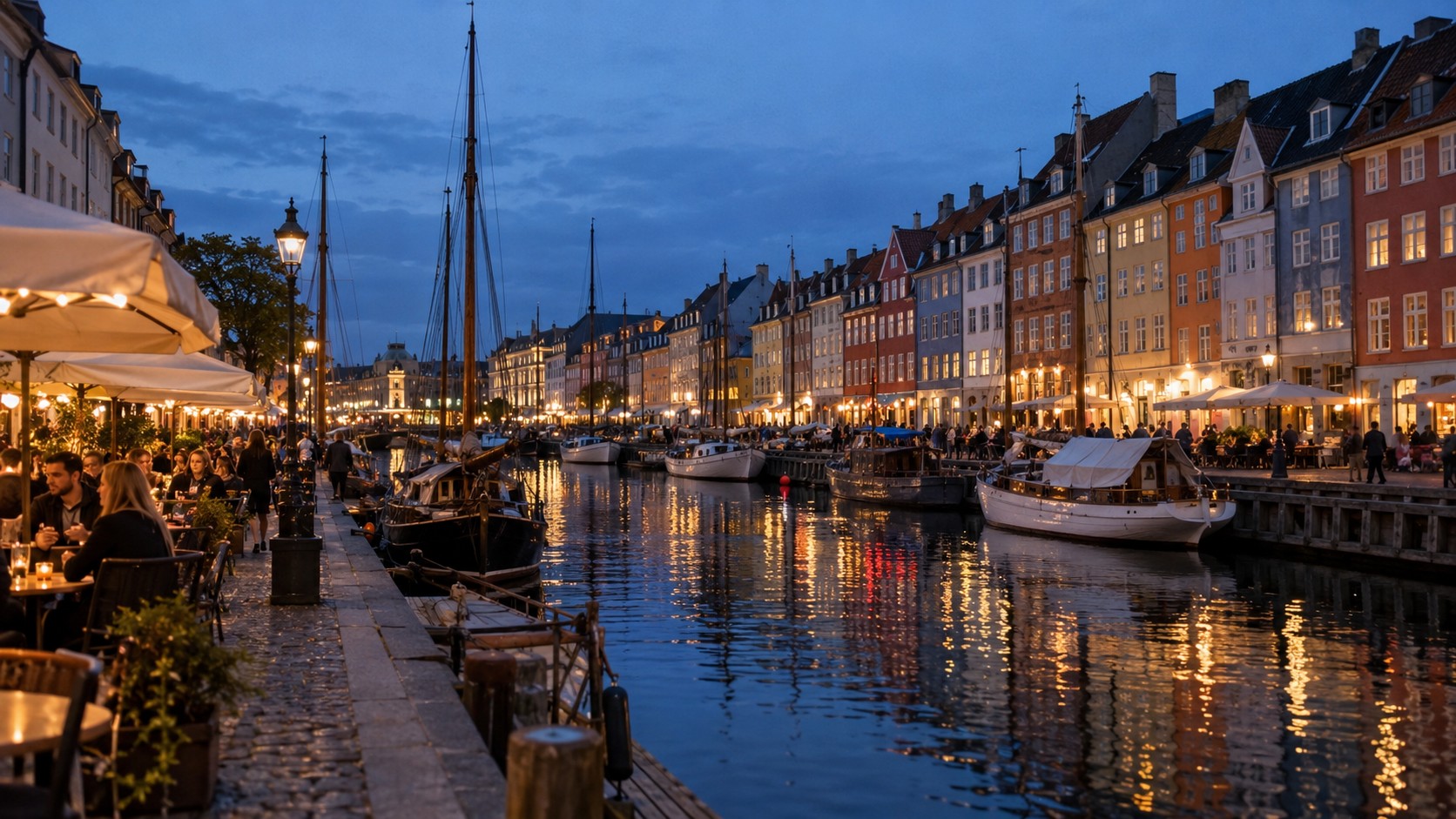
Nyhavn is the 450 metre canal Christian V had dug between 1670 and 1675, and its oldest surviving townhouse dates to 1681. It runs straight into Kongens Nytorv.
On the harbour promenade off it, Den Vandrette pours natural wine from a basement at Havnegade 53A, with a list sorted by style rather than by country, fizzy through orange to oxidative, and small plates built for sharing across the table. Booking is available; check before relying on an unreserved seat.
Watch the two clocks. The bar runs to 22:00 from Monday to Thursday and to midnight on Friday and Saturday, while the kitchen stops at 21:30 and 22:00. It is closed all day Sunday.
Where Does Slurp Borgergade Fit After Amalienborg?
Amalienborg is four matching palaces around an octagonal courtyard, with Marmorkirken's dome at the top of the square.
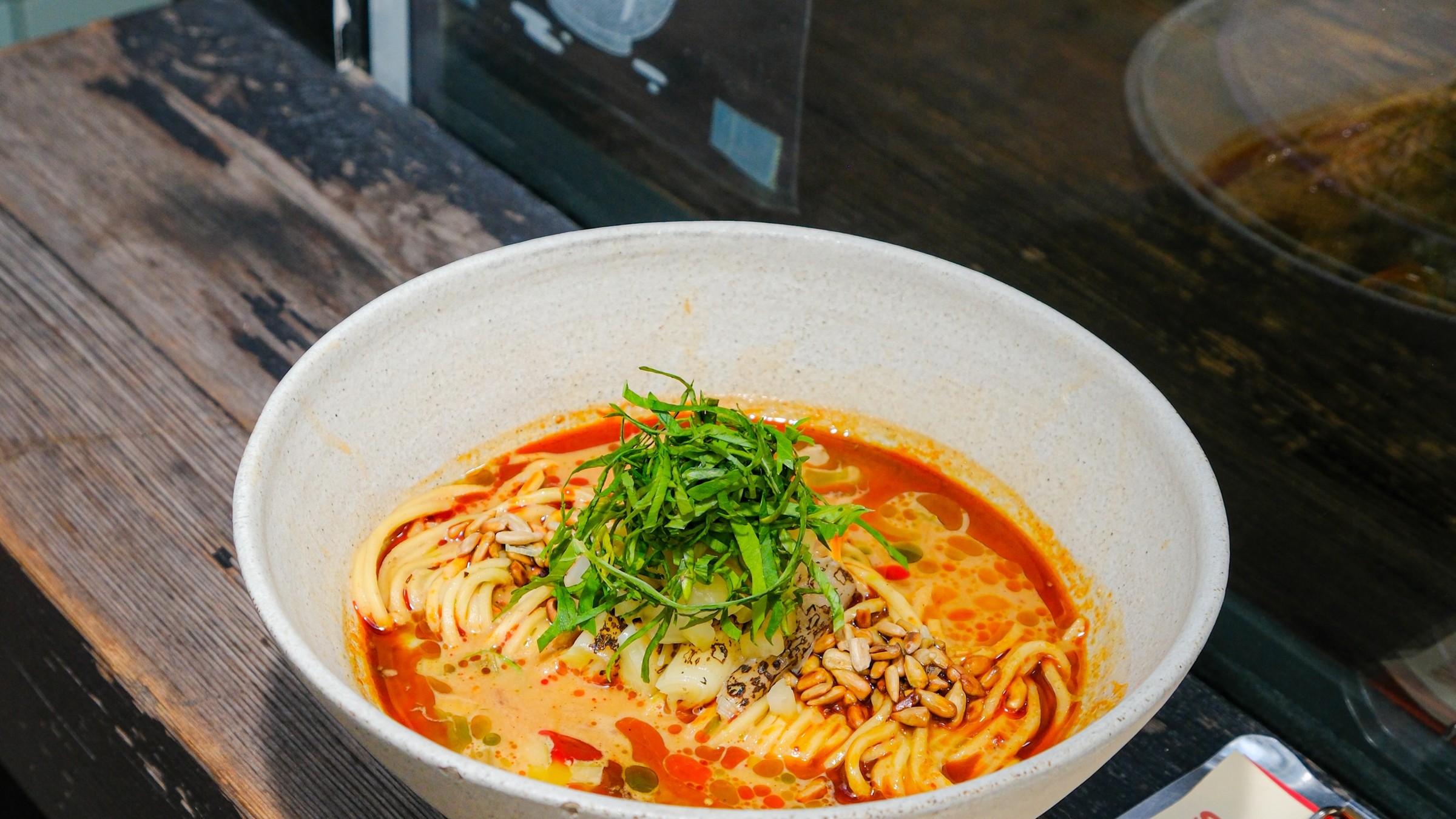
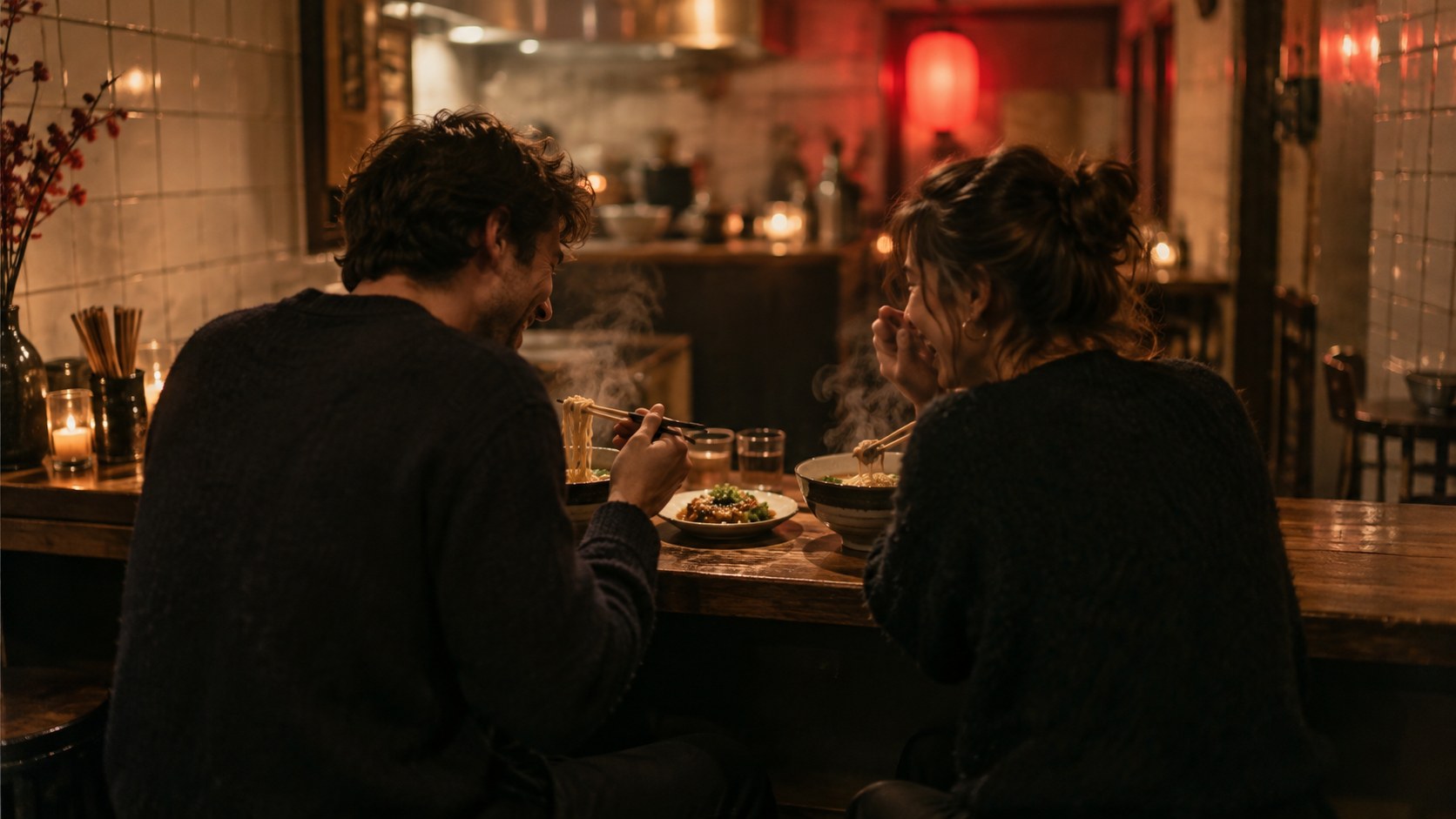
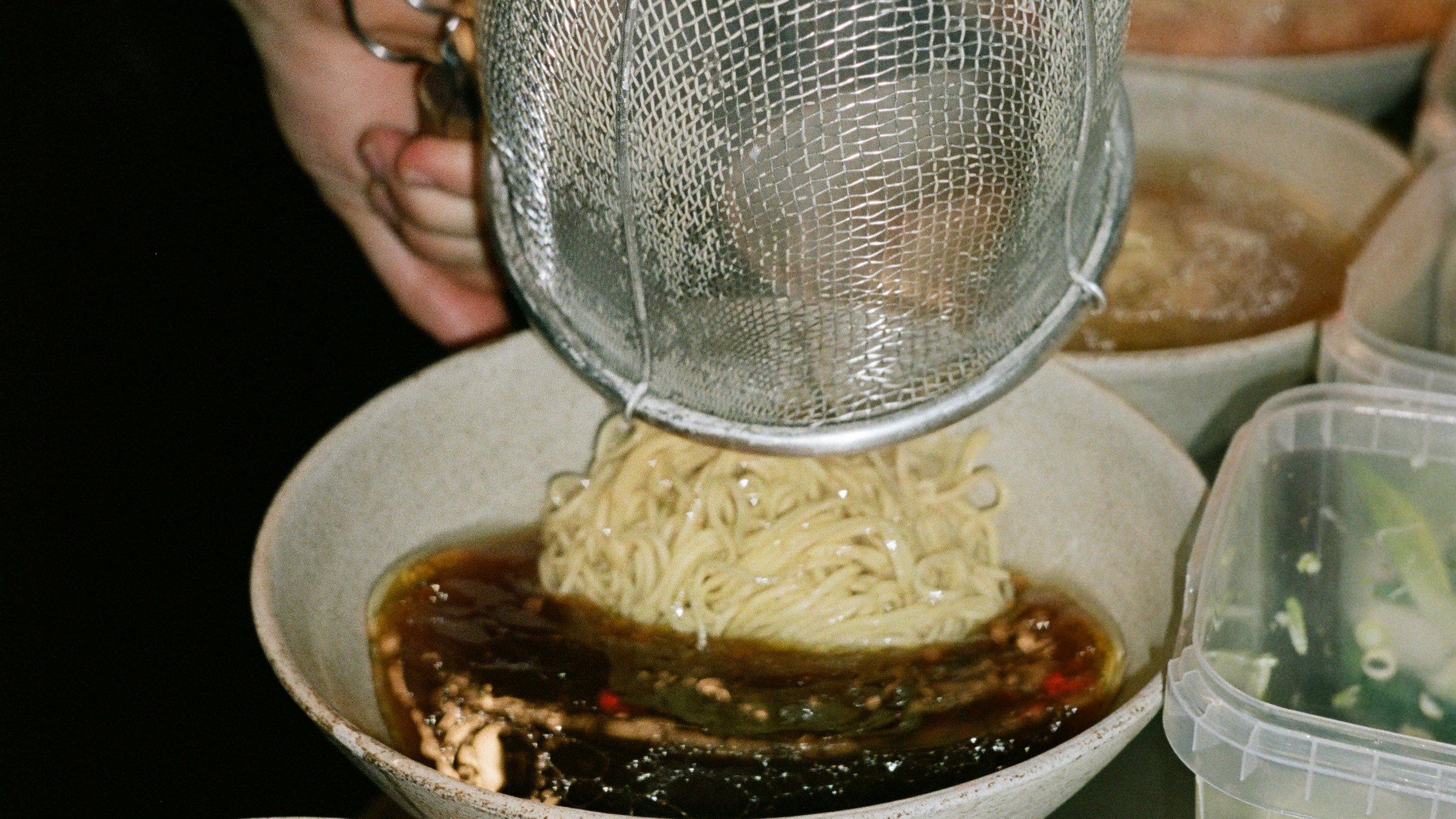
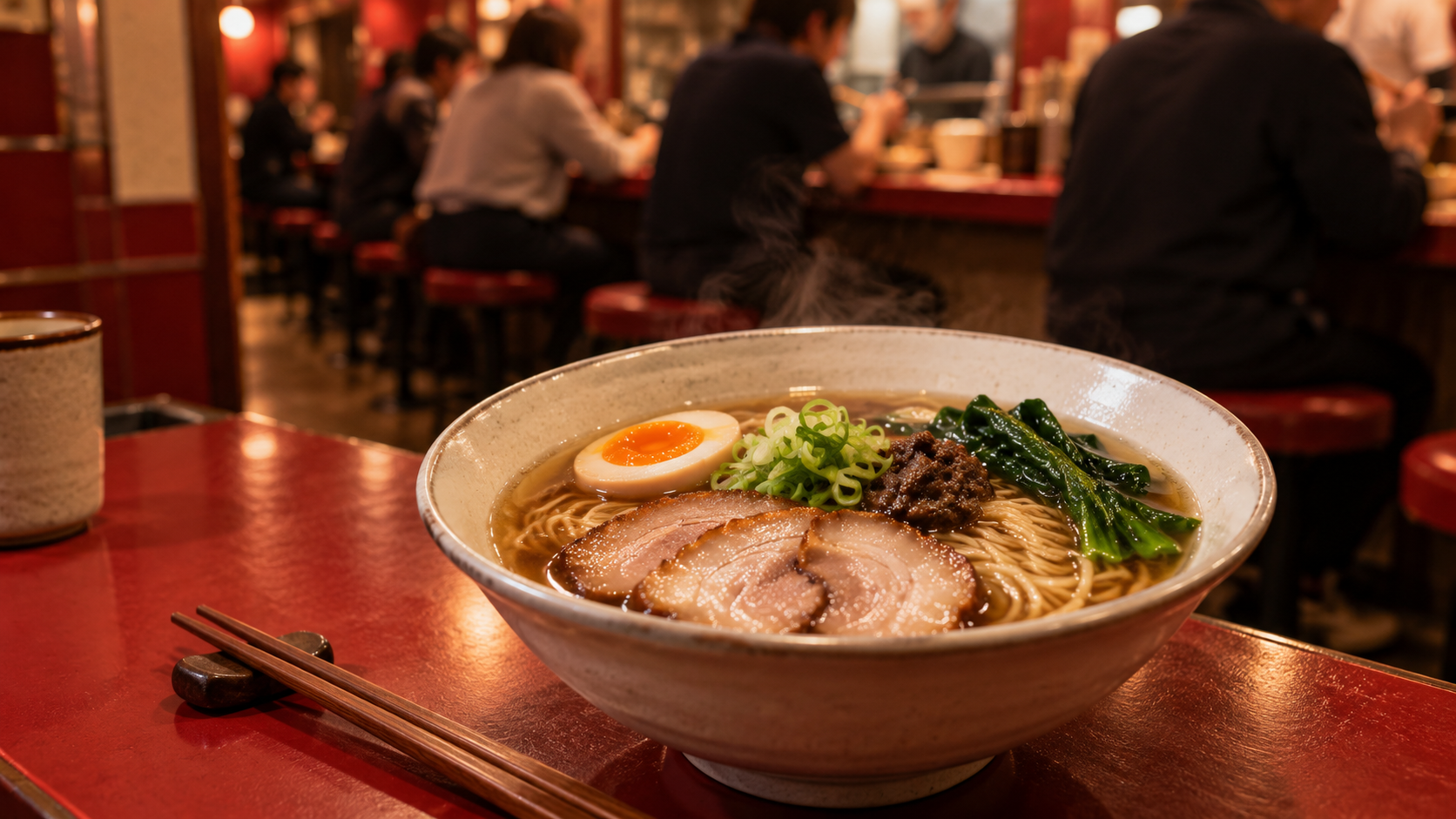
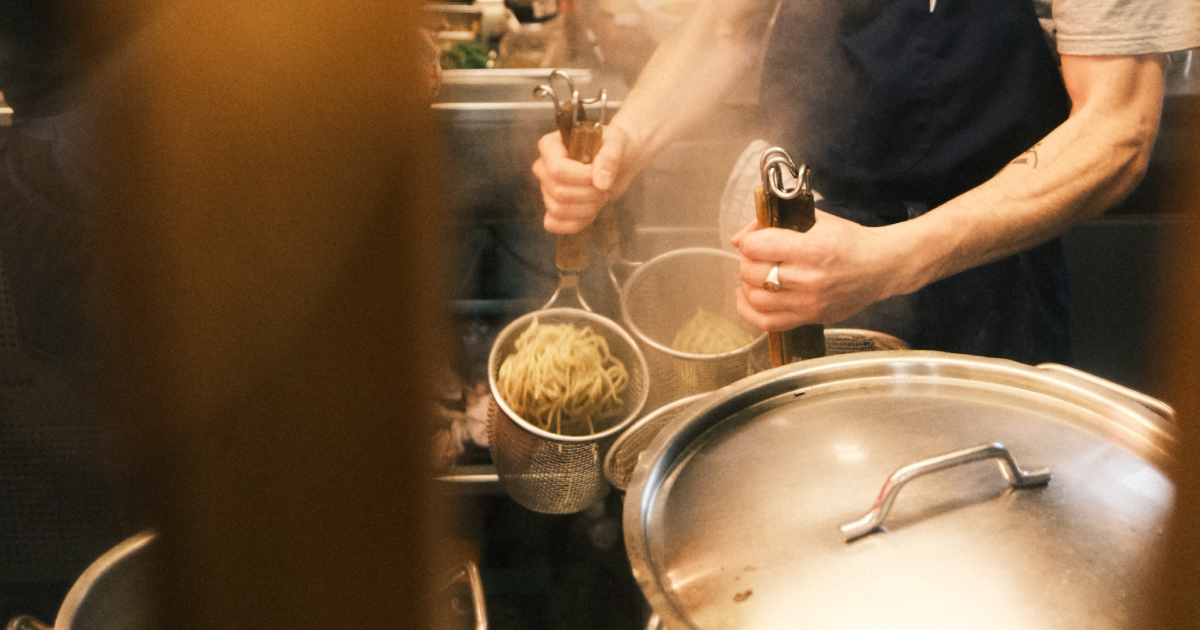
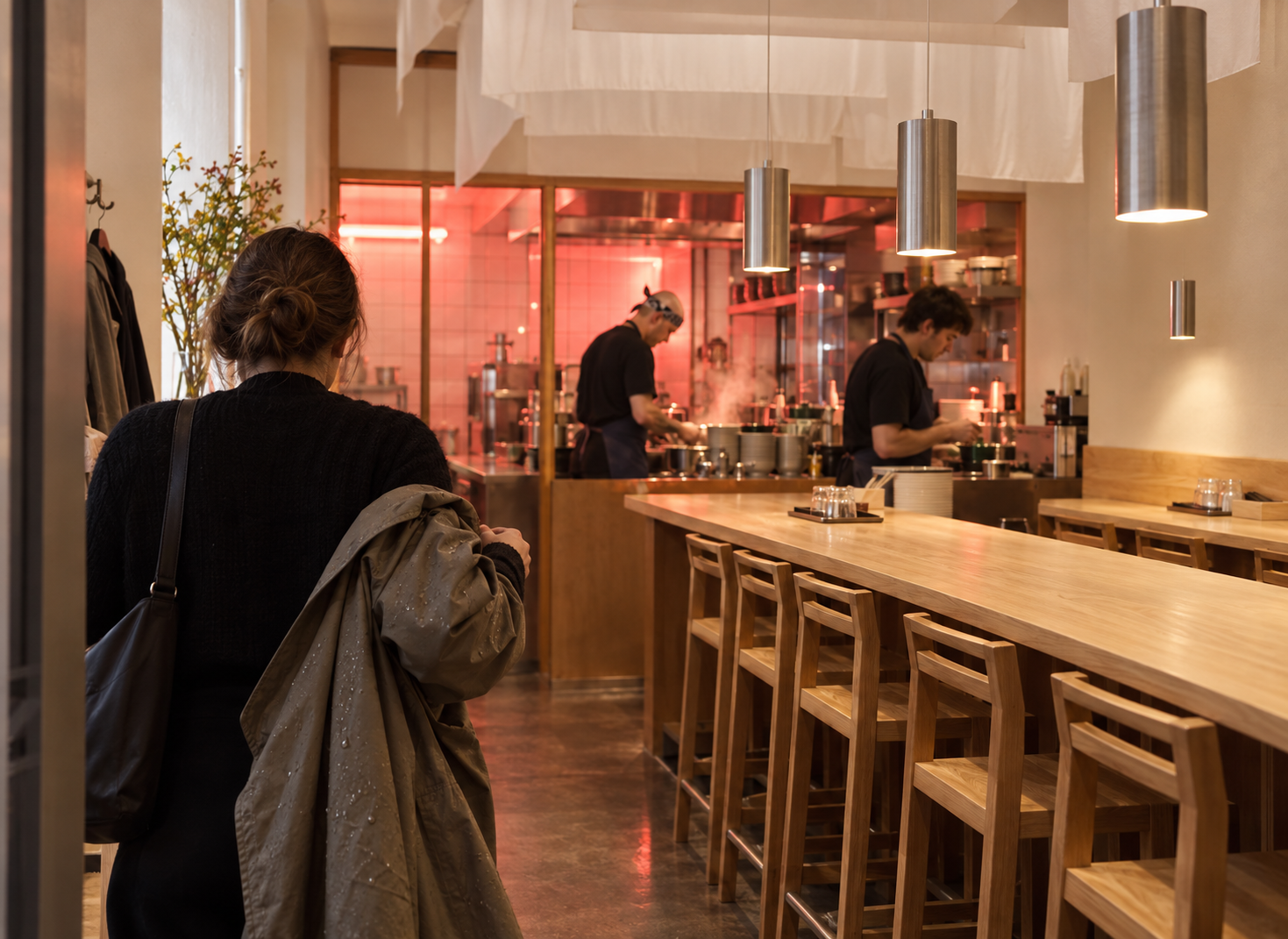
A few minutes inland, our Slurp Borgergade room has 36 seats and takes no reservations. We serve ramen with broths simmered for hours to entire days and noodles cut each morning with Suzy, our custom-built machine. Our current bowls run 175 to 210 DKK.
We open 11:30 to 15:00 and 17:00 to 22:00 daily. The two-hour afternoon gap matters if you are walking up from the palace; at service times, ask for the next available seat.
Where Do You Eat After the Little Mermaid?
The Little Mermaid was unveiled in 1913 and stands 125 centimetres tall. Kastellet's star-shaped ramparts sit just behind it.
The old customs house on the water offers a nearby seated meal. Seaside Toldboden runs seven kitchens under one roof at Nordre Toldbod: Nonna Regina for pasta, Patagonia Grill cooking meat over fire, Marina for sushi, Ocean Bar for harbour seafood, Sonora for Latin American, Dang Dang for pan-Asian and Pernille's for Danish classics.
Kitchens serve 12:00 to 22:00 on weekdays and from 10:00 at weekends, with brunch until 12:30 on Saturday and Sunday. The bar runs later, to 02:00 on Friday and Saturday.
Seaside Toldboden foregrounds table reservations and gives no promise of a walk-in seat at the bar or kitchens. If eating there matters to your harbour walk, book before setting off.
The line-up also moves. Two kitchens were swapped out at a March reopening, so a stall named in an older article may no longer be there.
Which Landmark Stops Need a Timing or Booking Check?
Two timing checks belong in the plan: Restaurant Schønnemann's published lunch seatings, and DØP's current opening hours.
Restaurant Schønnemann, near Rosenborg and Nørreport, accepts bookings up to 120 days ahead and publishes fixed lunch windows. If eating there matters to the day, reserve a listed sitting rather than relying on an unconfirmed walk-in policy.
The second is DØP. Check the stand's current hours before making a special trip, including on Sunday.
So treat the hot dogs as a daytime stop rather than the reward at the end of a long walk.
How Should You Plan a Landmark Day Around These 7?
Walk the list in geographic order rather than in appetite order. Rundetårn and Strøget in the morning, Slotsholmen and Gammel Strand around lunch, Nyhavn and Kongens Nytorv in the afternoon, then the palace quarter and the harbour.
Then let the food break the tie, because these seven stops are not interchangeable. DØP's hot dog, Bar Vitrine's Indian-leaning small plates, Ved Stranden 10's wine and cheese, and our ramen at Slurp make very different meals.
If you want one memorable plate rather than the shortest walk, make it the Saturday choushoku at Admiralgade 26, or come to us at Slurp Borgergade for a bowl after the palace. Admiralgade needs the right Saturday sitting; our Borgergade room is walk-in, with a seat subject to availability.
Two entries need a day chosen in advance. Choushoku exists only on Saturday between 11:30 and 14:00, and Ved Stranden 10 is closed on Sunday. Admiralgade 26 and Seaside Toldboden should be reserved; the table above separates those planned stops from the walk-in options.
Sources
- VisitCopenhagen, DØP stand and address; Rundetaarn, Round Tower address
- Wikipedia, Rundetårn, Nyhavn, Amalienborg and the Little Mermaid
- FRAMA, Bar Vitrine room and seating; venue walk-in policy and hours; VisitCopenhagen, Bar Vitrine; The Infatuation, Bar Vitrine review
- VisitCopenhagen, the Old Stock Exchange
- Ved Stranden 10, wine and reservations and the Wednesday tasting
- Admiralgade 26, menu and prices and choushoku; Anders Husa, Admiralgade 26
- Den Vandrette, wine, hours and booking; World of Mouth, Den Vandrette
- Slurp, Borgergade and the menu
- Seaside Toldboden, the seven kitchens; Spiseliv, the two new kitchens
- Restaurant Schønnemann, booking page
Frequently Asked Questions
DØP's stand is listed at Købmagergade 52, beside the Round Tower at 52A, grilling organic sausages with remoulade and fried onions. Bar Vitrine on Møntergade is a short walk east, walk-in only, for Indian-leaning small plates.
Seaside Toldboden, in the old customs house at Nordre Toldbod, runs seven kitchens from pasta to fire-grilled meat and sushi. It foregrounds table reservations and does not promise unreserved bar or kitchen seating. Reserve ahead if you plan to eat there after the Little Mermaid.
Ved Stranden 10 and Den Vandrette both close all day Sunday, as does Admiralgade 26. Its Japanese choushoku breakfast runs on Saturday only, between 11:30 and 14:00.
At Slurp Borgergade, we have thirty six seats, take no reservations, and open 11:30 to 15:00 and 17:00 to 22:00 every day. Slurp bowls run 175 to 210 DKK, with noodles we cut each morning.