15 Places to Eat in Copenhagen When the Forecast Turns in 2026
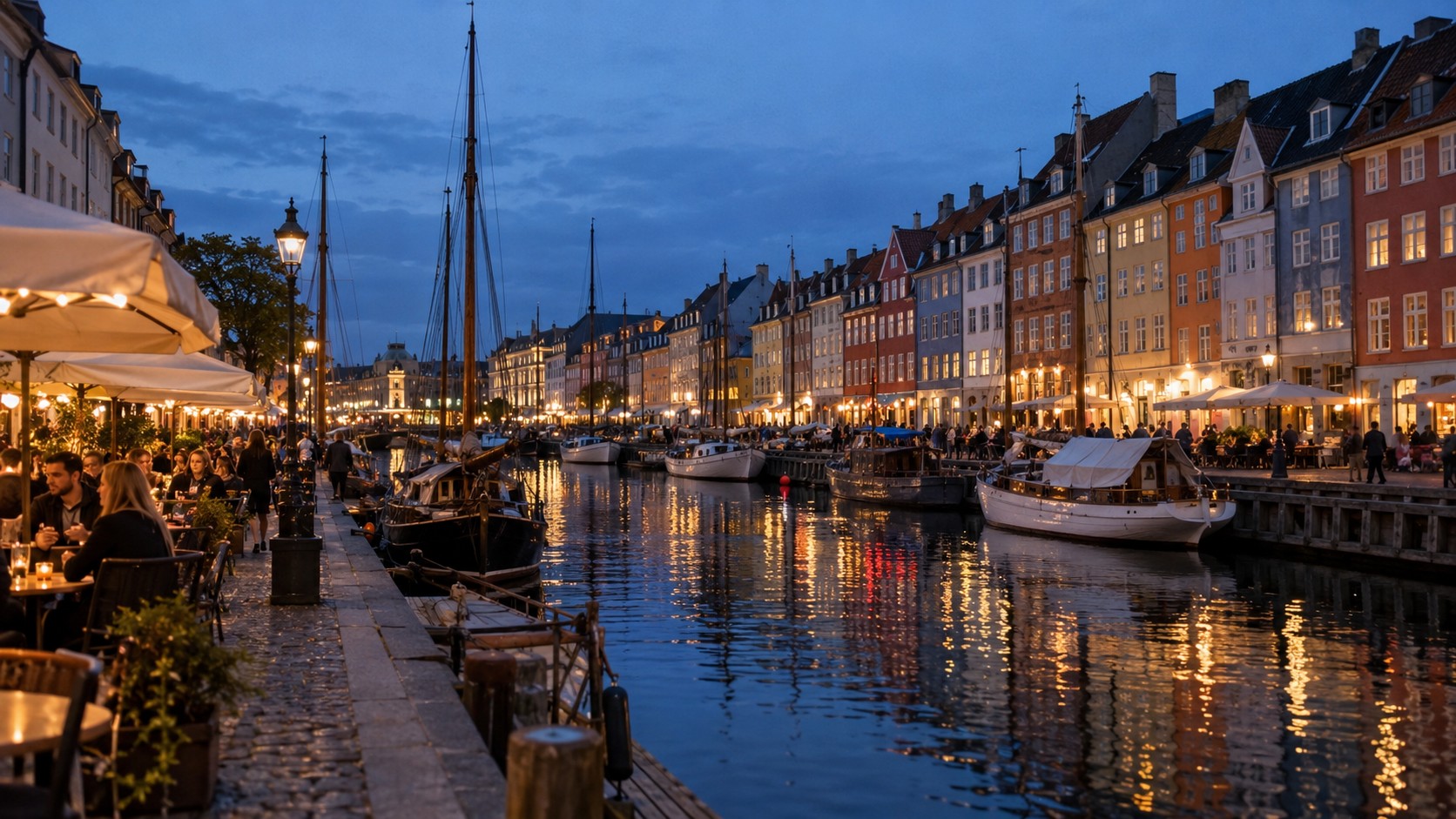
Copenhagen spends late September through November deciding whether it is still autumn or already winter, and the rooms that handle that indecision best are rarely the ones built for a single season.

TL;DR
The stretch to plan around is late September to November, when the thing that ruins an afternoon is a twenty minute shower rather than an early sunset.
La Glace has served hot chocolate from the same rooms on Skoubogade since 1870, and Sankt Peders Bageri, Copenhagen's oldest bakery, has baked from the same corner in the Latin Quarter.
BRUS runs a full kitchen inside a former factory on Guldbergsgade, and Bang og Jensen keeps a room on Istedgade open from breakfast until two in the morning.
Folkehuset Absalon turns a deconsecrated church into a long communal table most evenings, and Kødbyens Fiskebar seats a warm seafood room inside the old meatpacking district.
Both Slurp rooms run hot broth and a short menu that turns around fast, which suits a day that might still turn dry by evening as much as one that will not.
Copenhagen's peak outdoor season ends earlier than the calendar suggests. By the third week of September, most courtyards have taken their cushions in for the night even when the afternoon is still warm enough to sit outside.
That leaves a stretch of six to eight weeks where the weather changes its mind by the hour, and the rooms that work best are the ones built to hold a full afternoon regardless of what the sky does next.
Locals call the mood hygge, a word that gets attached to candles and blankets more often than it gets attached to a plan, but the practical version of it is simpler: pick a room that will not mind if you stay for three hours instead of one.
How Does an Autumn Shower Change Where You Should Eat in Copenhagen?
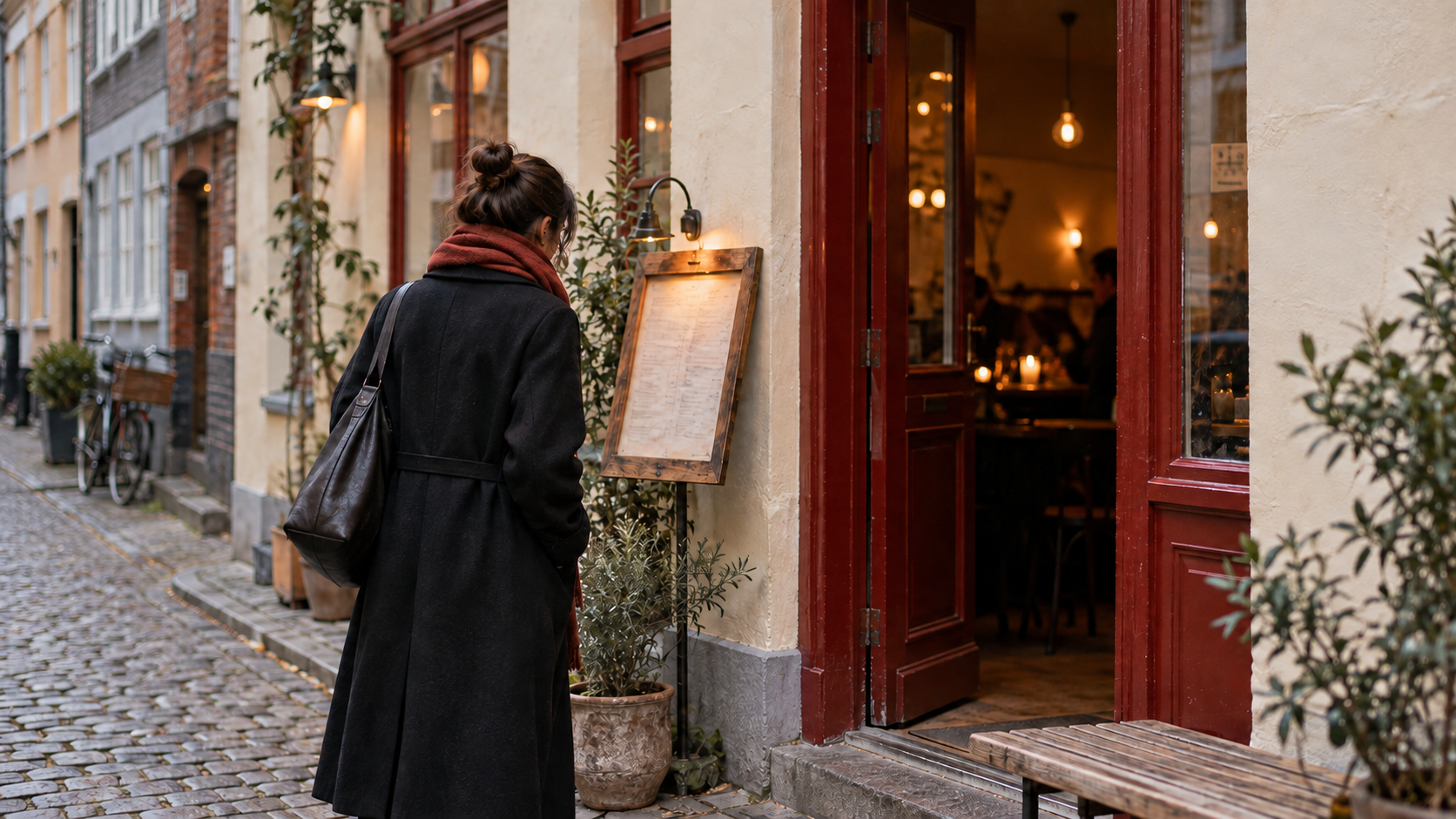
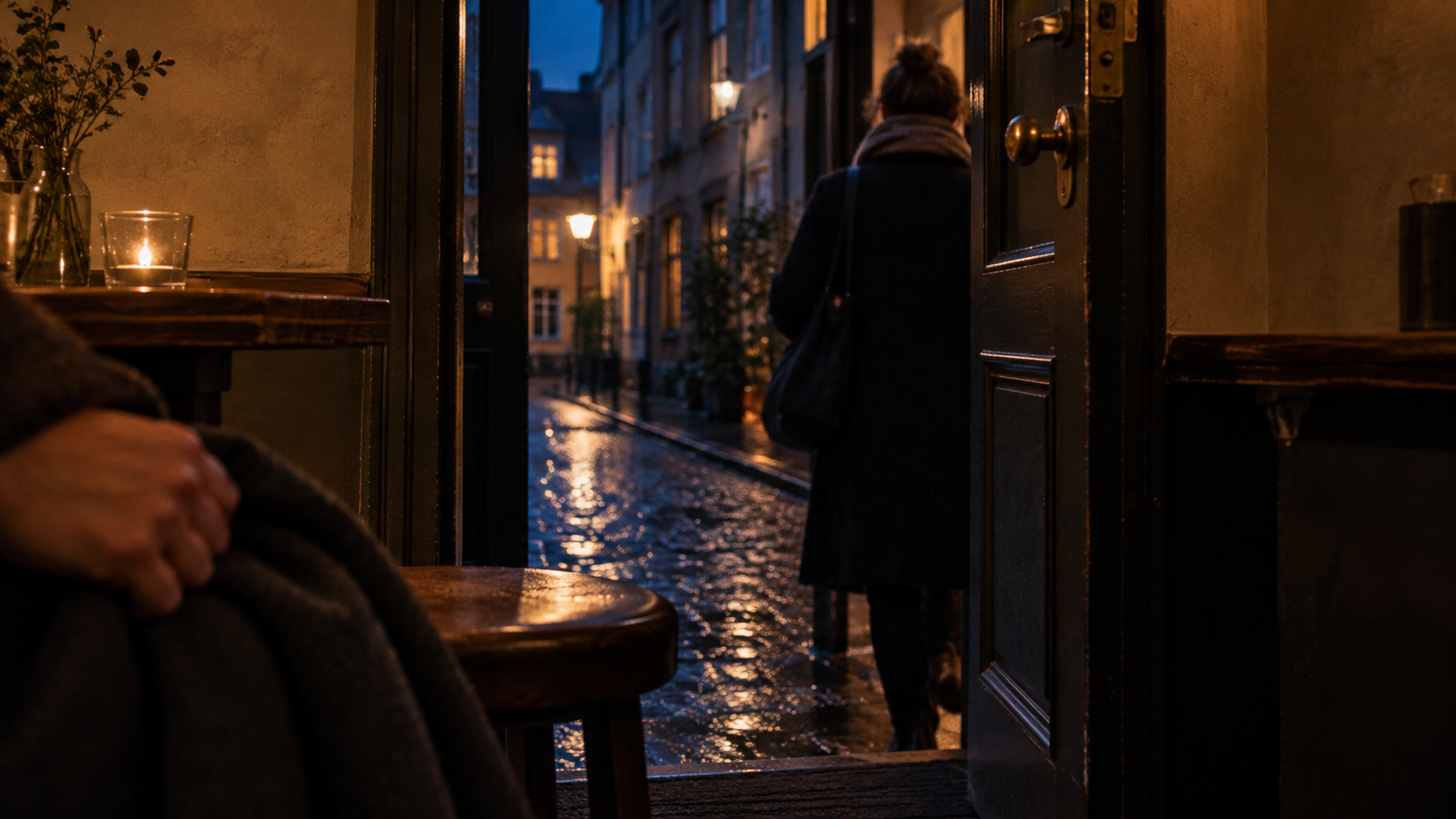
The days are still reasonably long through October, but a shower starts with no warning and lasts twenty minutes, which rewards a room you can duck into over one you booked around a sunset.
Strøget itself, the pedestrian spine running through the middle of this stretch, turns considerably quieter once the tourist coaches thin out for the season, which makes the walk between stops faster than it would be in July.
Where Can You Sit Out an Afternoon Shower in the City Centre?
La Glace, on Skoubogade just off Strøget, has run as a confectionery since 1870, which makes it the oldest in Denmark still serving from its original rooms. A pot of hot chocolate with whipped cream runs 95 DKK, and they will refill it once, alongside a case of cakes meant to be eaten at the table rather than boxed to go.
It opens Monday to Friday 8:30 to 18:00, Saturday 9:00 to 18:00 and Sunday 10:00 to 18:00, hours long enough to cover a full wet afternoon without watching the clock.
The rooms themselves are part of the draw. La Glace has not moved and has not modernised past recognition, so the marble tables and the original counters are doing the same job they did for the confectionery's first customers in 1870.
Sankt Peders Bageri, a short walk into the Latin Quarter, is Copenhagen's oldest bakery, still baking from the same corner at Sankt Peders Stræde.
Its Wednesday cinnamon roll, the onsdagssnegl, sells about 4,000 copies that day alone.
Which Nørrebro and Vesterbro Rooms Hold a Full Kitchen for a Wet Night?
BRUS, on Guldbergsgade in a former iron foundry, keeps more than twenty craft beers and kegged cocktails on tap, many of them brewed by the group itself, alongside a kitchen doing burgers and fermented fries.
The room itself was built for staying rather than passing through, open Sunday to Thursday from midday to midnight and Friday and Saturday to 02:00.
BRUS is part of the To Øl brewing group. Its tap selection turns over on the brewery's own release calendar rather than staying fixed month to month, and the two locals who founded To Øl learned to brew at school, as apprentices of the teacher who later became Mikkeller.
Bang og Jensen, on Istedgade in Vesterbro, runs from breakfast through to cocktails in one long stretch, Monday to Friday 8:00 to 02:00, Saturday 10:00 to 02:00 and Sunday 10:00 until midnight.
A rainy morning that turns into a dry evening never has to mean changing venues, since the same room and the same staff carry the day from coffee to a cocktail.
What Do You Get From a Communal Table Instead of a Private One?
Folkehuset Absalon occupies the former Absalon Church on Sønder Boulevard, which is where it takes its name.
Most evenings it runs a queue-up, pay-a-small-amount communal dinner served on shared dishes down long tables rather than individual plates, a format built specifically for showing up without a reservation.
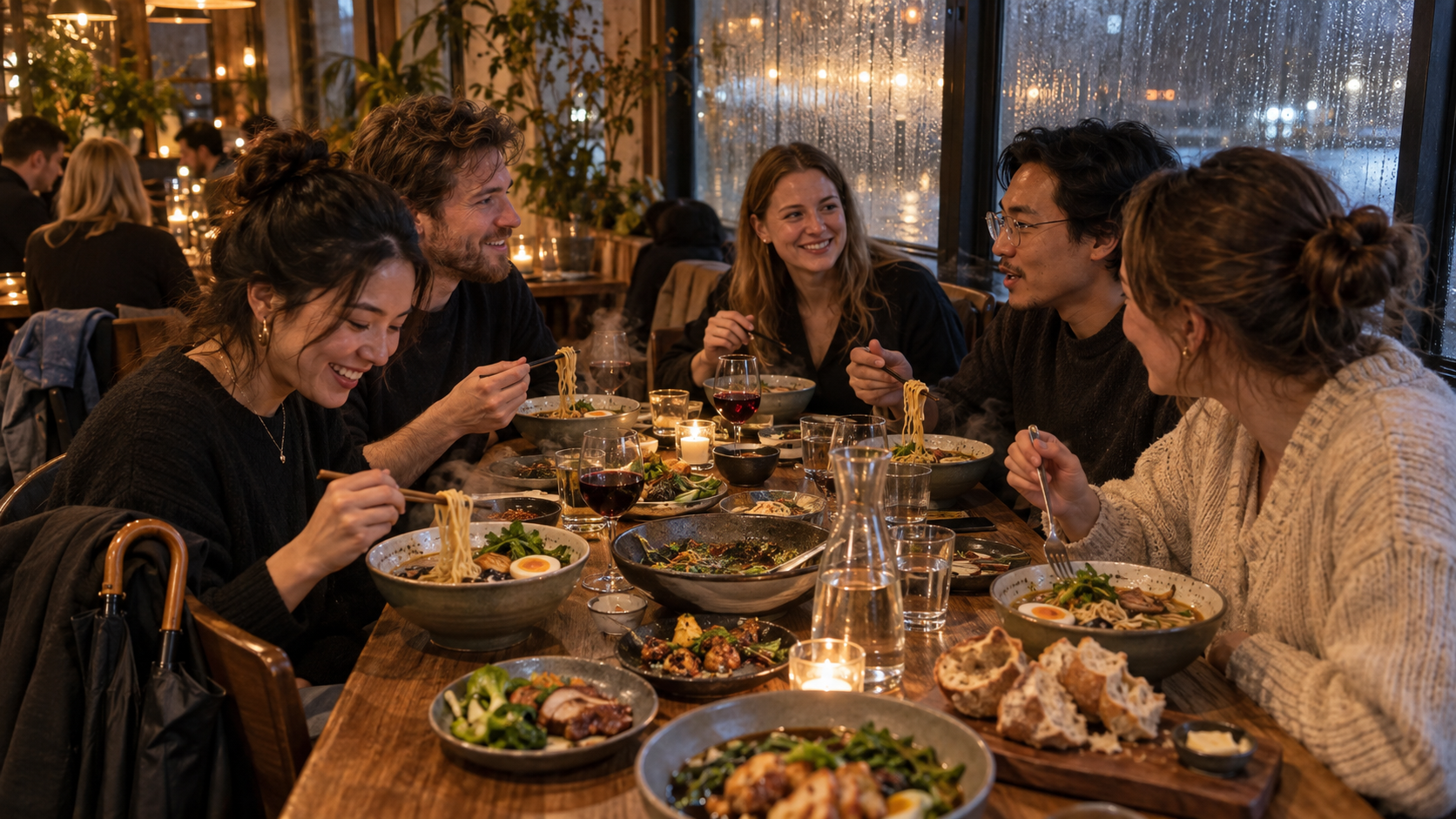
A wet evening is, if anything, the argument for it: the room seats 180 at those tables and runs on the kind of shared warmth that a rain-empty street outside makes feel earned rather than forced.
Where Does Copenhagen's Old Meatpacking District Fit a Wet Evening?
Kødbyen, the meatpacking district that surrounds Kødbyens Fiskebar, only became a dining destination once the actual meat trade moved out in the 2000s, leaving a set of white-tiled halls that restaurants and galleries then took over largely unchanged.
Kødbyens Fiskebar sits inside the white-tiled halls of the old meat market in Kødbyen, under a concrete bull carved by Einar Utzon-Frank in 1933 that still hangs above the door.
The kitchen runs oysters, scallops, blue mussels and a rotating list of Nordic fish, serving lunch Friday to Sunday from 11:30 and dinner every day from 17:30 until 23:00, so the room covers a full dinner any night and a rained-out lunch at the end of the week.
The white-tiled walls and cavernous ceiling once handled a very different kind of trade, and the room has kept enough of that scale that a wet Tuesday never feels like eating in an empty restaurant.
Which Rooms Serve a Proper Sit-Down Meal Whatever the Weather Does?
Seaside Toldboden puts seven independent kitchens under one customs-house roof down by Nordre Toldbod: pasta from Nonna Regina and meat over fire at Patagonia Grill, among five more chef-run kitchens under the same roof. A table there is the one booking that survives a group who cannot agree, and the whole thing is indoors, which on this stretch of the year is the point.
Jah Izakaya on Gasværksvej runs karaage, gyoza, agedashi tofu and gyukatsu with sake by the glass from 60 DKK, Sunday to Thursday from 17:30 to midnight and to 01:00 at the weekend. Last food order is 22:00 every day, which is the detail that catches people out.
Propaganda on Vester Farimagsgade is a Korean kitchen: fried chicken at 175 or 300 DKK, grilled beef ribs at 170, and a haddock wonton at 155.
Goldfinch sits in a backyard behind Esmee off Kongens Nytorv, Cantonese, with turntables built into the tables: char siu bao, scallop toast, dan dan noodles, half a roasted Danish duck. The full menu runs to 22:00, and to 23:00 on Friday and Saturday, while the room stays open past midnight, so a wet evening can go long without anyone moving.
Akaton in Østerbro does one thing, a tonkatsu set at 275 DKK: breaded pork cutlet with rice, miso soup, shredded cabbage and pickles.
SURT in Carlsberg Byen bakes sourdough pizza, 165 to 265 DKK, and runs midday to 21:30 every day of the week, which is the most reliable set of hours on this list.
Where Does a Wet Evening End With a Glass Rather Than a Plate?
Ved Stranden 10 keeps no wine list at all and takes no reservations: the room talks, tastes and finds the bottle. It has poured natural wine across the canal from Christiansborg since 2009, and cheese, charcuterie and a croque monsieur is the whole food offer, closed on Sundays.
Den Vandrette on Havnegade sorts its list by style rather than by country, fizzy through orange to oxidative, and builds small plates for sharing beside it. The kitchen stops at 21:30 on weeknights and 22:00 at the weekend, half an hour before the room on weeknights and two hours before at the weekend.
How Do the Two Slurp Rooms Handle an Unpredictable Forecast?
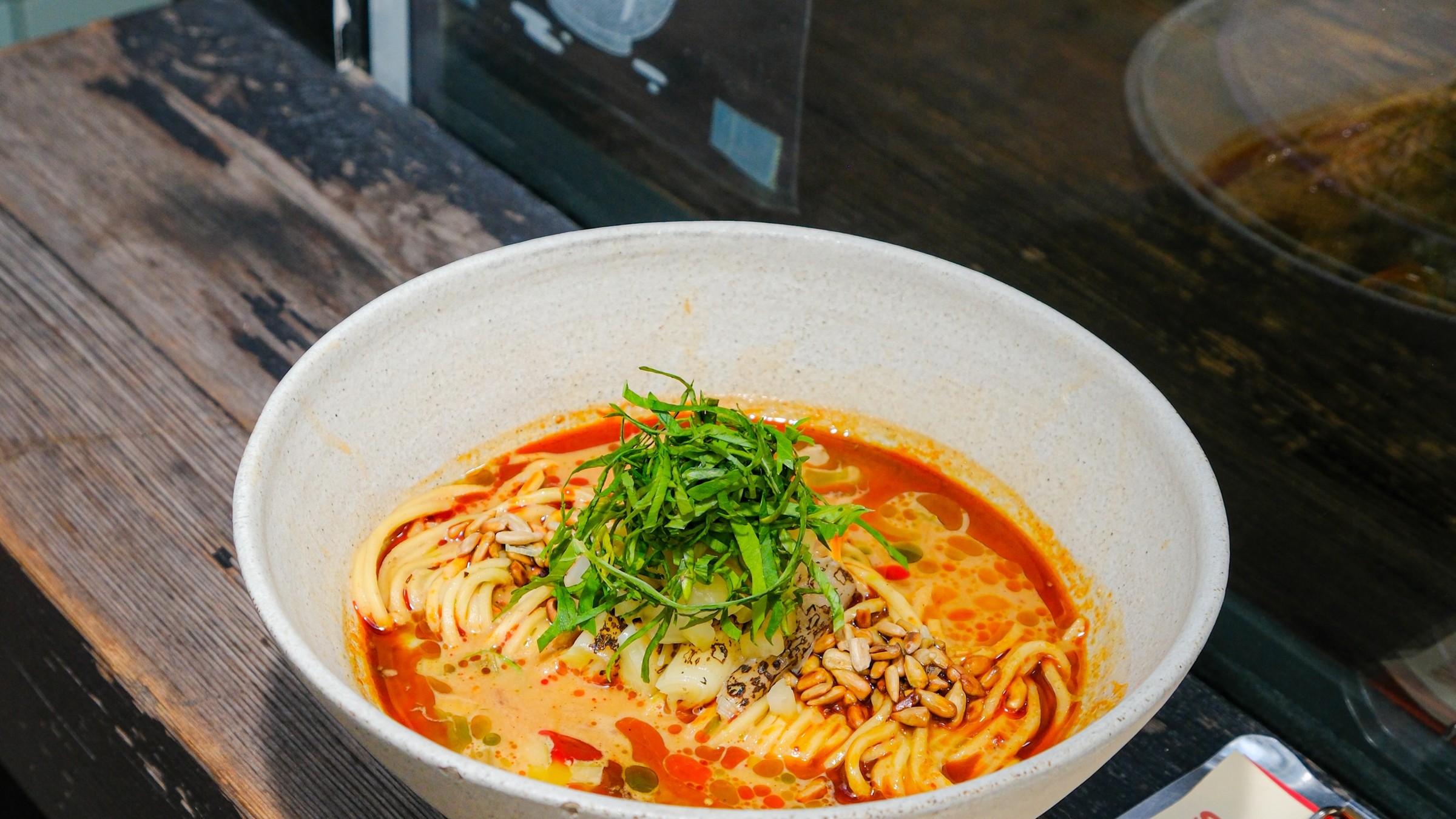
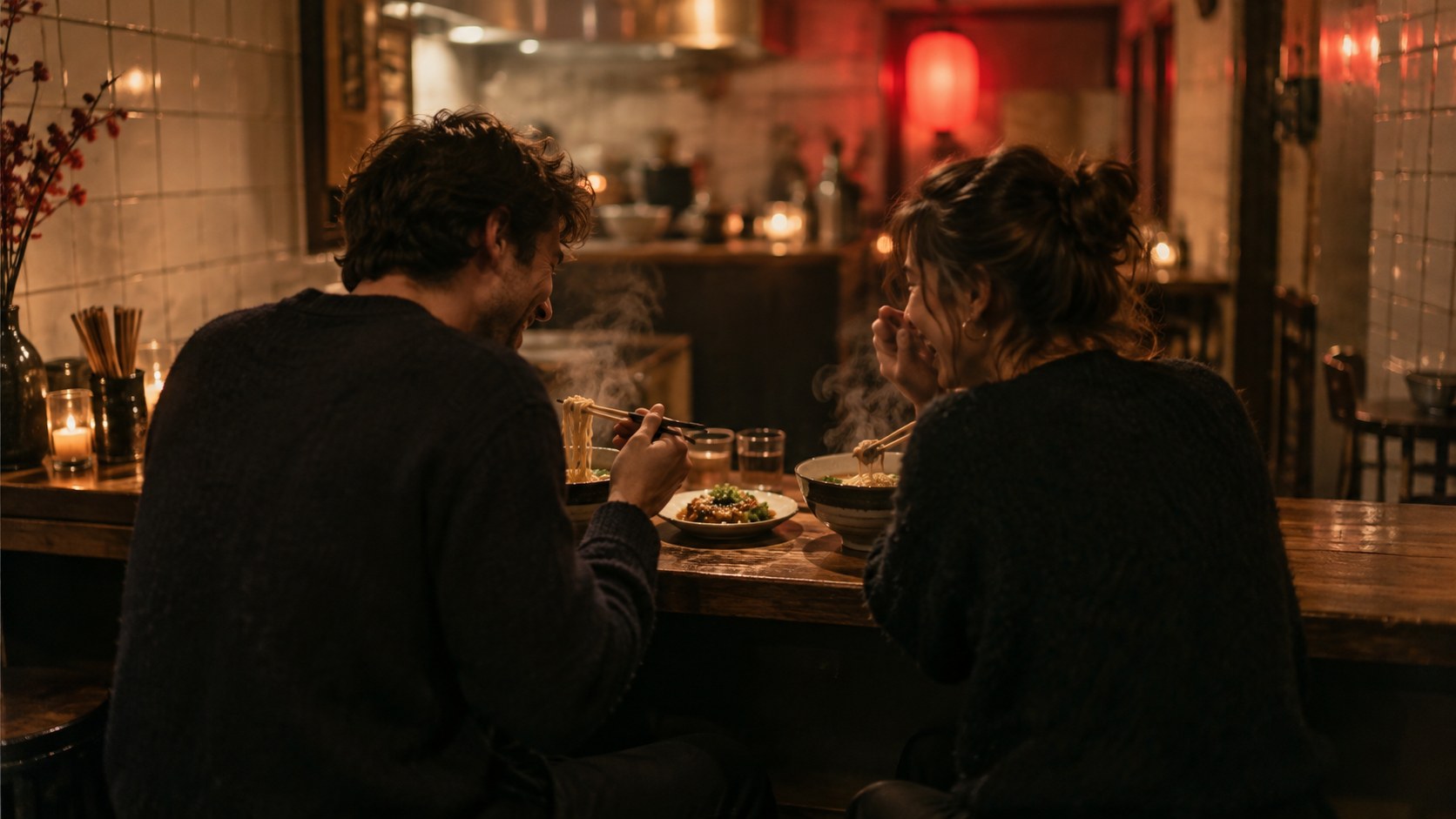
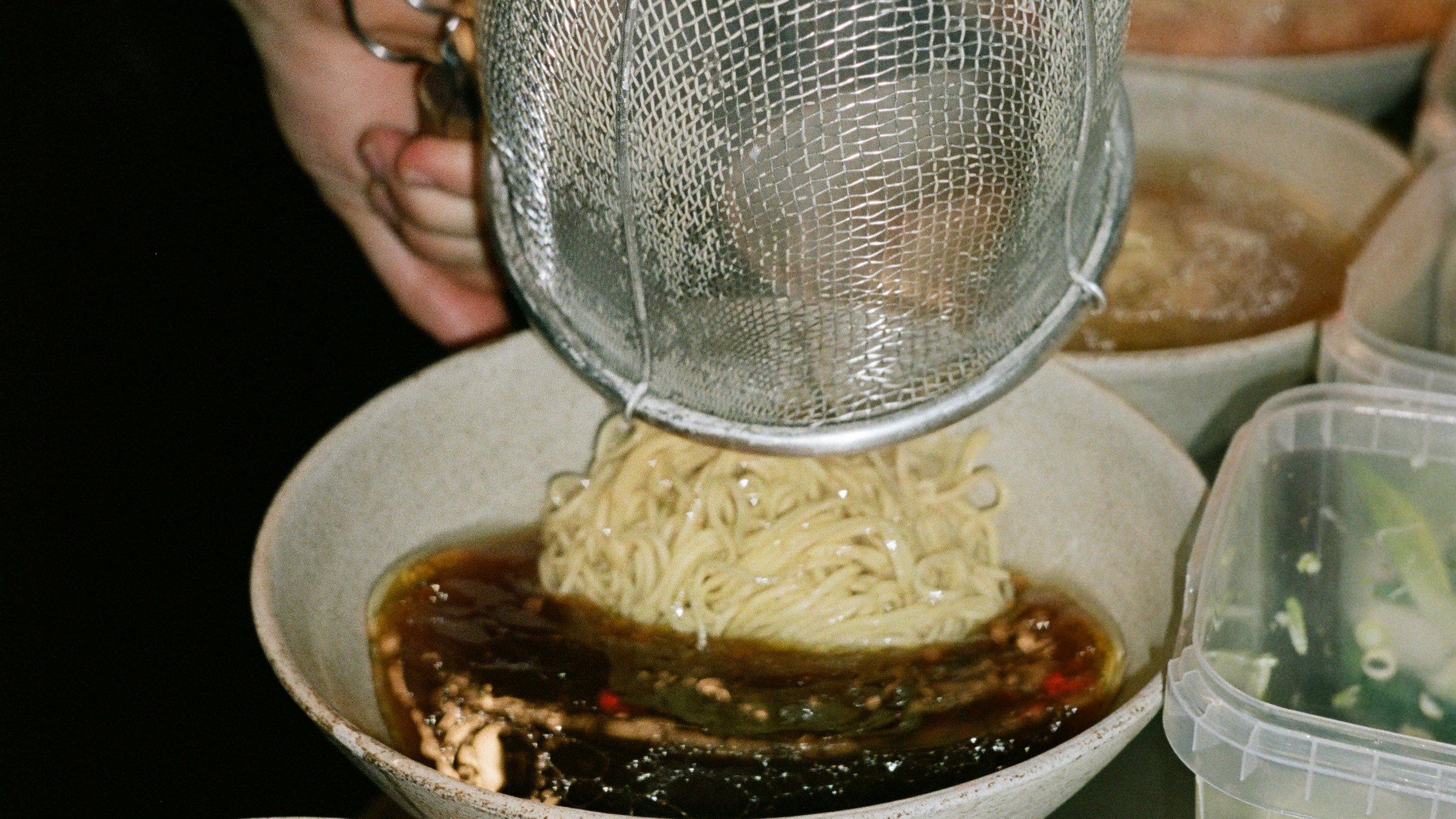
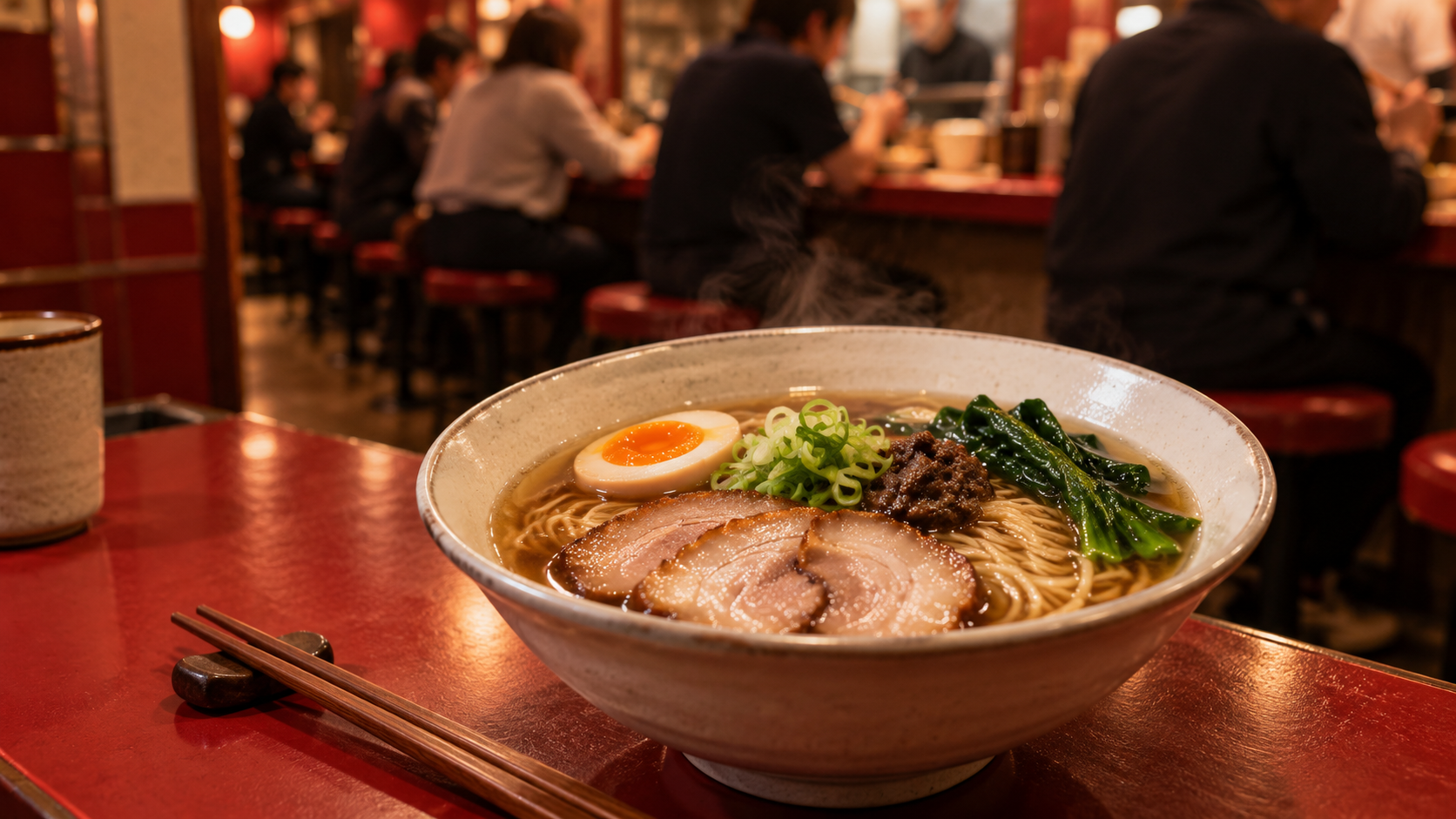
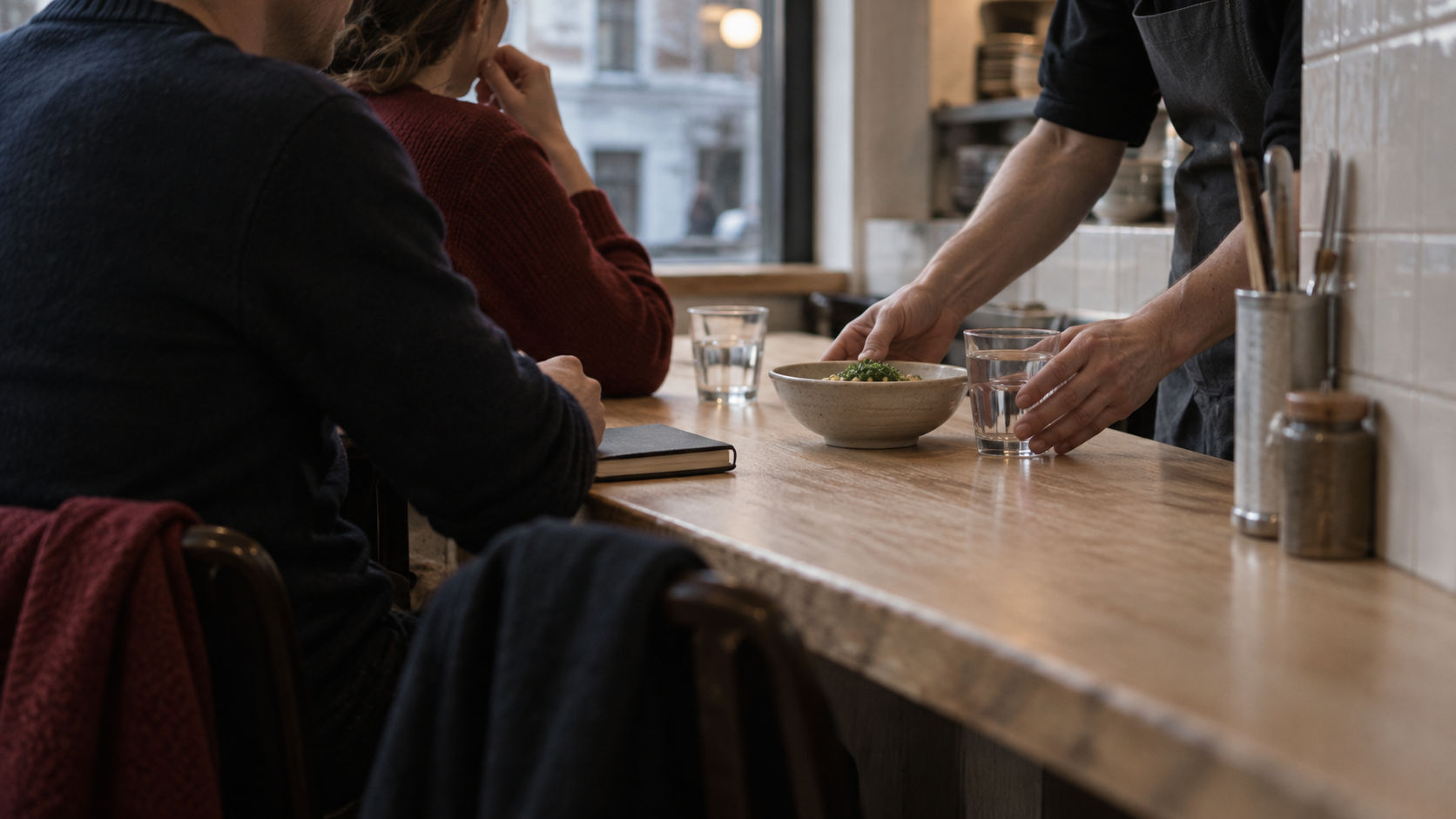
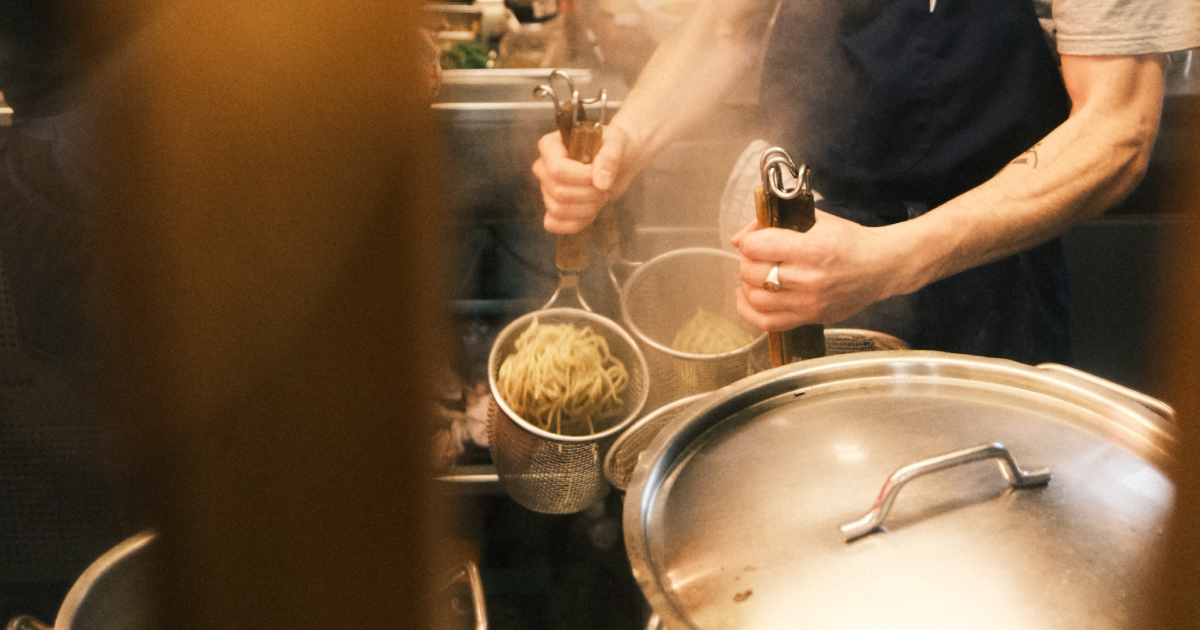
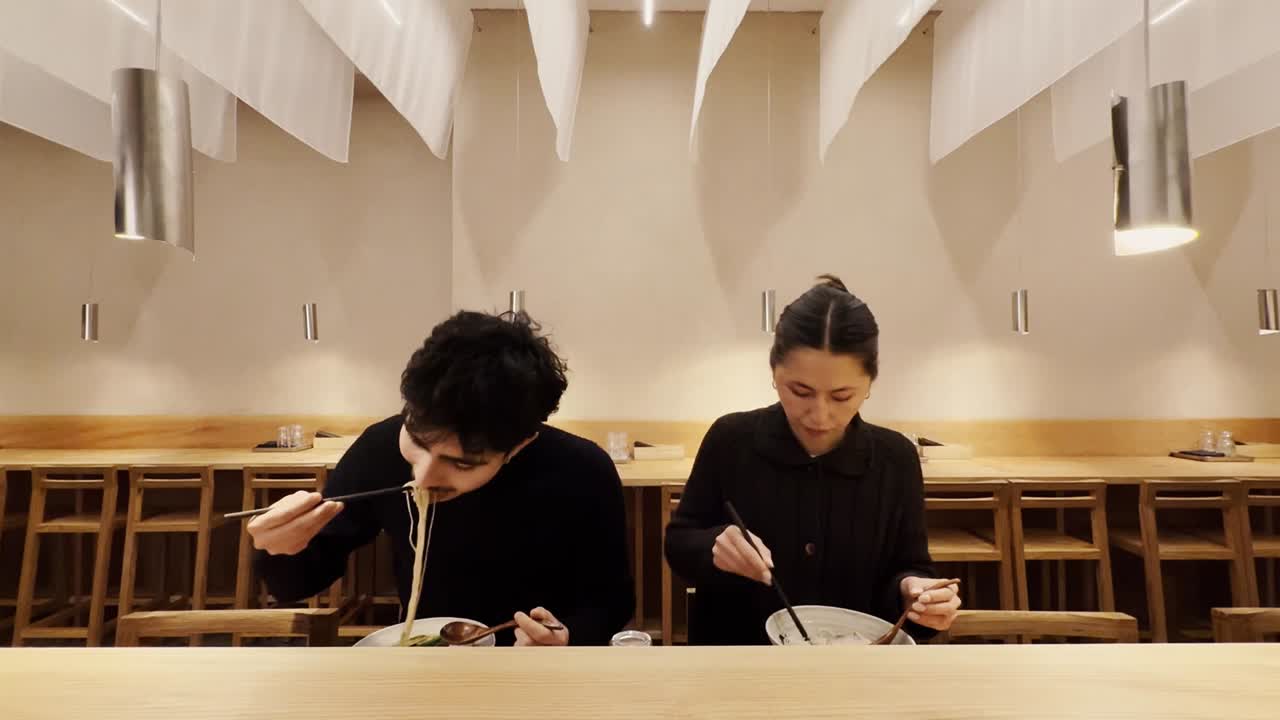
A bowl of ramen is close to the ideal wet-afternoon meal, which is most of why we do nothing else. Founder Philipp Inreiter opened the first Slurp counter on Nansensgade in 2017, having cooked previously at Noma, at Relæ, and at RyuGin in Tokyo, and the broth still holds a burner from before opening until close. Every noodle is cut in-house that same morning, made from Øland wheat milled on Bornholm, and the whole thing arrives hot enough to be worth walking through rain for. Bowls run 175 to 195 DKK.
We change the topping list with the season rather than running one fixed bowl all year, so an October visit to either Slurp room means whatever is in rotation now, not a summer menu working through its stock.
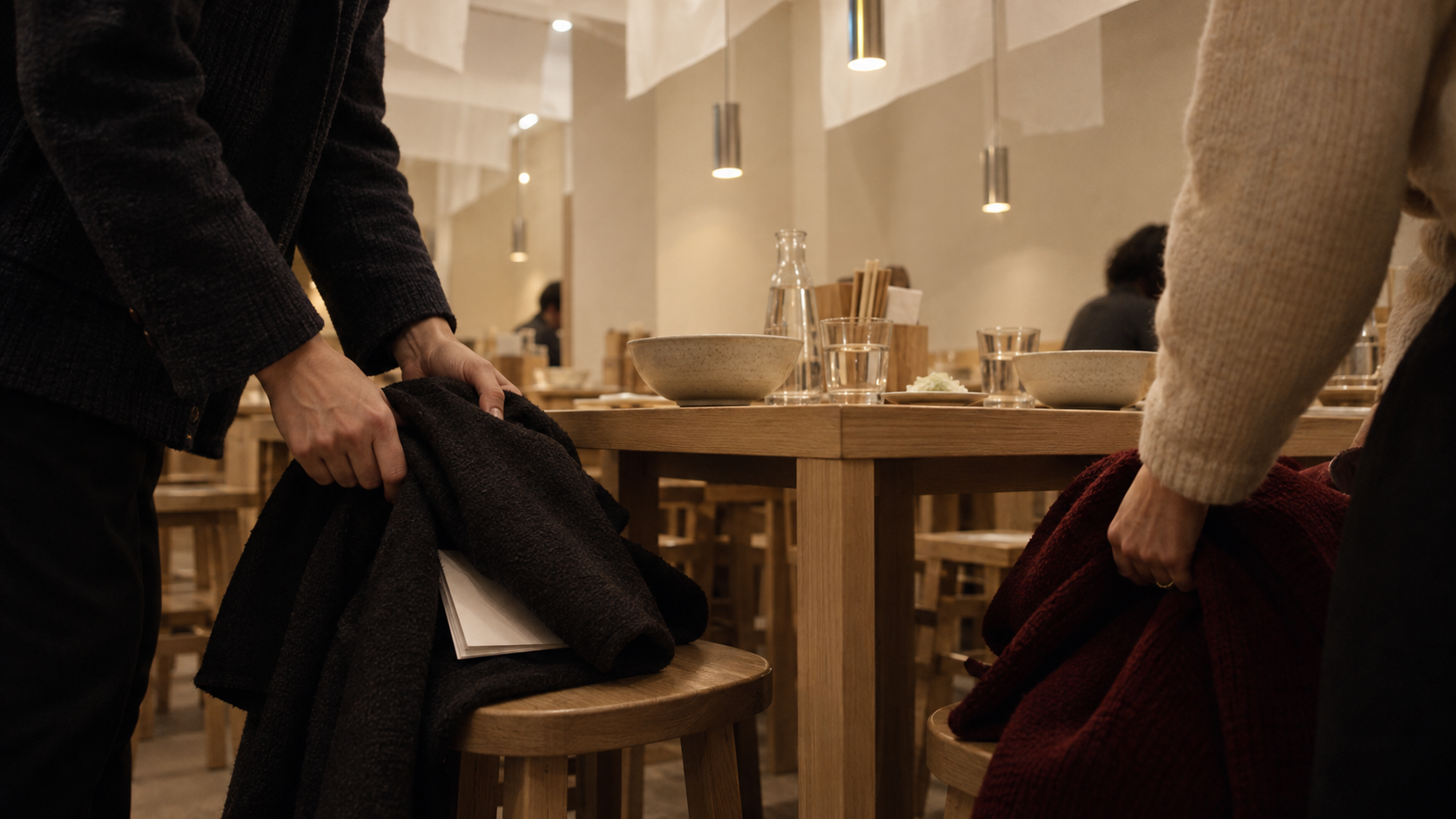
Neither Slurp Nansensgade nor the 36-seat Slurp Borgergade takes a booking, which is the point in a week like this one: a plan that might change with the sky costs nothing to change.
15 Weather-Proof Rooms in Copenhagen, Compared
The table below runs in the order the venues appear above, and is not a ranking.
| Venue | Area | Best for | What it actually serves | Price band |
|---|---|---|---|---|
| La Glace | Indre By | A long, dry afternoon | Cakes and hot chocolate since 1870 | Budget to mid |
| Sankt Peders Bageri | Latin Quarter | A quick, warm stop | Bread and pastries, Copenhagen's oldest bakery | Budget |
| BRUS | Nørrebro | A full wet evening | Own-brewed beer, burgers and fermented fries | Mid |
| Bang og Jensen | Vesterbro | Breakfast through to night | All-day cafe and bar menu | Budget to mid |
| Folkehuset Absalon | Vesterbro | A shared, communal room | Set communal dinner, shared dishes | Budget |
| Kødbyens Fiskebar | Kødbyen | A proper sit-down seafood dinner | Nordic seafood, oysters, mussels | Mid to high |
| Seaside Toldboden | Nordre Toldbod | A group that cannot agree | Seven kitchens, pasta and fire-grill among them | Mid |
| Jah Izakaya | Vesterbro | A long evening over sake | Karaage, gyoza, agedashi tofu, gyukatsu | Mid |
| Propaganda | Indre By | A quick Korean plate | Korean fried chicken, grilled beef ribs | Mid |
| Goldfinch | Indre By | A late, warm room | Cantonese: char siu bao, dan dan noodles, duck | Mid to high |
| Akaton | Østerbro | One dish, done properly | Tonkatsu set with rice, miso and pickles | Mid |
| SURT | Carlsberg Byen | The most reliable hours here | Sourdough pizza | Mid |
| Ved Stranden 10 | Indre By | Ending on a glass, no booking | Cheese, charcuterie, croque monsieur | Mid |
| Den Vandrette | Havnegade | Small plates beside the wine | Sharing plates, natural wine by style | Mid |
| Slurp, Nansensgade and Borgergade | Indre By | A fast, hot, no-plan meal | Ramen, à la carte | Budget to mid |
What Should You Actually Pack for This Stretch of the Year?
The temptation in late September is to dress for the temperature on the app rather than the wind coming off the harbour, which reads several degrees colder than the number suggests once you are actually outside.
A proper umbrella earns its place more in October and November than in December, when the wind tends to make it useless anyway. Layering matters more than a heavy coat, since a warm room like BRUS or Kødbyens Fiskebar can run considerably hotter than the pavement outside.
None of the 15 rooms on this list needs a reservation locked in a week ahead except Kødbyens Fiskebar at peak dinner hour, so the plan that works is to decide the neighbourhood in the morning and the exact room once the afternoon shows what it is doing.
A day that starts dry and turns wet by four in the afternoon rarely wrecks a plan built around this list. Starting at La Glace or Sankt Peders Bageri costs nothing to abandon if the sun holds, and ending at Slurp, BRUS or Kødbyens Fiskebar costs nothing to commit to once the rain actually arrives.
Sources
- Conditori La Glace, official site
- Visit Copenhagen, Sankt Peders Bageri
- Visit Copenhagen, BRUS
- Bang og Jensen, opening hours
- Visit Copenhagen, Absalon
- Kødbyens Fiskebar, menu and wine
- Danish Architecture Center, Absalon
- Slurp, official site
- Slurp, menu
- Seaside Toldboden, the kitchens
- Jah Izakaya, hours and menu
- Propaganda, menu and prices
- Goldfinch, menu and hours
- Akaton, the tonkatsu set
- SURT, hours and prices
- Ved Stranden 10, the wine policy
- Den Vandrette, hours and list
- Conditori La Glace, menu and hot chocolate price
- Conditori La Glace, opening hours
- Kødbyens Fiskebar, 10 year anniversary
- Propaganda, location
- Ved Stranden 10, official site
- SURT, need to know and hours
- Tapperiet BRUS, about
Frequently Asked Questions
La Glace and Sankt Peders Bageri both open early enough to cover a lunchtime retreat, and Kødbyens Fiskebar runs a lunch sitting from 11:30, Friday to Sunday. Bang og Jensen runs breakfast through the whole day, so a lunch stop there never means waiting for a dinner menu to start.
Kødbyens Fiskebar is worth booking for a Friday or Saturday dinner given how popular the room is, but every other venue on this list runs on walk-in seating. Both Slurp rooms have never taken a reservation at either address.
The communal table format suits a solo visitor well, since everyone queues and sits together regardless of party size. It also runs more than fifty weekly activities beyond dinner, so arriving alone rarely means eating in silence.
Both Slurp rooms serve a short menu fast enough that a full counter rarely means a long wait, which matters when the plan for the rest of the day depends on what the sky does next. A bowl of ramen also runs hot enough to be worth ducking in for on its own terms, not just as shelter.