16 Relaxed Copenhagen Restaurants That Skip the Fine-Dining Rules in 2026
The line between casual and serious in this city has nothing to do with the shopping list and everything to do with who decides the order of the plates, which is why a 275 kroner set meal can out-cook a tasting menu twice its price.

TL;DR
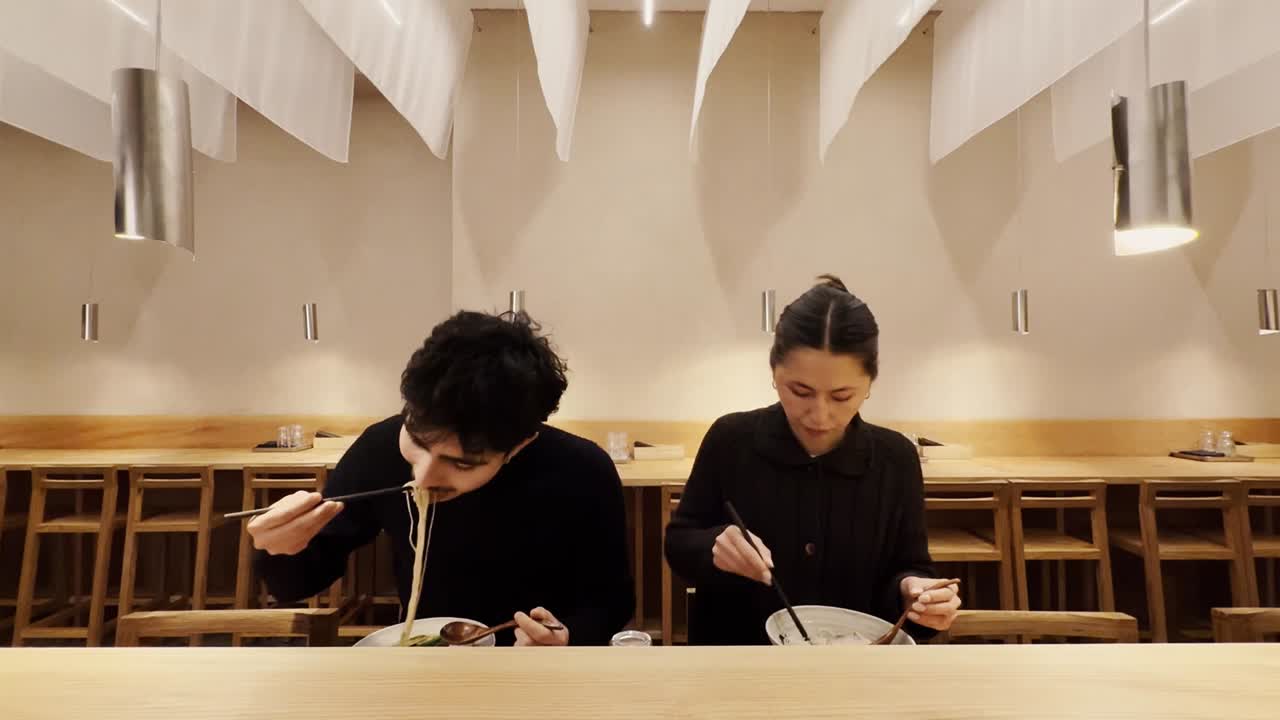
Sixteen kitchens cook seriously without a fixed sequence of courses. SURT fires sourdough pizzas at 165 to 265 around a stone oven, Akaton serves one tonkatsu set at 275, and both Slurp counters pour ramen from 175, rising to 210 for the Borgergade tonkotsu, with nobody taking your name.
Order for the middle of the table at Goldfinch, where char siu bao is 80 and half a roast duck 585, or at Propaganda, where Korean fried chicken is 175 or 300 and beef ribs 170.
Eight of the sixteen take no bookings at all. Kodbyens Fiskebar runs pot-caught langoustine and Limfjorden oysters from a bar you can eat the whole menu at, 11:30 to 14:30 and 17:30 to 23:00 daily.
Updated 2 October 2026
Copenhagen spent fifteen years teaching the world that a restaurant could be a sequence of twenty small events. Then a lot of the cooks who built those sequences went off and opened rooms where you just order what you want.
Those rooms are the interesting part of the city now. The sourcing is the same, the technique is often the same, and the evening is entirely different.
What changes is the direction of control. In a fine-dining room the kitchen decides the shape of the night. In these sixteen, the table does, and the kitchen still cooks as though it mattered.
What Actually Separates Casual From Fine Dining in Copenhagen in 2026?
It is not price, it is not tablecloths, and it is not the quality of the fish.
The real dividing line is the fixed sequence. A tasting menu commits you to two or three hours and a running order somebody else wrote, and everything else about the room follows from that commitment.
Take the sequence away and the rest falls away with it. No booking six weeks out, no dress code, no wondering whether you are allowed to order a second helping of the thing you liked.
The second marker is whether you can get in tonight. A kitchen that plans its covers weeks ahead has to behave differently from one that cooks for whoever walks through the door.
Where Does Serious Technique Show Up Without the Formality?
The clearest examples are rooms where a highly trained kitchen deliberately narrowed its scope.
Slurp is ours too, which makes it an illustration rather than a neutral entry. Philipp Inreiter trained in kitchens that ran fixed sequences, Noma and Relae here and RyuGin in Tokyo, and in 2017 opened a room whose entire menu is one dish repeated.
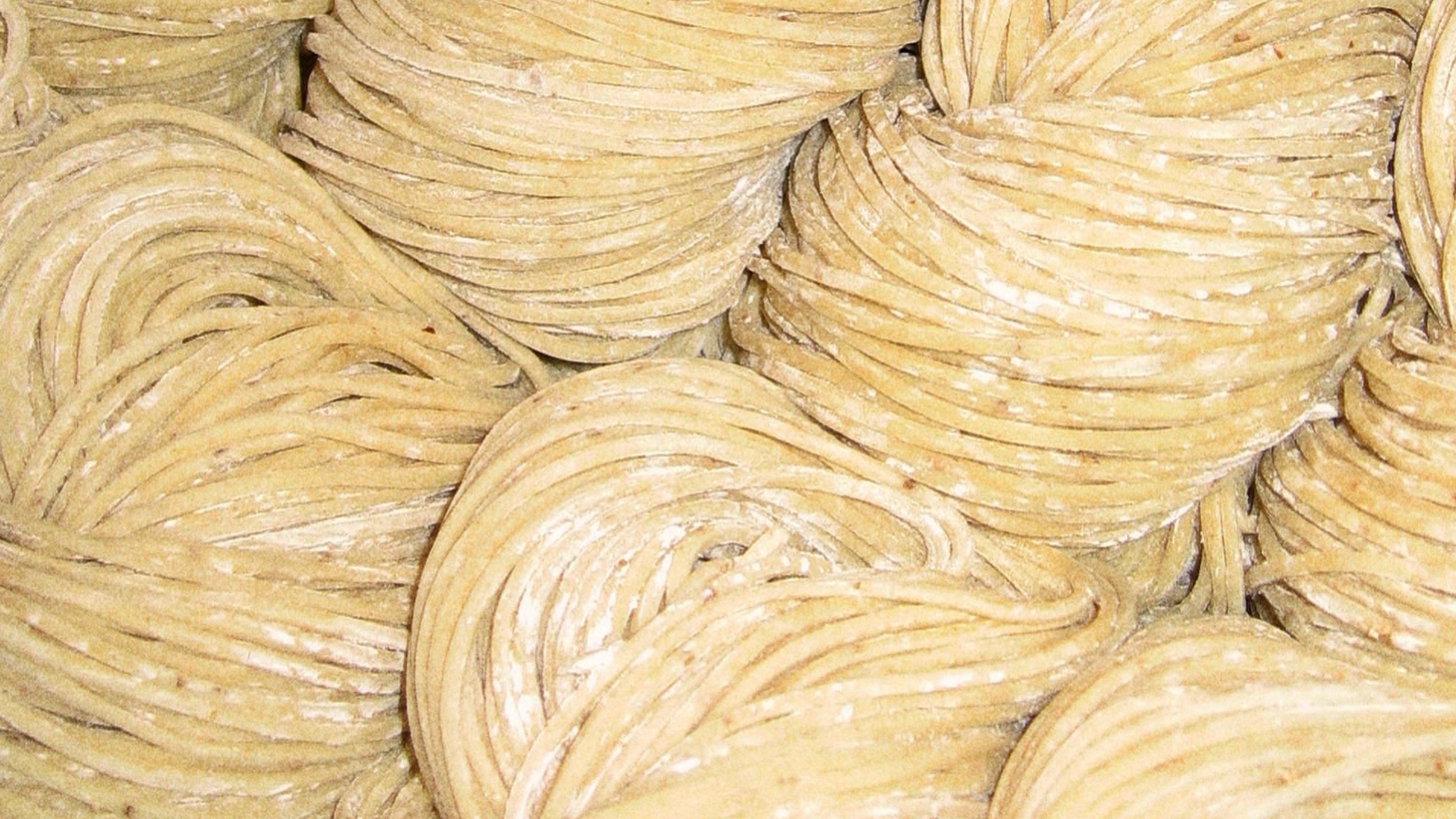
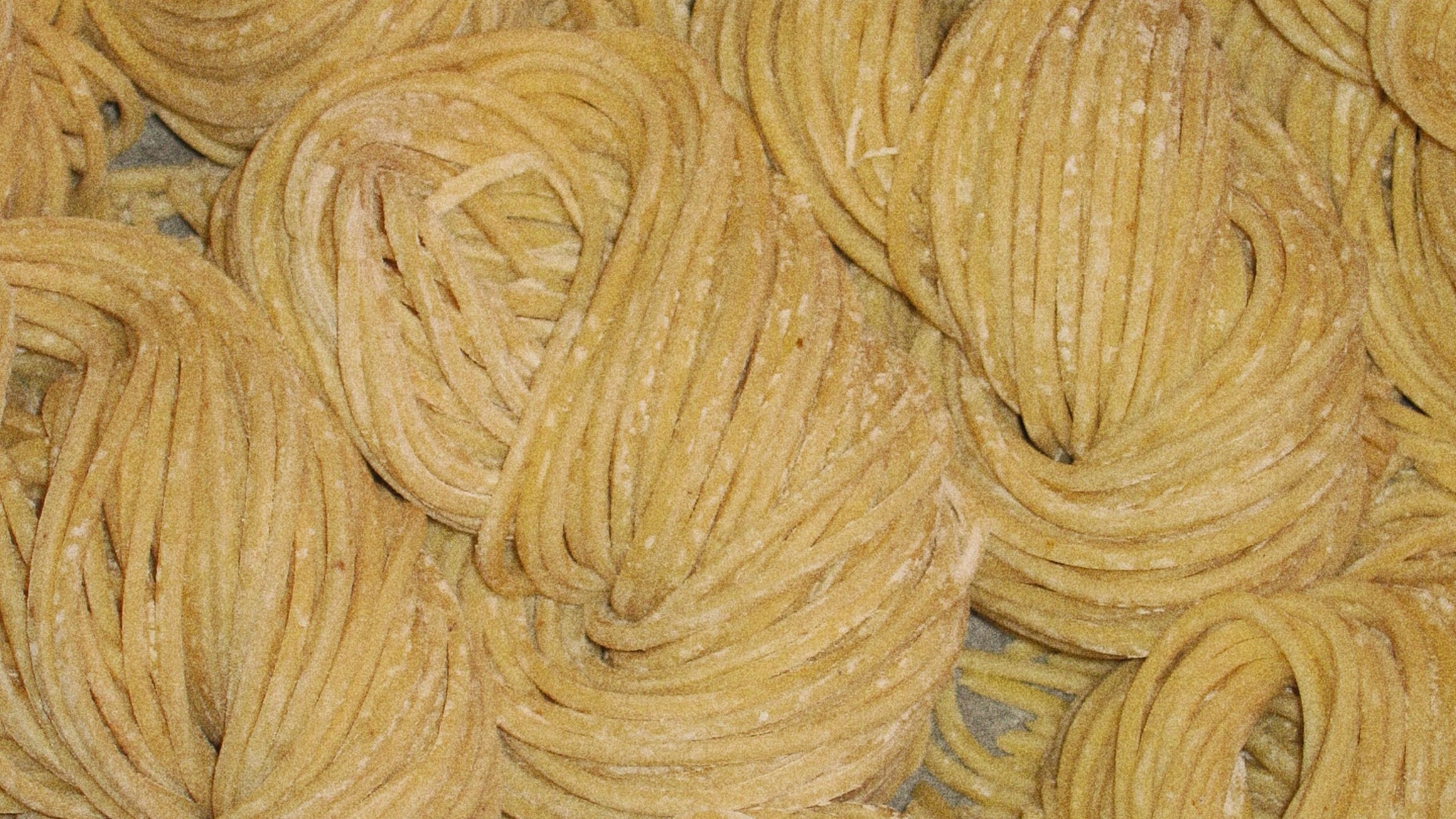
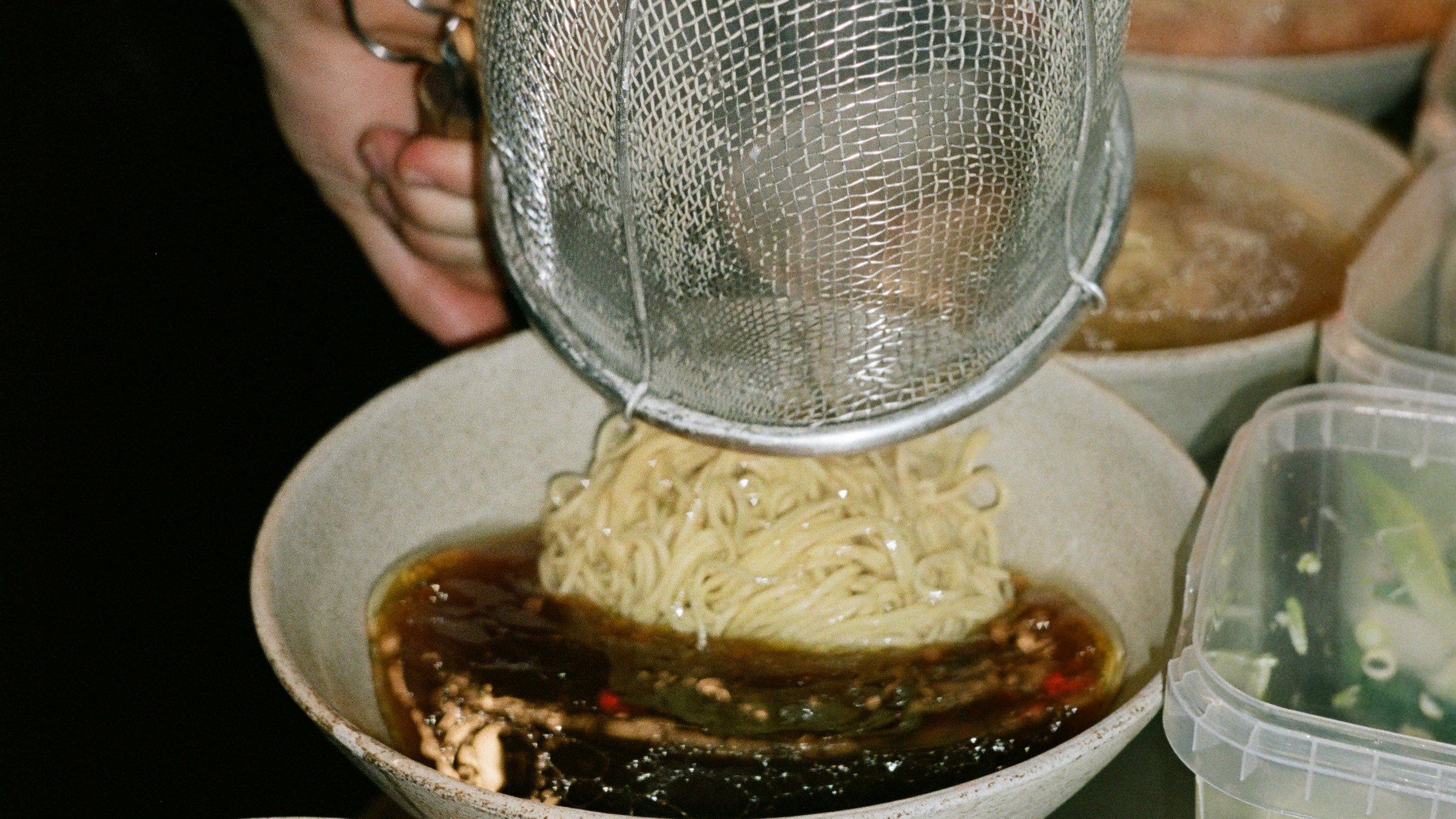
The work moved rather than disappeared. Someone still cuts the noodles behind the bar every morning, from Oland grain milled on Bornholm, and the broth still holds a burner from before opening until close.
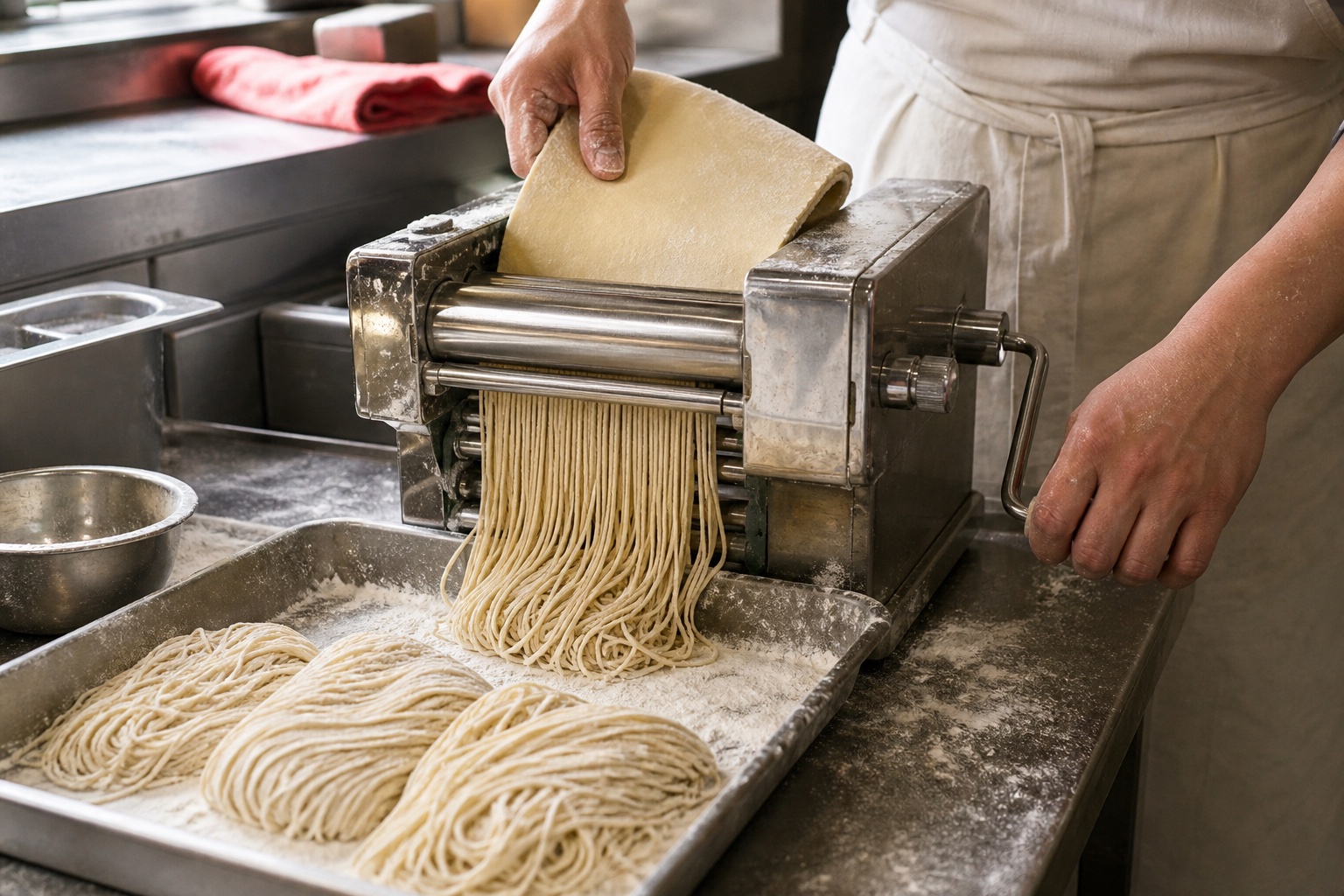
That is a fine-dining curriculum aimed at a single bowl, which is exactly the trade this article is about. You get the training without the sequence.
Akaton in Osterbro does the same thing with pork. One tonkatsu teishoku at 275 kroner, breaded and fried, served with rice, miso soup, shredded cabbage and pickles, extra servings on request, and walk-ins welcome.
Akaton is owned by Mads Battefeld and Tobias Isaksen, and Battefeld also builds Edomae nigiri at the booked Sushi Anaba counter, so the same people run both ends of this argument.
Where Do Wood, Fire and Sourdough Do the Work?
SURT put 50 seats into an old building called Lauras hus in Carlsberg Byen and built a stone oven on the spot. The oven is the middle of the room and the menu is the length of a postcard.
Pizzas made on sourdough with ancient grain varieties run 165 for a marinara to 265 for the Hindsholm, which carries buffalo mozzarella, summer leeks, pork sausage, fermented chilli and thirty-month Parmigiano. Hand-cut Danish organic beef tartare with Pantelleria capers and Tokyo turnip is 185.
The kitchen runs 12:00 to 21:30 every day and holds a table for one hour and forty-five minutes. That is the only rule in the building.
Where Does Seafood Skip the White Tablecloth?
Kodbyens Fiskebar cooks from 11:30 to 14:30 and again 17:30 to 23:00 every day of the week, in the old meatpacking district.
The sourcing is the argument. Oysters come from France and from Limfjorden, where Veno Seafood works both the native oyster and the invasive Gigas, and the squid arrives as by-catch from Skagen rather than as a target species.
Langoustines are pot-caught by Swedish and Faroese fishermen, and the sea trout comes from sustainable sea breeding in Smalandshavet. None of that requires a fixed menu to be true.
Which Rooms Are Built for a Table Ordering Together?
Goldfinch, a Cantonese room in Indre By, asks you to share everything, and its prices assume you will. Char siu bao at 80 for two, pork wontons in black vinegar and chilli oil at 130, crispy aubergines at 150 and half a roast Danish duck at 585 with pancakes, limited to a few a day.
Propaganda near Central Station runs a Korean kitchen, with a separate 21-seat dining room called Next Door alongside it. Fried chicken in fermented chilli glaze is 175 or 300, galbi-marinated beef ribs 170, haddock wonton with potato puree and lemongrass 155, and steamed rice 45.
Jah Izakaya is the format itself: a Japanese gastropub of tori no karaage, gyoza and agedashi tofu, with an omakase tasting menu at 495 for anyone who would rather not choose. Ulla Inoue, from a family of Osaka izakaya owners, took on the room when the owners of Omonim retired in 2016.
Absalon Folkehuset works the same idea at the cheapest end. Its communal dinner is largely vegetarian and changes daily, coconut dhal with spinach and almonds one night, new potatoes with aubergine the next, at 75 to 100 kroner for whoever takes a seat.
Two more Japanese rooms belong here for the same reason. Selfish on Elmegade cuts sushi sets from 155 for seven pieces up to a forty-five piece platter built for three or four, and Restaurant Tokyo has served shabu-shabu, a hotpot the table cooks itself, on the first floor above Vesterbrogade since it became Scandinavia's first Japanese restaurant.
16 Relaxed Copenhagen Restaurants in 2026, Compared
Ordered alphabetically.
| Place | Area | What to eat | Price, DKK | Booking |
|---|---|---|---|---|
| Absalon Folkehuset | Vesterbro | Communal dinner, one dish | 75 to 100 | Turn up |
| Akaton | Osterbro | Tonkatsu teishoku set | 275 | Walk-ins welcome |
| Bar Vitrine | Indre By | Indian-leaning small plates, natural wine | Not published | Walk-in only |
| Gasoline Grill | Ten sites | Burgers | Not published | Walk-in only |
| Goldfinch | Indre By | Char siu bao, roast duck, wontons | 65 to 585 | Bookable |
| Hija de Sanchez | Broens and four others | Three tacos, heirloom corn | 115 | Turn up |
| Jah Izakaya | Vesterbro | Karaage, gyoza, agedashi tofu, sake | omakase 495 | Bookable |
| Kodbyens Fiskebar | Kodbyen | Oysters, squid, langoustine | Not published | Bookable, bar walk-ins |
| Omegn og Venner | Torvehallerne | Daily blackboard small plates | From about 100 | Walk-in only |
| Propaganda | Near Central Station | Korean fried chicken, beef ribs | 155 to 300 | Bookable |
| Ramen to Biiru | Norrebro and beyond | Shoyu and miso ramen, Mikkeller beer | Not published | Walk-in only |
| Restaurant Tokyo | Vesterbro | Shabu-shabu, tempura, sashimi | Not published | Bookable |
| Selfish | Norrebro | Sushi sets, 7 to 45 pieces | 155 to 840 | Bookable |
| Slurp Borgergade | Indre By | Ramen, tonkotsu at dinner | 175 to 210 | No reservations |
| Slurp Nansensgade | Indre By | Shoyu and shio ramen | 175 to 195 | No reservations |
| SURT | Carlsberg Byen | Sourdough pizza, beef tartare | 165 to 265 | Bookable |
Where Can You Skip Booking Altogether?
Eight of the sixteen have no booking system to argue with, and Akaton takes walk-ins alongside its bookings.
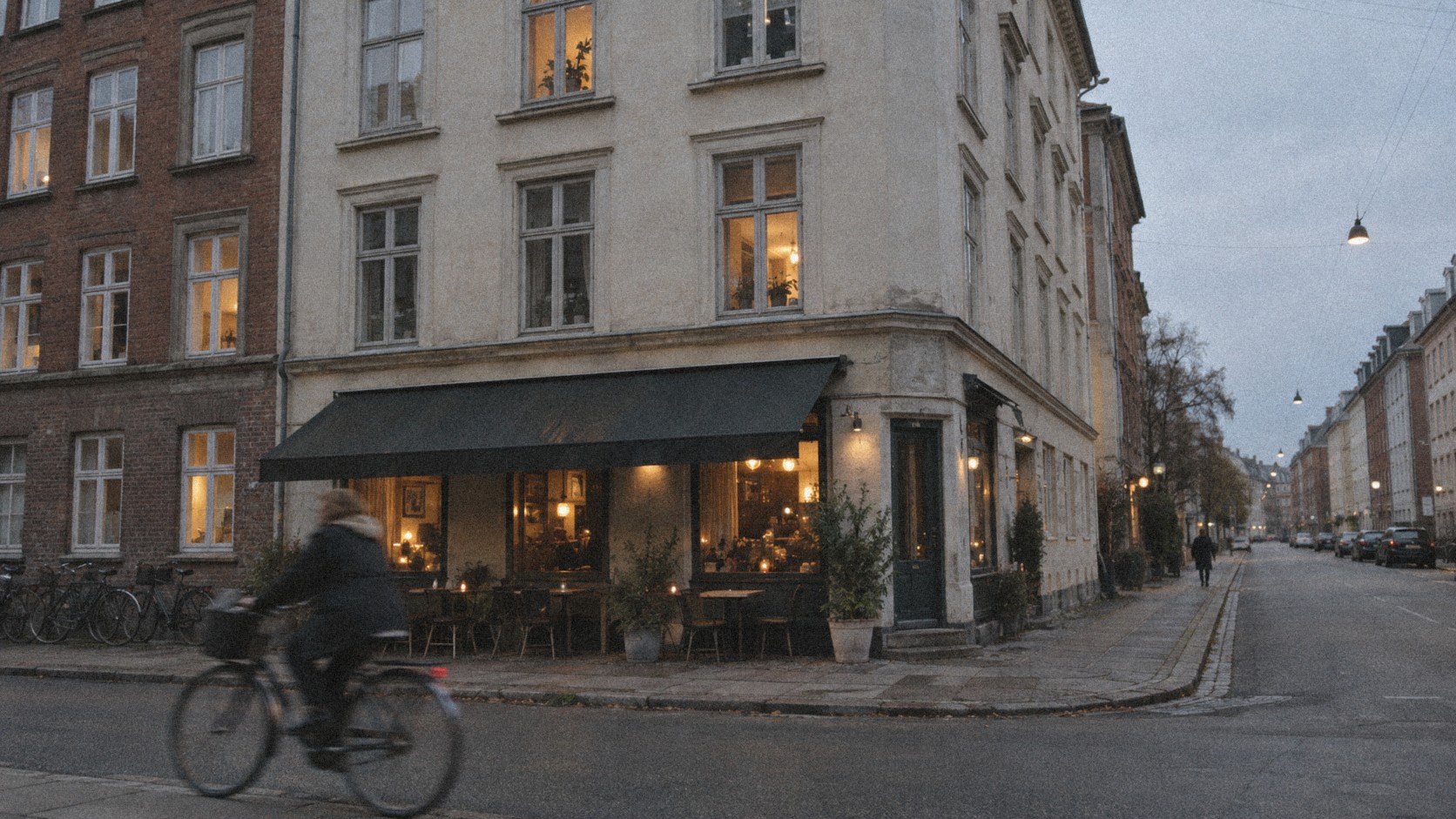
Bar Vitrine on Montergade is walk-in only, a Frama-designed room of glass and timber with bottles racked behind the counter, pouring natural wine alongside Indian-leaning small plates.
Omegn og Venner cooks a daily blackboard of small plates from Danish producers inside Torvehallerne, as a shop and an eating counter at the same time. The hall holds dozens of stalls under two roofs, among them Hija de Sanchez, whose three-taco combo of pork cochinita and beef barbacoa on organic Mexican corn is 115.
Ramen to Biiru started on Griffenfeldsgade and has spread across the city since, pairing shoyu and miso bowls with Mikkeller beer. Both Slurp rooms take no reservations either.
What Do the 2 Slurp Rooms Do Without a Menu Sequence?
Since both Slurp counters are on this list, here is the whole argument in one kitchen.
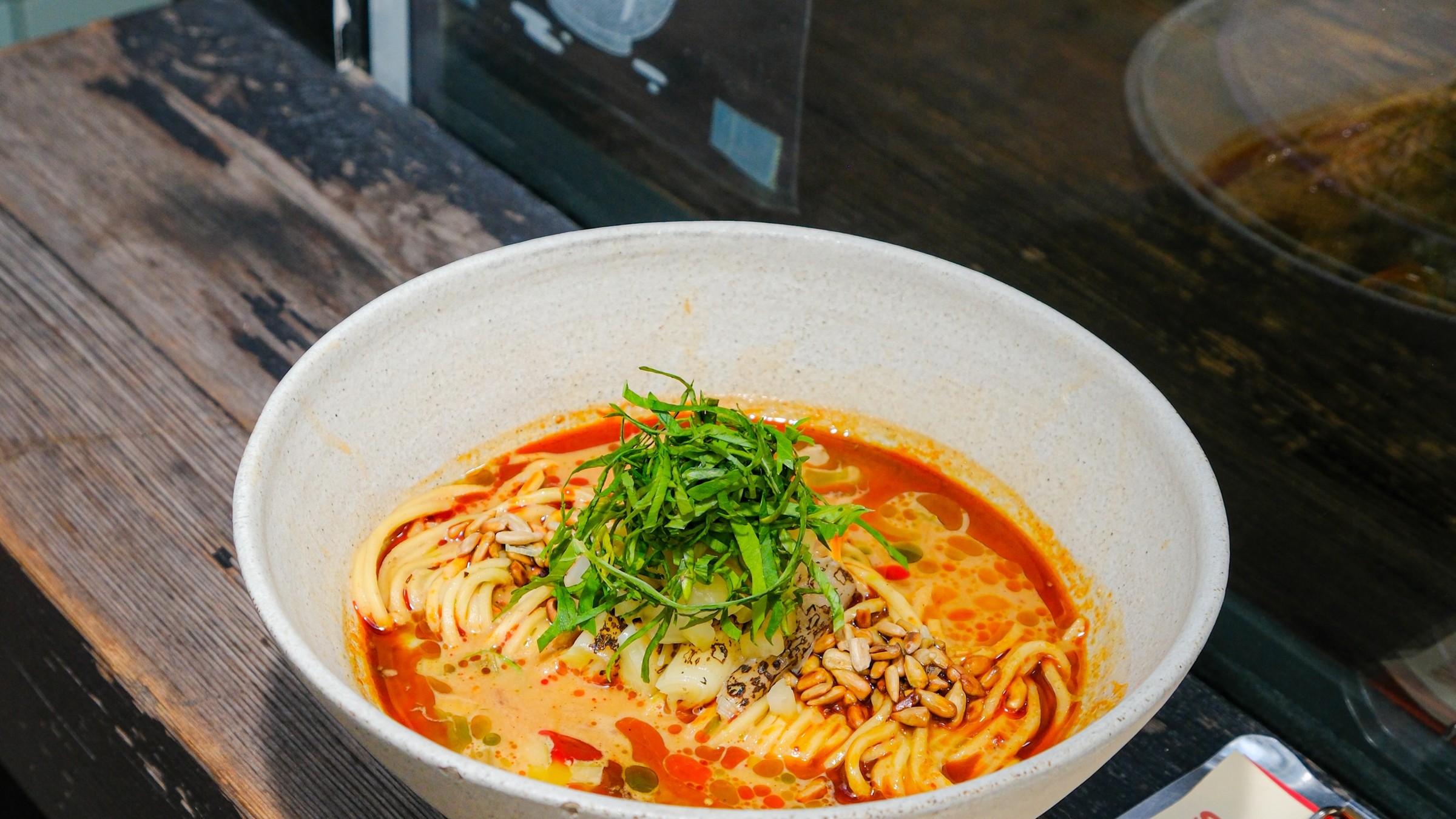
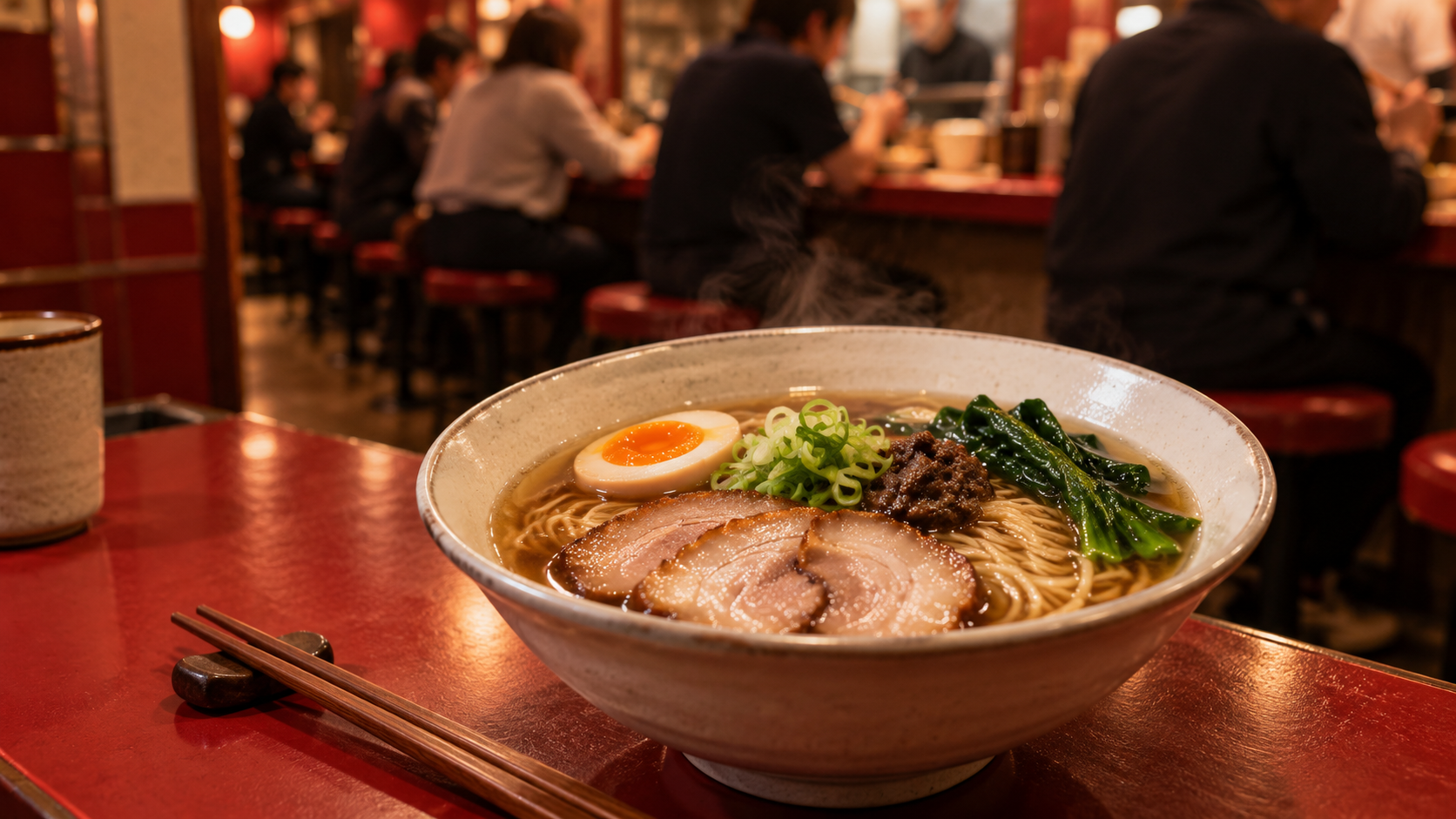
The shoyu at 185 is a chicken broth with pork neck chashu, tamago, spring onions, mushroom paste, chard and garden sorrel, poured with a hojicha pairing. The shio at 185 runs chicken with smoked mackerel and seafood, finished with daikon, red peppercorns, rocket and lemon thyme.
The veggie at 175 is mushroom and celeriac with oyster mushroom and pickled fennel, and can be made vegan. The nduja miso at 195 is a creamy tori paitan with spicy nduja butter, pak choi and burnt onion oil.
The tonkotsu at 210 is dinner only, Slurp Borgergade only, and capped at fifteen portions a day. That is the one piece of scarcity in the building, and it is about the broth rather than the booking sheet.
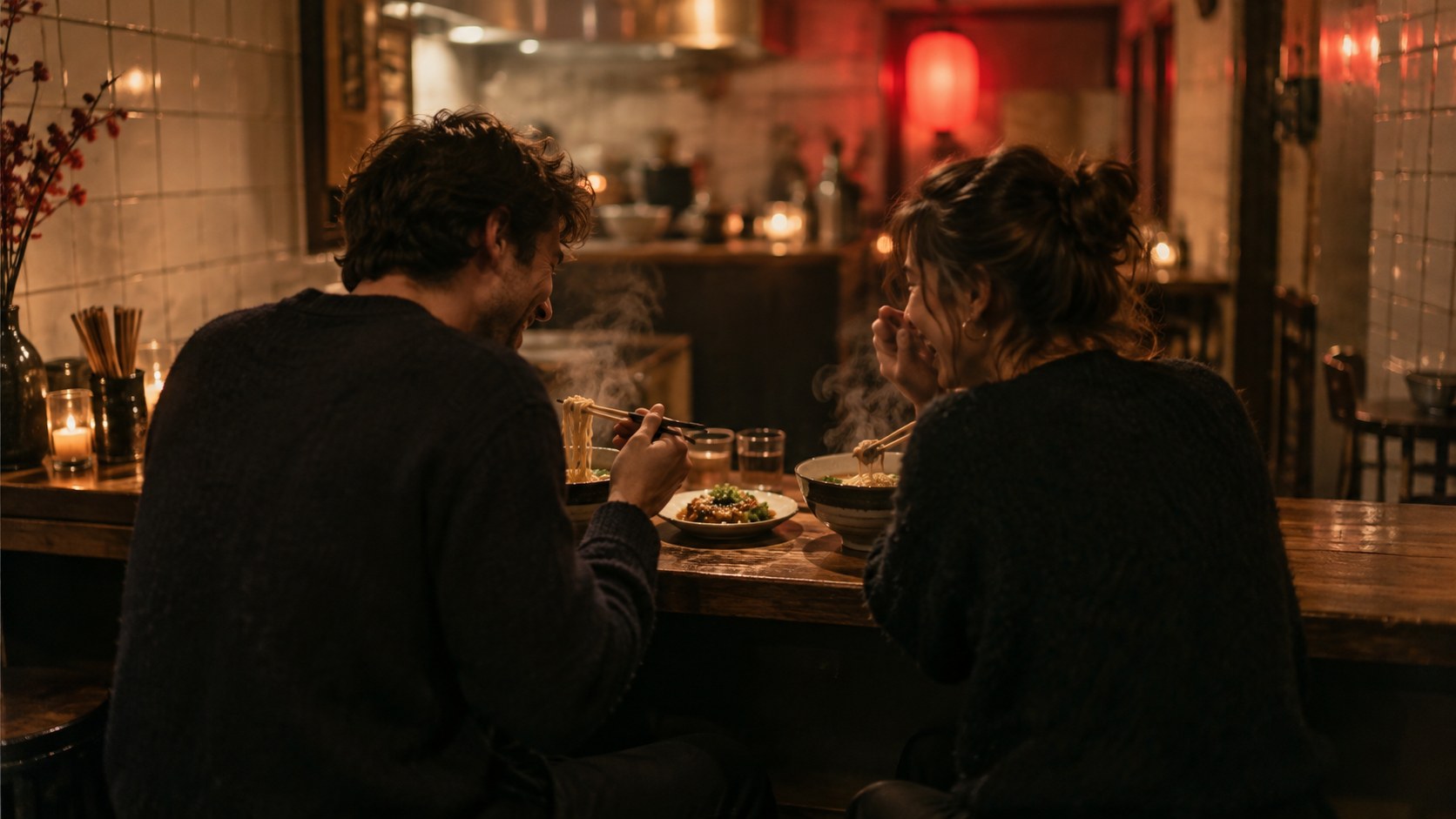
Slurp Nansensgade seats 22 and has no toilets, so it suits a fast bowl rather than a long evening. Slurp Borgergade opened in January 2025 with 36 seats and more room to sit, and both welcome dogs and take nobody's name in advance, which means you turn up and wait or walk on.
Where Does Casual Still Mean a Wait?
Two of these rooms carry a queue worth planning around.
Bar Vitrine on a Friday means standing outside until a counter seat opens. Walk-in counters across the city fill fastest in the middle of the evening, so arrive either side of that and you will wait less.
Gasoline Grill sells until it runs out rather than until closing, which is a different kind of queue: the risk is not the wait, it is arriving after the last burger.
Which of These Work Best for a Vegetarian Table?
Casual rooms tend to do this better than fixed menus, because you are choosing the plates.
The Slurp veggie bowl at 175 is a mushroom and celeriac broth with oyster mushroom, kale, pickled fennel, red onion and lemon thyme, and it can be made vegan.
SURT's zucchini pizza at 225 carries buffalo mozzarella, garlic and fresh mint, and its marinara at 165 has no cheese at all. Propaganda's aubergine katsu with spicy peanut sauce is 140 and its grilled zucchini with rugbrod sauce is 140.
One warning, though. akme offers no vegetarian or vegan menu at all. Casual does not automatically mean flexible.
So How Do You Choose Between These 16?
Start with how much of the evening you want to hand over. If the answer is none of it, take a counter with no booking and one complete dish: ramen, a tonkatsu set, three tacos.
If you want a table to build something together, go where the menu was written for sharing. Goldfinch, Propaganda and Jah Izakaya are all designed around passing plates rather than receiving courses.
And if what you actually wanted was the cooking rather than the ceremony, the encouraging thing about Copenhagen in 2026 is how many kitchens have quietly reached the same conclusion. The technique stayed. The apparatus went.
Sources
- Slurp, current and archive ramen menu with prices
- Slurp, Nansensgade, 22 seats, no reservations
- Slurp, Borgergade, 36 seats, open since January 2025
- Aotori, Akaton tonkatsu teishoku at 275 DKK
- Washoku Guide, Akaton, opened January 2026, walk-ins welcome
- Craving Copenhagen, Sushi Anaba and Mads Battefeld
- Noted Prize, Aotori and Akaton in one building
- SURT, dinner menu and pizza prices
- SURT, hours and table policy
- VisitCopenhagen, SURT, 50 seats and the stone oven
- Kodbyens Fiskebar, kitchen hours and sourcing
- Kodbyens Fiskebar, location and contact
- Goldfinch, sharing menu and prices
- Anders Husa, Goldfinch and Will King Smith
- Propaganda, menu prices
- Propaganda, booking policy
- Jah Izakaya, izakaya format, Ulla Inoue and Omonim
- Cofoco, Japanese restaurants in the group
- The Infatuation, Bar Vitrine, walk-in only
- FRAMA, Bar Vitrine interior project
- TorvehallerneKBH, market stalls
- Mig og Kobenhavn, Omegn og Venner lunch
- Mikkeller, Ramen to Biiru on Griffenfeldsgade
- Yamato, Ramen to Biiru noodle supply
- Selfish, sushi set prices
- Heartbeats, Restaurant Tokyo, Scandinavia's first Japanese restaurant
- Broens Street Food, Hija de Sanchez menu and Rosio Sanchez
- Hija de Sanchez, locations
- Gasoline Grill, sites across the city
- Gasoline Grill, the original Landgreven site
- Absalon Folkehuset, communal dinner pricing
- Absalon Folkehuset, the week's communal dinner menu and ticketing
- akme, menu prices and dietary note
- Kinyobi, set menus and door policy
Frequently Asked Questions
Often yes, because the sourcing is frequently identical. Kodbyens Fiskebar's pot-caught langoustines and SURT's ancient-grain sourdough are the same standard of raw material, served without a fixed sequence.
Eight of them: Absalon Folkehuset, Bar Vitrine, Gasoline Grill, Hija de Sanchez, Omegn og Venner, Ramen to Biiru and both Slurp rooms. Gasoline Grill and Hija de Sanchez have no booking system because they have no tables to hold.
Not at the sixteen here. Kinyobi, which is a different kind of room, does operate a door policy weighing appearance and attitude, so it is the exception worth knowing about.
Goldfinch, because the menu is designed for a table passing dishes, or Propaganda for Korean fried chicken at 300 for the larger portion. Absalon Folkehuset cooks one hot dish for the whole room and works for a group willing to share a long table with strangers.