What a Good Meal Actually Costs in Copenhagen in 2026
Copenhagen is expensive in the way a city is expensive when it has decided that cheap food should still be made properly, and the gap between a 75 kroner supper and a 2,500 kroner one turns out to be about who chooses the order of the plates.

TL;DR
Absalon Folkehuset feeds you a communal dinner for 75 to 100 kroner and Hija de Sanchez does three tacos on heirloom corn for 115. Slurp Nansensgade runs 175 to 195 and Slurp Borgergade up to 210, with a shoyu of pork neck chashu and garden sorrel at 185 in both.
The middle band, roughly 250 to 500, holds Akaton tonkatsu sets at 275, SURT sourdough pizzas at 165 to 265 and the Damindra lunch omakase at 485. Kinyobi runs its Deluxe Omakase at 650 and Admiralgade 26 serves dinner at 675.
The ceiling is akme, 1,300 for the tasting menu and 1,500 for the set menu, with beverage pairings adding 900 and 1,000. Service is included by law, so the number on the menu is the number you pay.
Updated 2 October 2026
Nobody arrives in Copenhagen without a number in their head. Usually it is a bad one, borrowed from a headline about the world's most expensive countries, and it makes people eat worse than they need.
You can eat a genuinely good dinner for 115 kroner and a genuinely good dinner for 2,500 kroner, and neither is a mistake. What changes is not the quality of the sourcing. It is how much of the evening the kitchen has decided in advance.
What Does the Cheapest Good Meal in Copenhagen Cost in 2026?
The floor is lower than visitors expect, and it is no compromise: at the bottom sits what people who live here eat on weekdays.
Absalon Folkehuset in Vesterbro serves a communal dinner at 75 kroner from Sunday to Wednesday and 100 kroner from Thursday to Saturday, at long shared tables in a converted church. The kitchen is largely vegetarian and changes daily, running to coconut dhal with spinach and almonds, or new potatoes with aubergine.
A step up, Hija de Sanchez charges 115 kroner for three tacos, pork cochinita, beef barbacoa and a seasonal vegetable, on organic corn from small Mexican producers, with heirloom-corn chips and salsa at 55. Rosio Sanchez cooked at Noma before she started making them.
The hot dog deserves better than its reputation. DOP works two carts, one at the Round Tower on Kobmagergade and one at the Church of the Holy Ghost on Stroget, selling organic sausages in slow-raised wholegrain bread topped with linseed.

What Do Copenhagen's Market Counters Charge?
Between cart and restaurant sits the market stall, where much of the best lunch in Copenhagen happens.
Torvehallerne draws more than 115,000 people a week across two glass halls by Norreport, and it opens 10:00 to 19:00 on weekdays. It is the easiest place in the city to eat well without a plan.
Omegn og Venner is the stall to aim for. It sells organic Danish cheese and sausage you will not find in a supermarket, and its little eating bar serves Danish charcuterie, oysters and a blackboard of dishes that changes.
Where Does a Bowl of Ramen Sit on the Copenhagen Price Ladder?
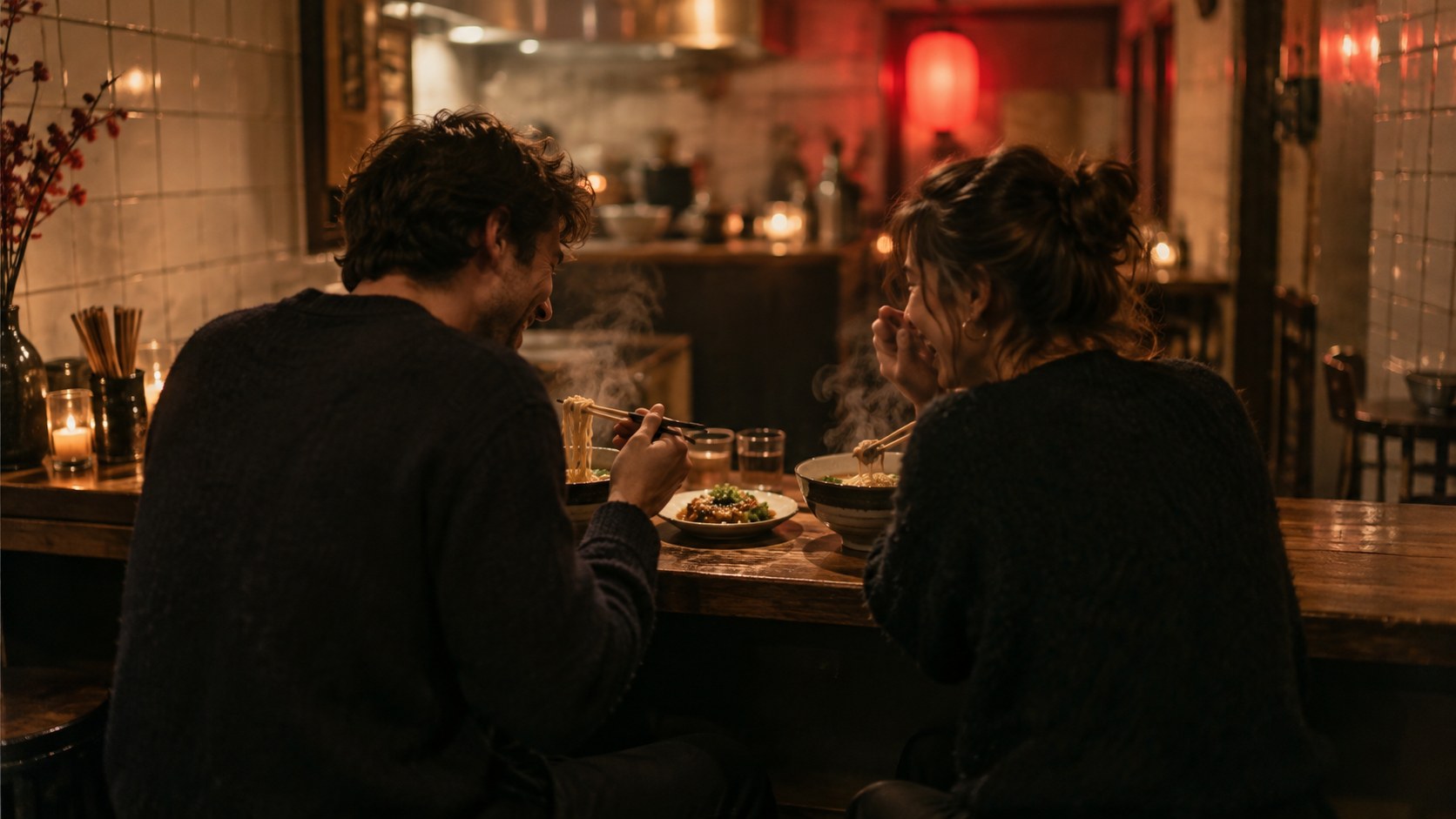
Ramen lands in the middle of this city's range, which is part of why it works here. Two rooms show what the middle buys.
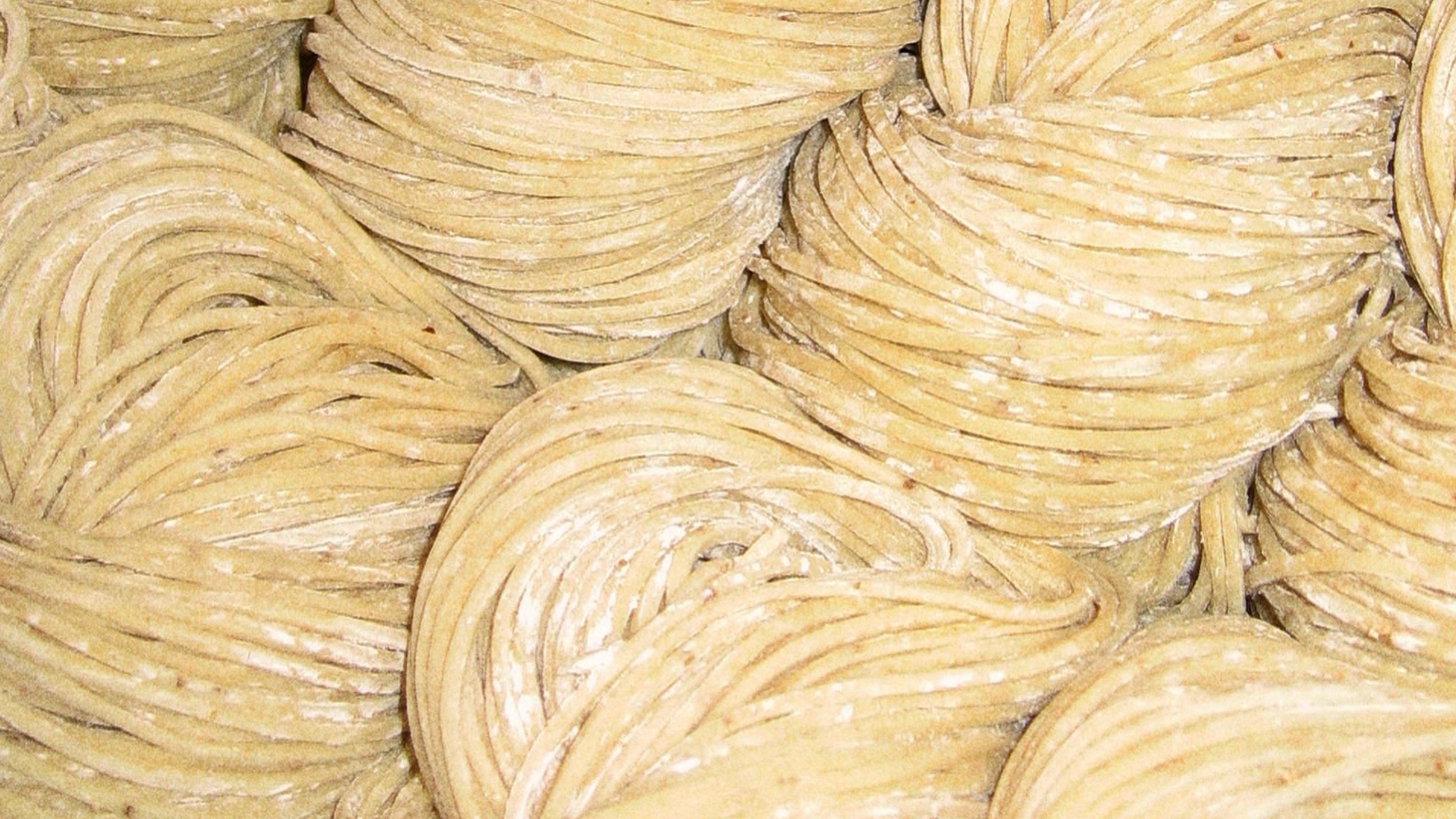
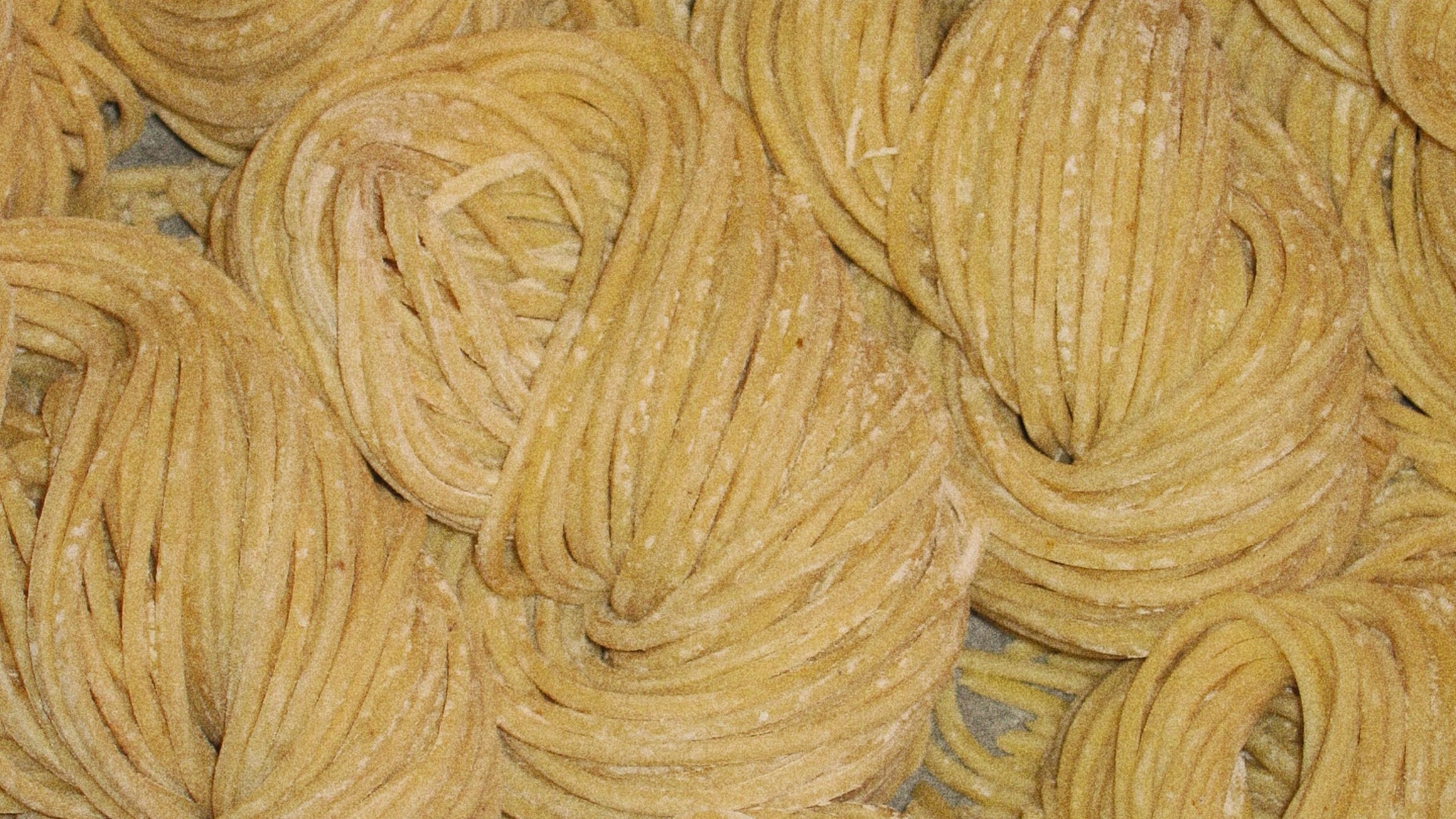
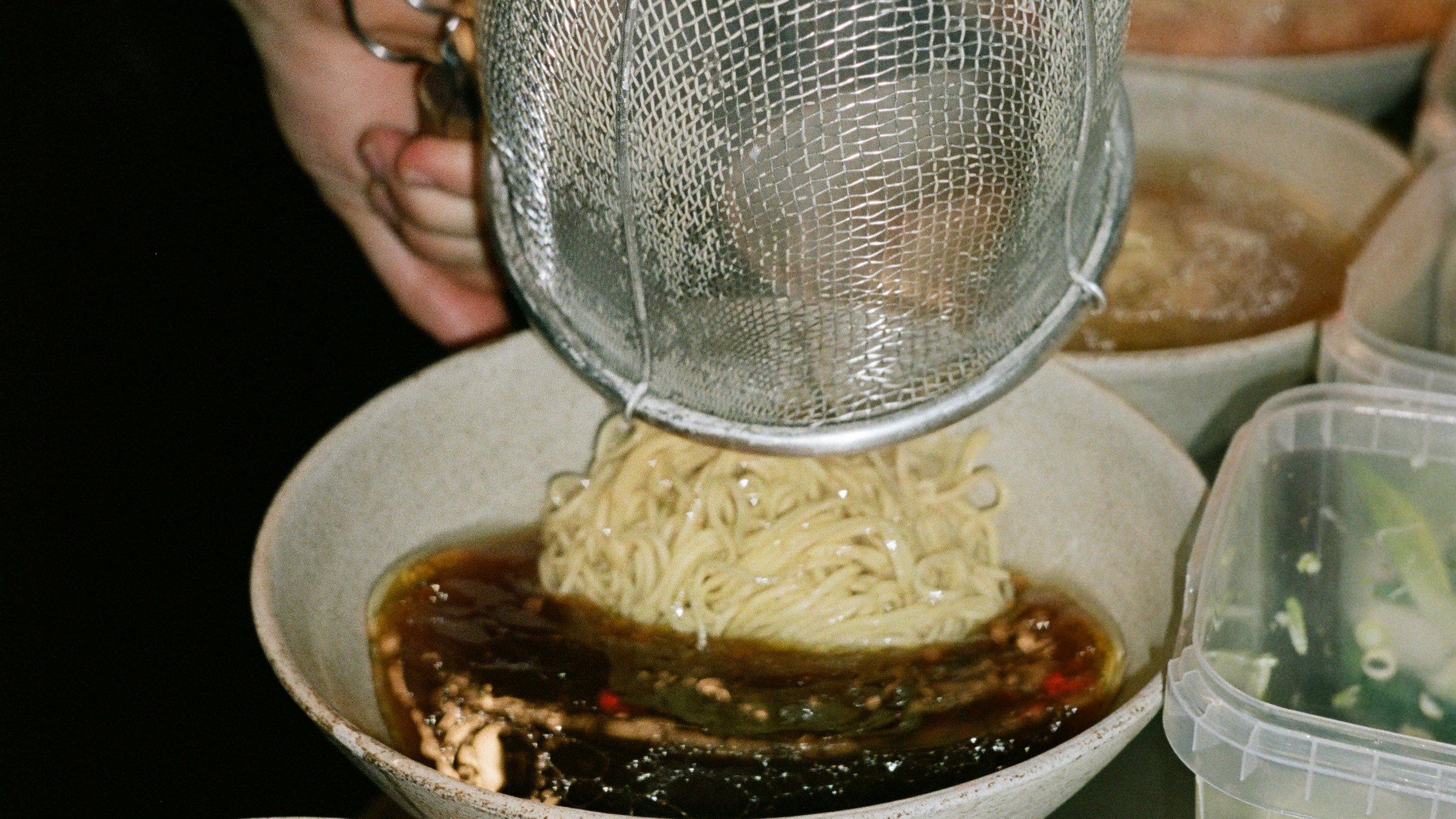
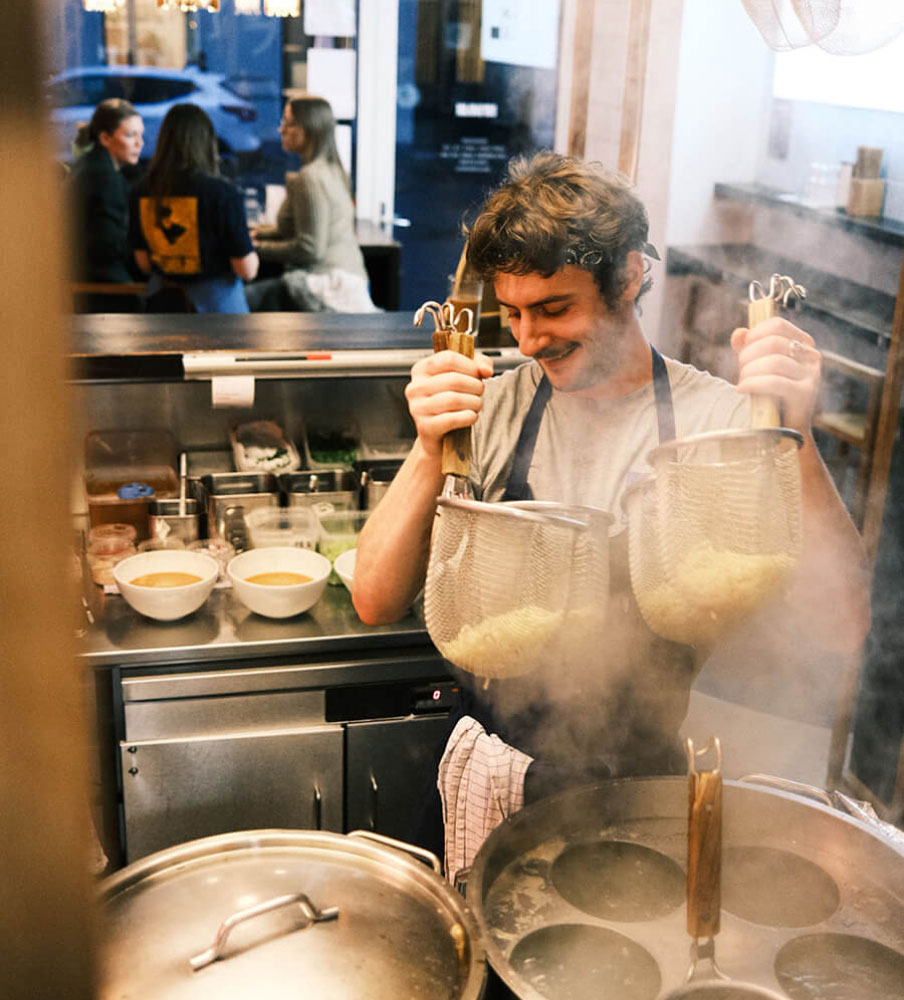
We own Slurp. What sets the price of a bowl here is the clock rather than the shopping list: the broth has occupied a burner since before opening, and the noodles were cut on the premises that morning.
Philipp Inreiter started it in 2017 on the back of years at Noma, Relae and Tokyo's RyuGin, and it has sold one dish ever since: ramen, currently a shoyu of chicken broth, pork neck chashu and garden sorrel.
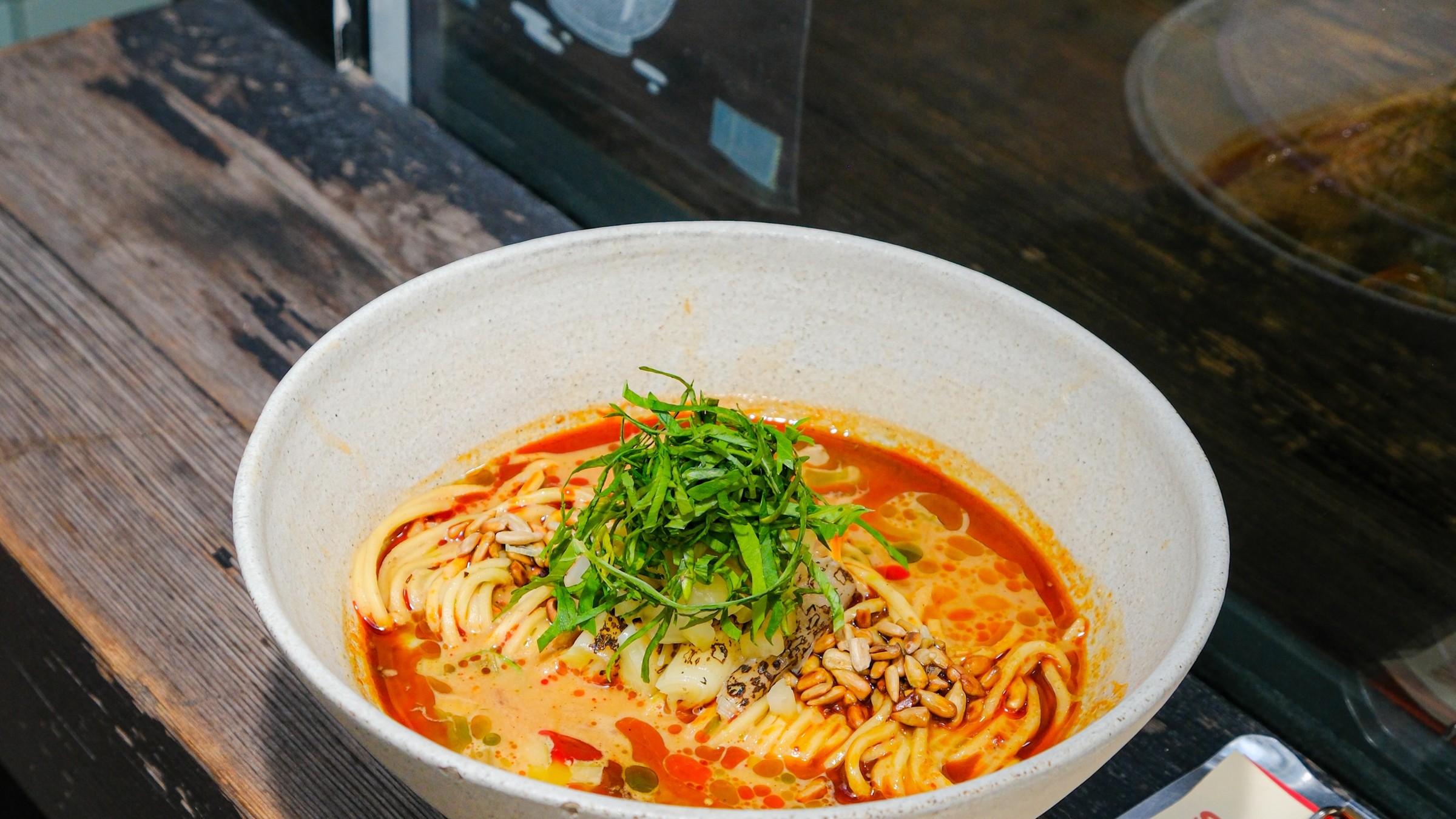
A bowl runs 175 to 210 kroner. The veggie, a mushroom and celeriac broth with oyster mushroom and pickled fennel, is 175 and can be made vegan. Shoyu and shio are both 185.
The nduja miso, a creamy chicken tori paitan with spicy nduja butter, is 195. The tonkotsu is 210, sold only at dinner and only at Slurp Borgergade, capped at fifteen portions a day.
Ramen to Biiru on Griffenfeldsgade plays the same band from the other direction, pairing shoyu and miso bowls with Mikkeller beer, and it has spread well beyond that first room.
What Does a Mid-Range Sit-Down Dinner Cost in Copenhagen?
The band most visitors should budget for is roughly 250 to 500 kroner a head before drinks.
Akaton in Osterbro charges 275 kroner for a tonkatsu set, breaded pork with rice, miso soup, shredded cabbage and pickles, with extra servings if you want them. It opened in January 2026 as the city's first dedicated tonkatsu room and it takes walk-ins.
SURT in Carlsberg Byen prices its sourdough pizzas from 165 for a marinara to 265 for the Hindsholm, which carries buffalo mozzarella, summer leeks, pork sausage, fermented chilli and thirty-month Parmigiano. The hand-cut organic beef tartare with Pantelleria capers is 185, and the organic ribeye with fried potatoes and parmesan mayo tops the menu at 425.
Propaganda, near Central Station, cooks Korean. Fried chicken in fermented chilli glaze is 175 or 300, galbi-marinated beef ribs 170, haddock wonton with potato puree and lemongrass 155, and rice 45 a portion.
Jah Izakaya on Vesterbro works the same band as a Japanese gastropub, with tori no karaage, gyoza and agedashi tofu to pick at, and an omakase tasting menu at 495 if you want the kitchen to choose.
Sushi lands here too if you order carefully. Selfish on Elmegade runs lunch sets from 155 for seven pieces of maki and nigiri up to 840 for a forty-five piece platter built for three or four. The small set is the one to order alone.
What Does the Top of the Range Cost in 2026?
Above about 600 kroner the kitchen makes the decisions, and that is what you pay for.
Kinyobi on Antonigade sets its Classics menu at 345 a head and the Deluxe Omakase at 650. Culinary director Will King Smith and head chef Adrien Norwood both came from Geranium, and the room ages its own fish and beef in cabinets you pass on the way in: nigiri and sashimi cut from that fish, wagyu and European beef grilled over Japanese charcoal.
Goldfinch, the Cantonese room from the same group, spans 65 kroner for a poached oyster to 585 for half a roast Danish duck with pancakes, limited to a few each day. Char siu pork glazed with honey and rose is 195.
Damindra charges 298 for a bento box and 485 for the lunch omakase, with a la carte sashimi and maki from 68 if you want to build it yourself.
Admiralgade 26 runs two lunch courses at 375, four at 525 and a five-course dinner at 675. Its Saturday choushoku, a Japanese breakfast served at lunch around rice, miso soup and egg, is 395 and runs 11:30 to 14:00.
At the ceiling, akme in Nordhavn charges 1,300 for the tasting menu and 1,500 for the set menu, with pairings at 900 and 1,000. The cooking is Japanese technique run through French sauce work: a choux bun holding a slice of buttery raw tuna to open, a nutty financier with vanilla ice cream and strawberries to close. The set menu with pairing comes to 2,500 a head, the honest top of the ordinary range here.
JATAK in Norrebro belongs in this band without publishing a figure. Sit at the kitchen counter rather than in the dining room and you get twelve dishes instead of eight, cooked in front of you, from a chef whose Cantonese and Vietnamese heritage runs through a Nordic larder: monkfish with leek and black sesame, mackerel with carrots and sambal.
15 Copenhagen Meals in 2026, Priced
Ordered alphabetically. The price column is the ladder.
| Place | Area | What you eat | Published price, DKK | Booking |
|---|---|---|---|---|
| Absalon Folkehuset | Vesterbro | Communal dinner, one dish | 75 Sun to Wed, 100 Thu to Sat | Turn up |
| Admiralgade 26 | Gammel Strand | Saturday choushoku; lunch and dinner menus | 375 to 675 | Bookable |
| Akaton | Osterbro | Tonkatsu teishoku set | 275 | Walk-ins welcome |
| akme | Nordhavn | Tasting and set menus | 1,300 and 1,500 | Bookable |
| Damindra | Frederiksstaden | Bento box, lunch omakase | 298 and 485 | Bookable |
| Goldfinch | Indre By | Cantonese, oyster to roast duck | 65 to 585 | Bookable |
| Hija de Sanchez | Broens and four others | Three tacos, heirloom corn | 115 | Turn up |
| Jah Izakaya | Vesterbro | Karaage, gyoza, agedashi tofu, sake | omakase 495 | Bookable |
| Kinyobi | Indre By | Classics and Deluxe Omakase | 345 and 650 | Bookable |
| Propaganda | Near Central Station | Korean fried chicken, beef ribs | 155 to 300 | Bookable |
| Selfish | Norrebro | Sushi sets, 7 to 45 pieces | 155 to 840 | Bookable |
| Slurp Borgergade | Indre By | Ramen, includes the 210 tonkotsu | 175 to 210 | No reservations |
| Slurp Nansensgade | Indre By | Ramen, 22 seats | 175 to 195 | No reservations |
| SURT | Carlsberg Byen | Sourdough pizza, beef tartare | 165 to 265 | Bookable |
| Ved Stranden 10 | Slotsholmen canal | Wednesday wine tasting | 150 | No bookings |
Which Rooms Charge Nothing to Walk Into?
Some of the best value in Copenhagen is not a price at all, but the absence of a booking system.
Ved Stranden 10 has run a Wednesday tasting since close to its opening in 2009, at 150 kroner from 17:00, first come and no sign-up. Whatever is open that night, poured by whoever is behind the bar. The kitchen runs a tailored selection of cheese, charcuterie and the inevitable croque monsieur, and on the last Monday of the month it cooks one shared meal for 100, first come from 18:00.
Bar Vitrine on Montergade takes no bookings at all. The room is glass on every side, with timber counters and bottles racked high, designed with the studio Frama, serving Indian-leaning small plates to whoever gets there first: a lentil pancake with spring greens and mint chutney, a spinach curry flatbread with mozzarella.
What Does Slurp Actually Buy You for 185 Kroner?
Since Slurp sits in the middle of this ladder, it is worth saying what the middle costs to produce.
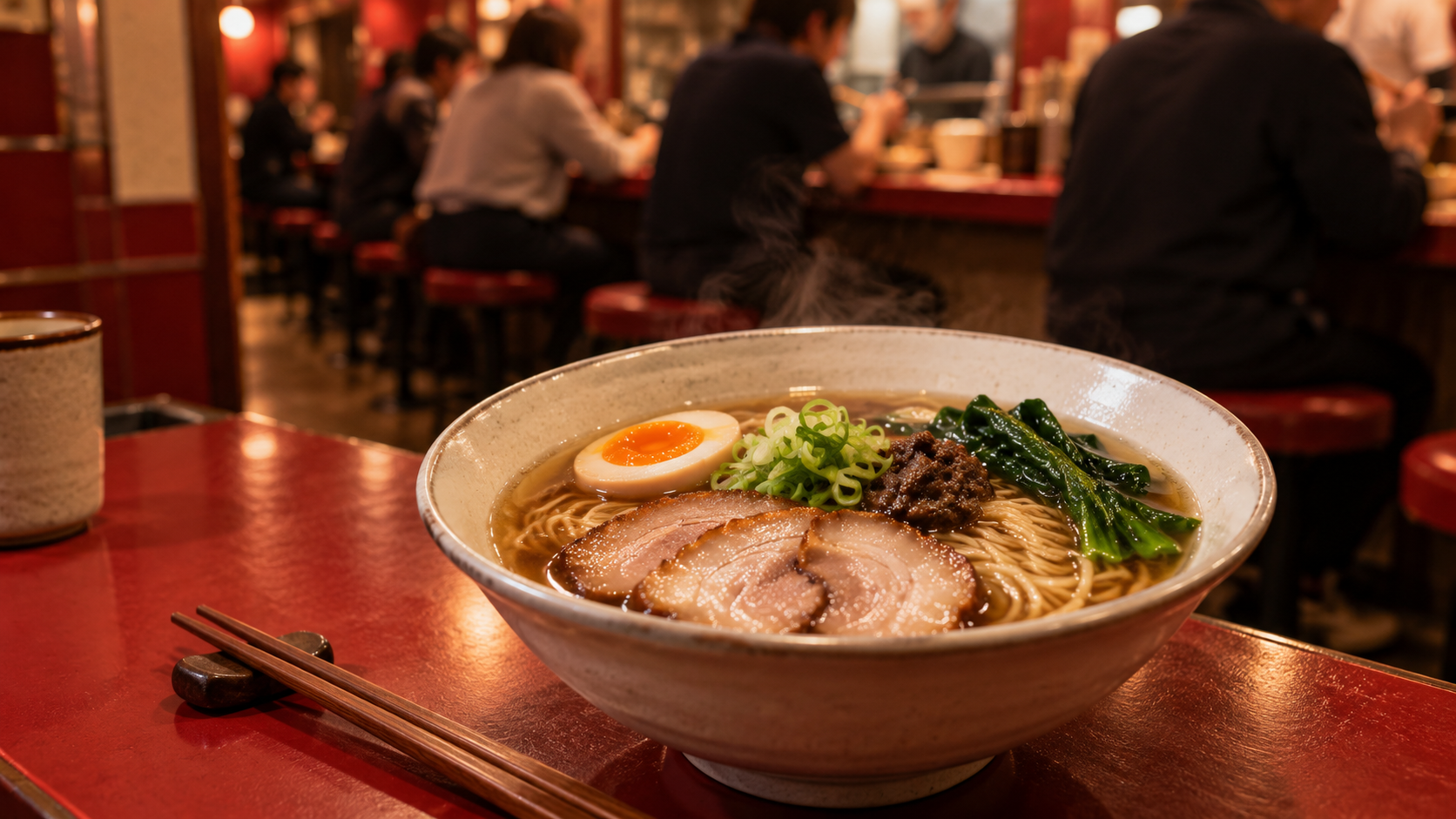
The shoyu at 185 is a chicken broth with chashu from pork neck, a tamago egg, spring onions, mushroom paste, chard and garden sorrel, and it is poured with a hojicha tea pairing. The shio at the same price runs chicken with smoked mackerel and a seafood broth, finished with daikon, red peppercorns, rocket and lemon thyme.
Neither is an expensive shopping list. What costs money is the simmer and the morning noodle cut, hours of labour rather than expensive ingredients.
The seasons show up on the menu itself. A Gyuko beef shoyu ran through winter 2025 and a summer cold bibim carried daikon kimchi and shaved vegetable ice. Neither is on now.
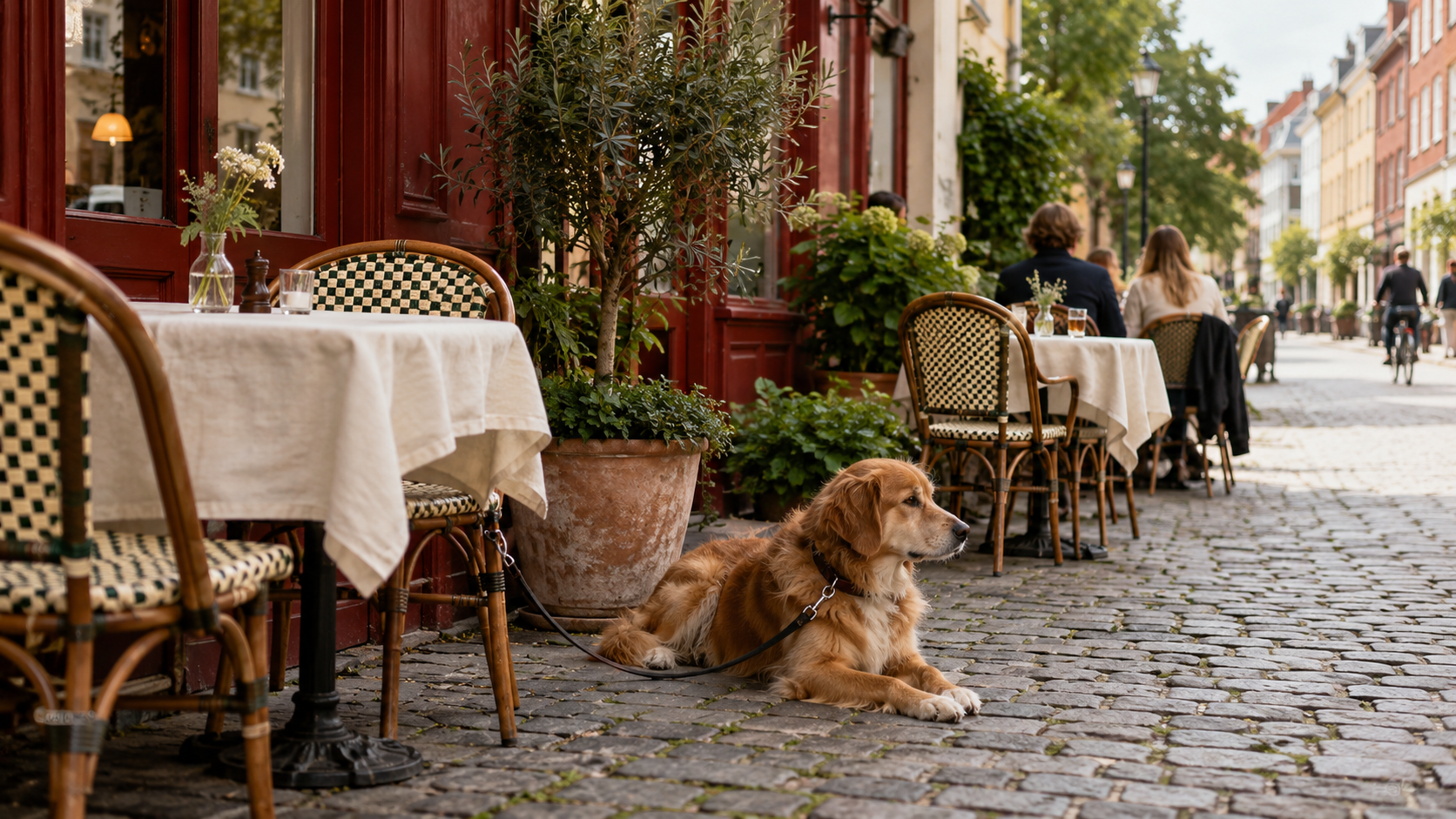
Slurp Nansensgade seats 22 and has no toilets, which tells you what kind of room it is. Slurp Borgergade opened in January 2025 with 36 seats, so choose it for space. Both take no reservations and welcome dogs.
How Should You Budget a Day of Eating in Copenhagen in 2026?
Two numbers bracket most visitors, and neither means eating badly.
At about 350 kroner for the day you can take a hot dog from the DOP cart at the Round Tower, a taco combo at 115, and Absalon's communal dinner at 75 or 100: a full day of real food.
At about 2,000 you keep breakfast cheap and spend the evening at Kinyobi's omakase at 650 or Admiralgade 26's dinner at 675 with wine. Only above that does the tasting menu enter the picture.
What Do Drinks Add to a Copenhagen Bill?
Drinks are where a well-judged dinner quietly doubles.
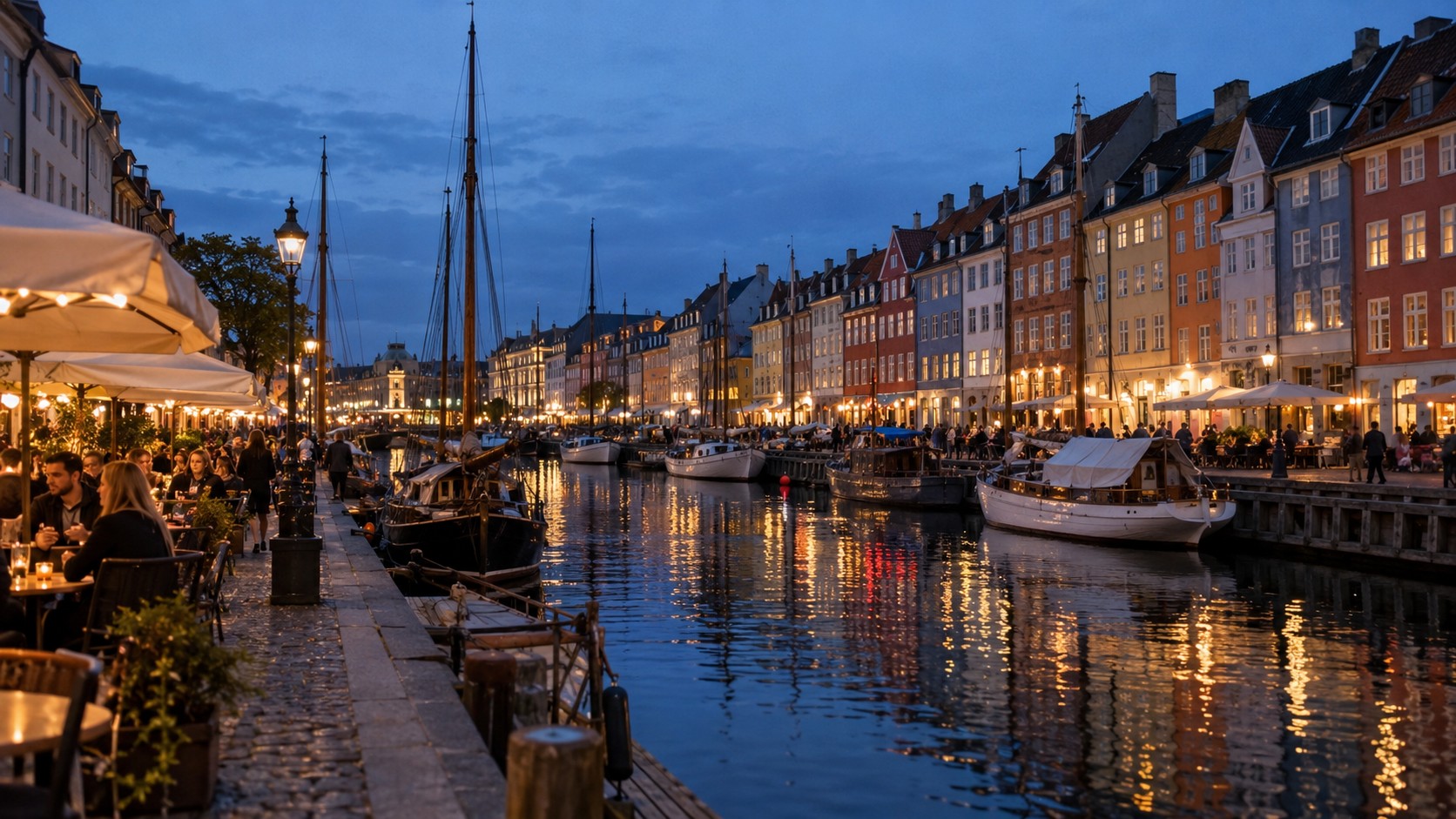
At SURT a negroni or a gin and tonic is 145 and a glass of wine is 100 or 150, with the first bottle of water free and refills at 20. At Den Vandrette, on the Nyhavn harbour front at Havnegade, most glasses of low-intervention wine sit between 115 and 125.
Beverage pairings are the sharpest jump. At akme the pairing adds 900 to the tasting menu and 1,000 to the set menu, so the drink is roughly two thirds the price of the food.
Do You Need to Budget for a Tip in Copenhagen?
No. Service is included by law in Danish restaurant prices, so the figure on the menu is the figure you pay. Rounding up is welcome and nobody will chase you for it.
So What Does a Good Meal Actually Cost Here?
The real division is between rooms where you choose each plate and rooms where the kitchen chooses the sequence. Crossing that line costs roughly four times as much, and buys a different kind of evening rather than better cooking.
Eat at the cart, the market counter and the ramen bar for most of your stay, and put the tasting menu on one night. That is how the city eats.
Sources
- Slurp, current and archive ramen menu with prices
- Slurp, Nansensgade room, 22 seats, no reservations
- Slurp, Borgergade room, 36 seats, open since January 2025
- Absalon Folkehuset, communal dinner pricing
- Broens Street Food, Hija de Sanchez menu and Rosio Sanchez
- Hija de Sanchez, locations and background
- VisitCopenhagen, DOP organic hot dog stands
- TorvehallerneKBH, market hall and visitor numbers
- Mig og Kobenhavn, Omegn og Venner lunch
- Gasoline Grill, outlets across the city
- Mikkeller, Ramen to Biiru on Griffenfeldsgade
- Yamato, Ramen to Biiru noodle supply
- Aotori, Akaton tonkatsu set at 275 DKK and its location
- Washoku Guide, Akaton, opened January 2026
- SURT, dinner menu and pizza prices
- SURT, opening hours and table policy
- VisitCopenhagen, SURT, 50 seats in Lauras hus
- Propaganda, menu prices
- Propaganda, booking policy
- Selfish, lunch sushi set prices
- Heartbeats, Restaurant Tokyo, Scandinavia's first Japanese restaurant
- Kinyobi, set menu prices and kitchen team
- Kinyobi, the room
- Goldfinch, full menu prices
- Anders Husa, Goldfinch and Will King Smith
- Damindra, omakase, bento and a la carte prices
- Admiralgade 26, lunch and dinner menu prices
- Admiralgade 26, Saturday choushoku at 395 DKK
- akme, tasting and set menu prices with pairings
- VisitCopenhagen, akme in Nordhavn
- The Infatuation, JATAK counter and dining room
- VisitCopenhagen, JATAK, opened January 2022
- Ved Stranden 10, Wednesday tasting at 150 DKK since 2009
- Absalon Folkehuset, the week's communal dinner menu and ticketing
- The Infatuation, Bar Vitrine, walk-in only
- Den Vandrette, the wine list and its by-the-glass prices, and the small-plate menu and its biodynamic and organic sourcing, and address on Havnegade and opening hours
- Jah Izakaya, izakaya format and dish range
Frequently Asked Questions
At the top end the difference is small. At the bottom Copenhagen is unusually good value, because cheap food here is still made from good raw materials: a 75 kroner communal dinner at Absalon, or a 115 kroner taco combo at Hija de Sanchez, has no real equivalent in a comparable city.
Between about 165 and 300 kroner covers most sit-down main courses. A SURT pizza runs 165 to 265, Propaganda's beef ribs are 170, and a bowl of ramen at either Slurp room is 175 to 210.
Yes, if you use the carts and the market halls. A DOP hot dog, a market plate at Torvehallerne and Absalon's 75 kroner communal dinner will feed you properly for a day, though you will be eating on other people's schedules rather than your own.
Tap water is normally free and usually offered. SURT gives the first bottle of water free and charges 20 for extra bottles, which is the common pattern for bottled rather than tap water.