Where Locals Actually Eat in Copenhagen: 11 Neighbourhood Places Away From the Tourist Traps in 2026
The meals worth crossing town for sit inside a former church, behind a 1965 hot dog shed and beside a fishmonger, and most dishes cost 255 kroner or less.

TL;DR
Residents eat a short ride from Nyhavn and Strøget, at places that have served one street for years, charge weekday prices and let you walk in. Try a Børge sausage at Harry's Place, fish on rye at H3 Amager Fiskehus, smørrebrød at Aamanns Deli or a Shio ramen at Slurp on Nansensgade.
Updated 22 October 2026
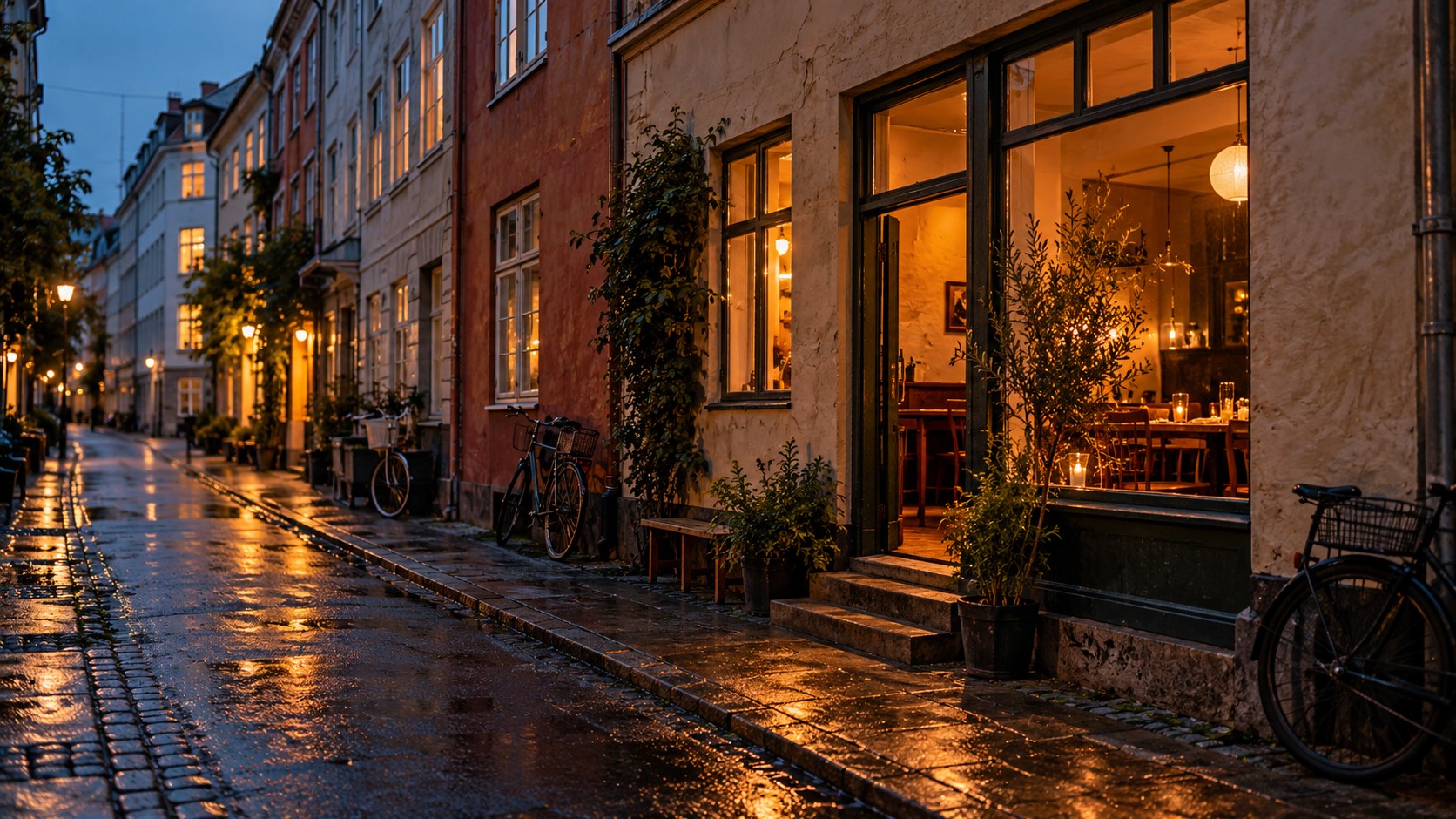
It is your second evening in Copenhagen, and you want dinner where the people who live here eat, not another table on the Nyhavn quay. Every restaurant on the map seems to call itself local, so the word tells you nothing. A better clue is a sausage.
The big sausage at Harry's Place, a hot dog shed in Nørrebro, exists because of a rounding problem. Harry Löfvall, a trained sausage maker, supplied the city's prisons, where each inmate's meat ration came to one and a half of his sausages. Nobody wanted the short end of an uneven cut, so a bigger sausage was made to hold the whole portion, and Harry named it after a prison officer called Børge.
You can still order a Børge on Nordre Fasanvej in outer Nørrebro, where Harry rolled out his cart in 1965, and the customers range from work overalls to suits. A story like that only survives where the same neighbours keep coming back for decades, which makes it the best clue to where residents really eat.
Eleven places follow that clue, from a fishmonger's family that started with a horse cart in the 1870s to a wine bar that opened in 2022.
How Can You Tell a Local Place From One That Only Says It Is?
Look at how long it has fed one street, who it counts as its regulars, what it charges on a weekday and whether it lets you in without a booking. Calling a place local costs nothing, while these four signs take a restaurant years to earn.
- It has fed one neighbourhood for years, away from Nyhavn and Strøget.
- Its site is written in Danish first, or the venue or a resident names its regulars.
- Its prices fit an ordinary weekday meal.
- You can eat without booking days ahead: a counter, a no-reservation rule, a stated welcome for walk-ins or seats held back for them.
Age alone proves little, because the quay at Nyhavn is old too. What matters is who has been coming back. The signs also have a cost: a door open to walk-ins means a queue on a busy night, and the most famous neighbourhood places draw visitors as well as regulars. Prices and hours below were checked on 17 October 2026 and shift with the season.
Because years on one street are the strongest sign, the places below run in order of the earliest date each one can show, oldest first.
Which Places Have Fed the Same Streets for Generations?
The oldest of these stories began with a horse cart and a sausage cart, and both still end at a counter you can walk up to.
What Is Left of Amager's Fish Tradition at H3 Amager Fiskehus?
In the 1870s Peter Salmand drove a horse cart round Frederiksberg selling fish, and his family has been in the fish trade for five generations. The shop moved to Holmbladsgade 3 in 1968, when Willy and Grethe bought the premises, and their grandson Lars and his wife Rikke took it over in 2002. H3, the restaurant beside the counter, has 28 seats and welcomes walk-ins, with advance notice needed only for groups of more than eight.
Lunch runs from 12:00 to 16:00, Tuesday to Saturday. On the lunch menu, a fishcake on rye with remoulade costs 125 DKK, curry herring on rye 135 DKK and a fish fillet on rye 175 DKK, with fish and chips at 225 DKK, moules frites at 255 DKK and three French oysters at 130 DKK. The restaurant closes on Sundays and Mondays.
Why Is Harry's Place Still the Hot Dog Shed Copenhageners Know?
The Børge was only half of Harry's invention. He also made a dip to go with it, Krudt, which is as strong as its name (gunpowder) suggests, and its recipe has been passed down and kept secret ever since. Harry, born in 1921, served sausages and meatballs from his cart until 1989, and the white shed that replaced the cart stands at Nordre Fasanvej 269.
The classic still comes with ketchup, mustard and raw onions, with a meatball sandwich and a roast pork sandwich beside it. In a June 2025 r/copenhagen thread where a visitor asked residents what they would miss most, one commenter called the shed an institution, and the shed itself says many tourists now make the trip out too. It opens from 10:00 to 21:00 on weekdays and from 11:00 to 21:00 at weekends, and you can pre-order by writing before 18:00 the day before. No price list is published online.
Why Do Regulars Still Lean on Dyrehaven's Old Bar?
Dyrehaven at Sønder Boulevard 72 in Vesterbro publishes no opening year, so it sits beside the two oldest on the evidence of its room, not a date. It calls itself a local café where regulars greet each other across the bar, and when the walls were painted in bright colours, the old wooden bar and the deer heads stayed to keep the old pub atmosphere. Outside, the street has been a green strip with ping pong tables and football pitches since a full makeover in 2007.
Lunch starts at 11:00 on weekdays and 10:00 at weekends, and the lunch card is short. Most smørrebrød costs 120 DKK a piece, roast beef or potato with pickled and crisp onions among them, two smaller pieces on one plate cost 160 DKK, and eggs Benedict costs 130 DKK. Dyrehaven takes no reservations on Saturday and Sunday during the day, and the outdoor seats suit a spur-of-the-moment visit.
Where Did a Family Pizzeria and a Regulars' Café Put Down Roots in the 1990s?
By the 1990s the same pattern was starting again with new food: a Calabrian family by the lakes and a café on Amager whose staff hear the same orders every day.
Why Has La Fiorita Kept Its Corner by the Lakes Since 1991?
La Fiorita has been a family pizzeria since 1991, started by Antonio from Calabria and his wife Hanne. It sits at Charlotte Ammundsens Plads 2, the small square that joins Nansensgade to Nørre Søgade, close to Dronning Louises Bro, the bridge across the lakes built between 1885 and 1887.
The thin-crust pizzas use a dough of flour, water, salt, yeast and olive oil that is left to rise for a long time. You order at the till, whether you carry out or eat in, and La Fiorita takes no table reservations. On the menu, a regular Margherita costs 87 DKK, a Napoletana with capers and anchovies 94 DKK and a Quattro Stagioni with ham, mushroom, prawns and artichoke 97 DKK. Another commenter in the same thread suggests carrying a pizza down to the lakes. The pizzeria is closed on Mondays and otherwise open from 11:00 to 22:00 Tuesday to Friday, 12:00 to 22:00 on Saturday and 13:00 to 21:00 on Sunday.
Why Do Amager Regulars Keep Going to Ingolfs Kaffebar?
Ingolfs Kaffebar at Ingolfs Allé 3 has made room for everyone since 1999, with a small stage for intimate concerts, the day's paper, books and board games. Staff hear a request for the usual several times a day. You can book, or turn up and find a seat, and the courtyard has plenty.
The day runs on a monthly menu. Weekday lunch starts at 12:00 (13:00 at weekends, and the kitchen closes at 15:00 on Sundays) with mushroom toast on toasted sourdough for 120 DKK or hot-smoked salmon with smoked cheese and buckwheat for 115 DKK. Dinner runs from 17:30 to 21:00, Monday to Saturday, and adds an onglet steak with port sauce at 210 DKK. The kitchen bakes its own bread and cakes.
How Did Smørrebrød, a Church Hall and a Ramen Counter Earn Their Regulars Since 2006?
The places that opened from 2006 on earned their regulars faster, and each did it by keeping one thing ordinary: the price of a piece of smørrebrød, a ticket to dinner, a bowl at a small counter.
Why Is Aamanns Deli Still the Original on Øster Farimagsgade?
Adam Aamann opened in 2006, when, as the deli tells it, smørrebrød was not something chefs with self-respect cooked. A Politiken review that year praised the chicken salad and the braised pork and gave four of five chef's hats, and in September 2026 the deli sold those two pieces for 20 kroner to mark 20 years. The deli at Øster Farimagsgade 10 in Østerbro is where it began.
A piece of potato with seasonal emulsion costs 75 DKK, old-fashioned herring with curry salad 80 DKK, and eggs with hand-peeled shrimp, salmon tartare, beef tartare or roast beef with béarnaise cream 90 DKK. All of it sits on rye bread baked with rye from Østagergaard and spent grain from Herslev Bryghus, and the kitchen suggests three pieces per person. Butter-fried plaice with shrimp salad (165 DKK) is among the favourites. The to-go counter is open from 10:30 to 19:30 every day, so a bag of smørrebrød on a park bench needs no table. The restaurant seats from 12:00, with last orders at 18:30.
What Happens When You Turn Up for Absalon's Communal Dinner?
Folkehuset Absalon opened in a former church on Sønder Boulevard in August 2015, and its dinner works like a neighbourhood one. People queue outside an hour before, and a host seats them at long tables as they arrive, strangers beside strangers. Everyone eats the same plate, with or without meat. On Tuesday 13 October it was rice under a sweet-and-sour sauce of pineapple, courgette and basil.
The communal dinner is served at 18:00 and costs 75 DKK from Sunday to Wednesday and two dishes for 100 DKK from Thursday to Saturday, with children under three free. Tickets sell online until 16:00 and at the door from 17:00. Lunch costs 60 DKK from 12:00, ordered at the bar, and there are no table reservations for any meal. Two limits matter: dogs are not allowed (service dogs are), and the small kitchen shares space with a bakery, so vegan and allergen-free meals cannot be promised.
Where Does Slurp Fit on Nansensgade and Borgergade?
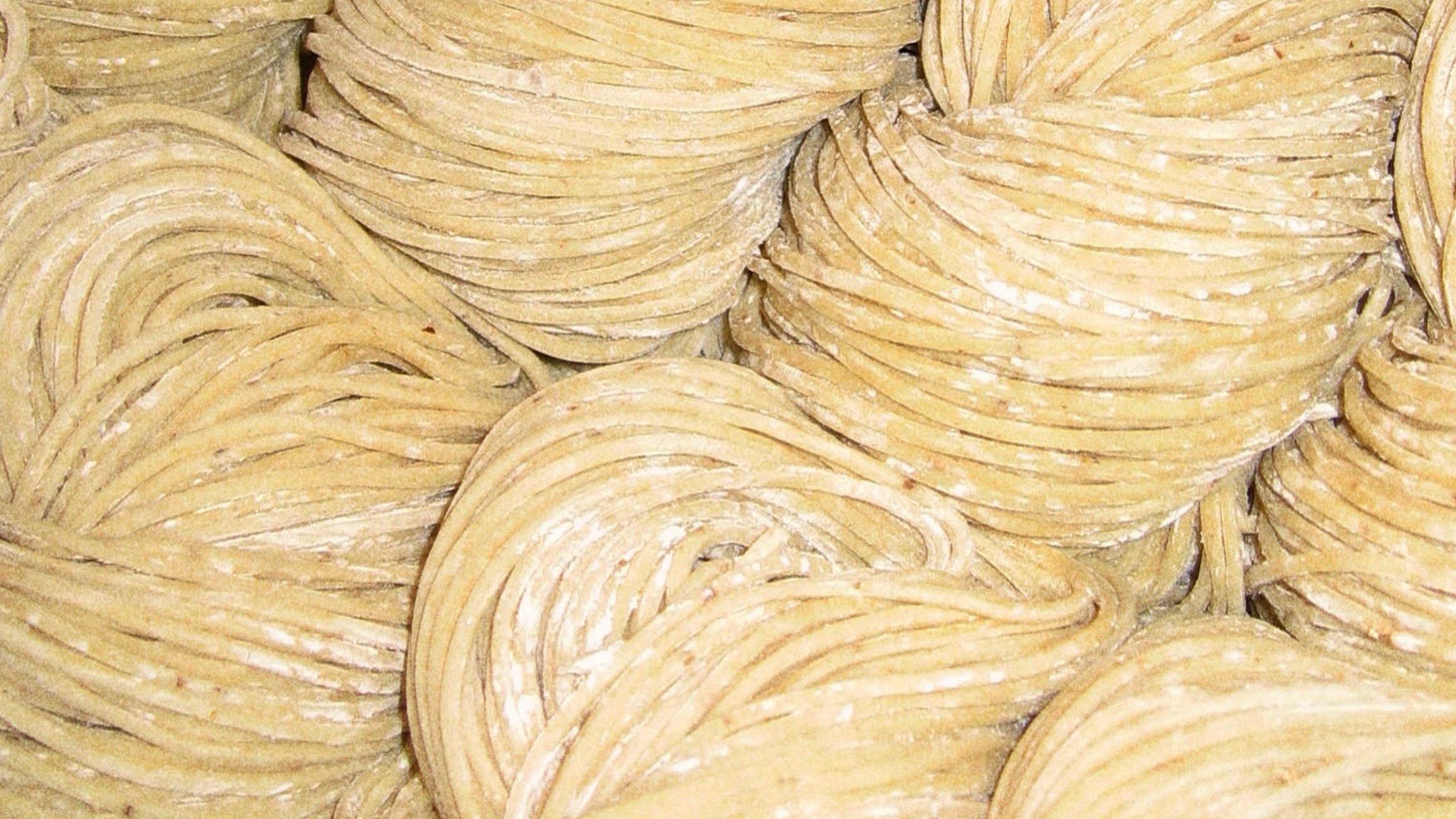
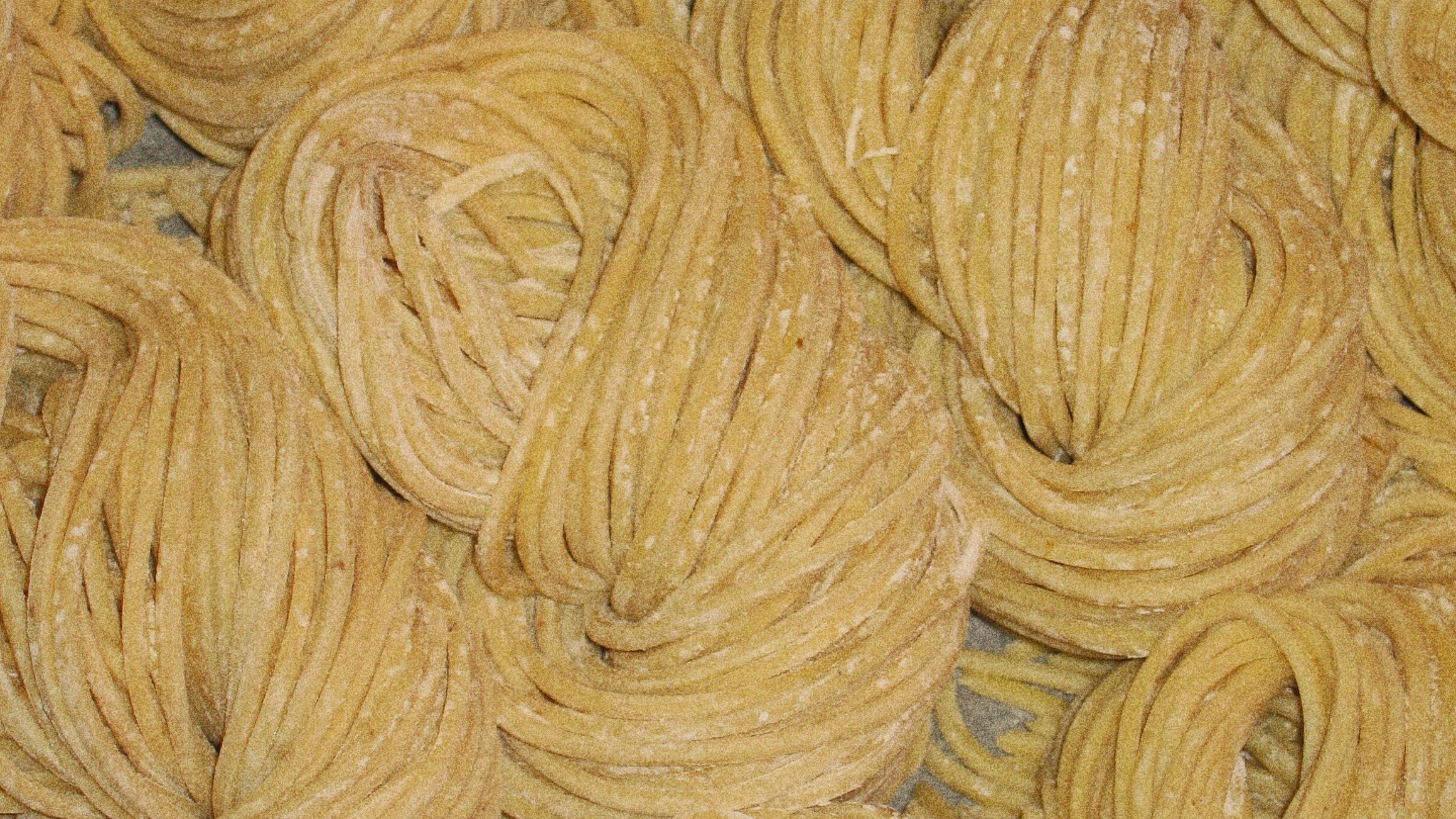
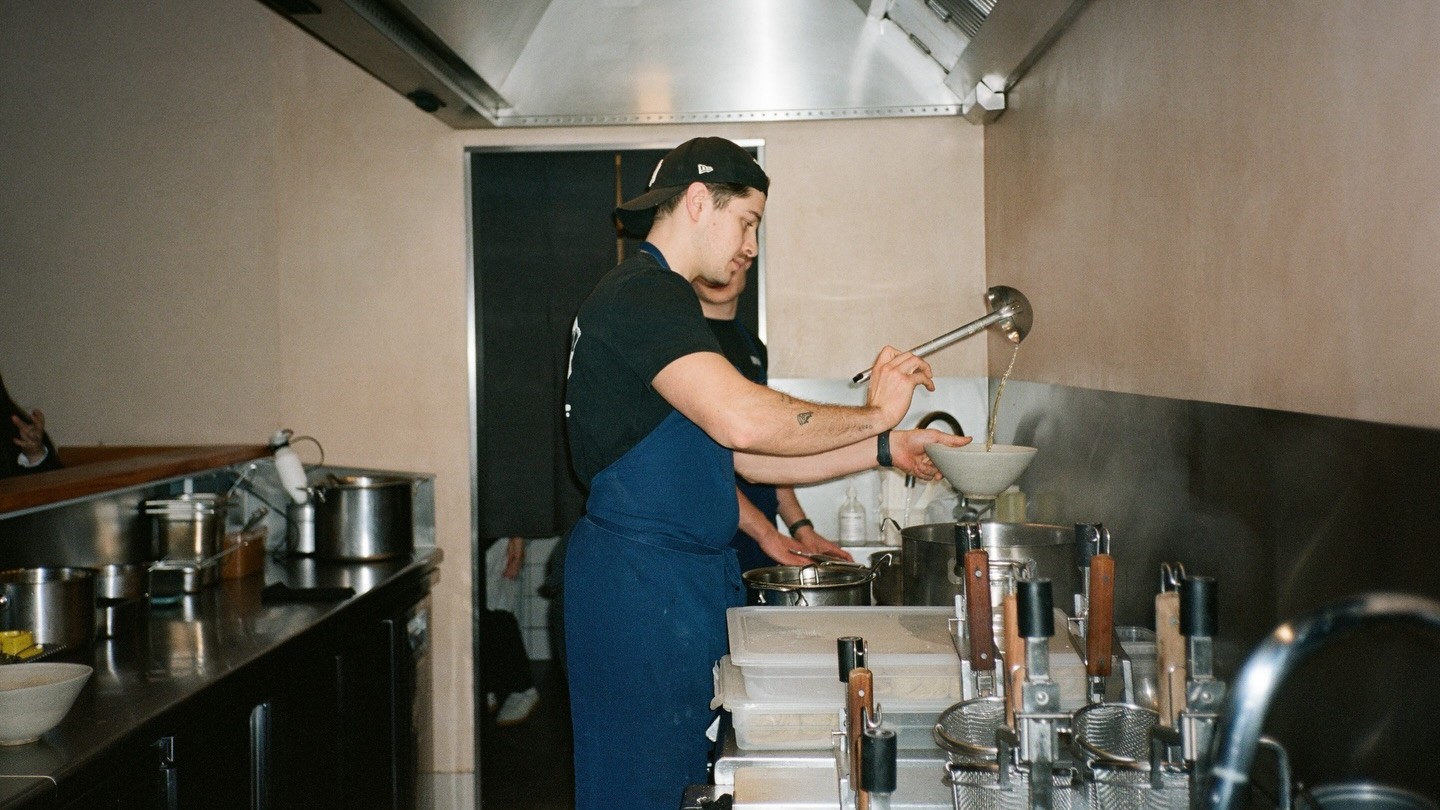
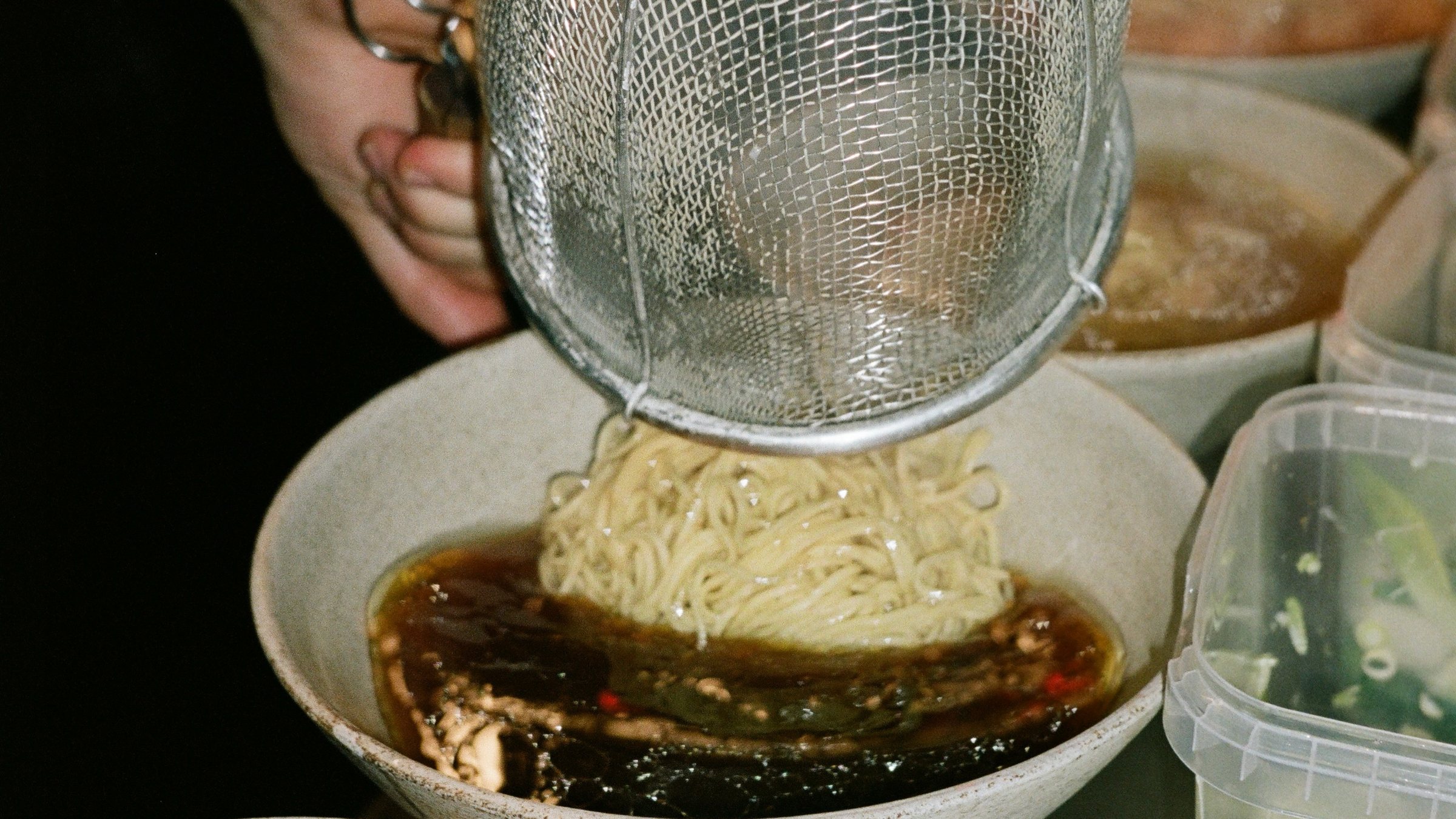
Nansensgade is a street of cafés and small shops with a festival every year. A food blogger writing in Norwegian who ate lunch at number 90 in the summer of 2017 remembered a sleepy street from student days, by then taken over by hipster shops and eateries. Slurp was a few months old. Austrian chef Philipp Inreiter, who had cooked at Noma and at RyuGin in Tokyo, built it on noodles rolled and cut each morning from flour milled on Bornholm and broths that simmer for hours to entire days. It had opened in February 2017, five weeks after the planned 4 January, and its name is the sound people make eating noodles.
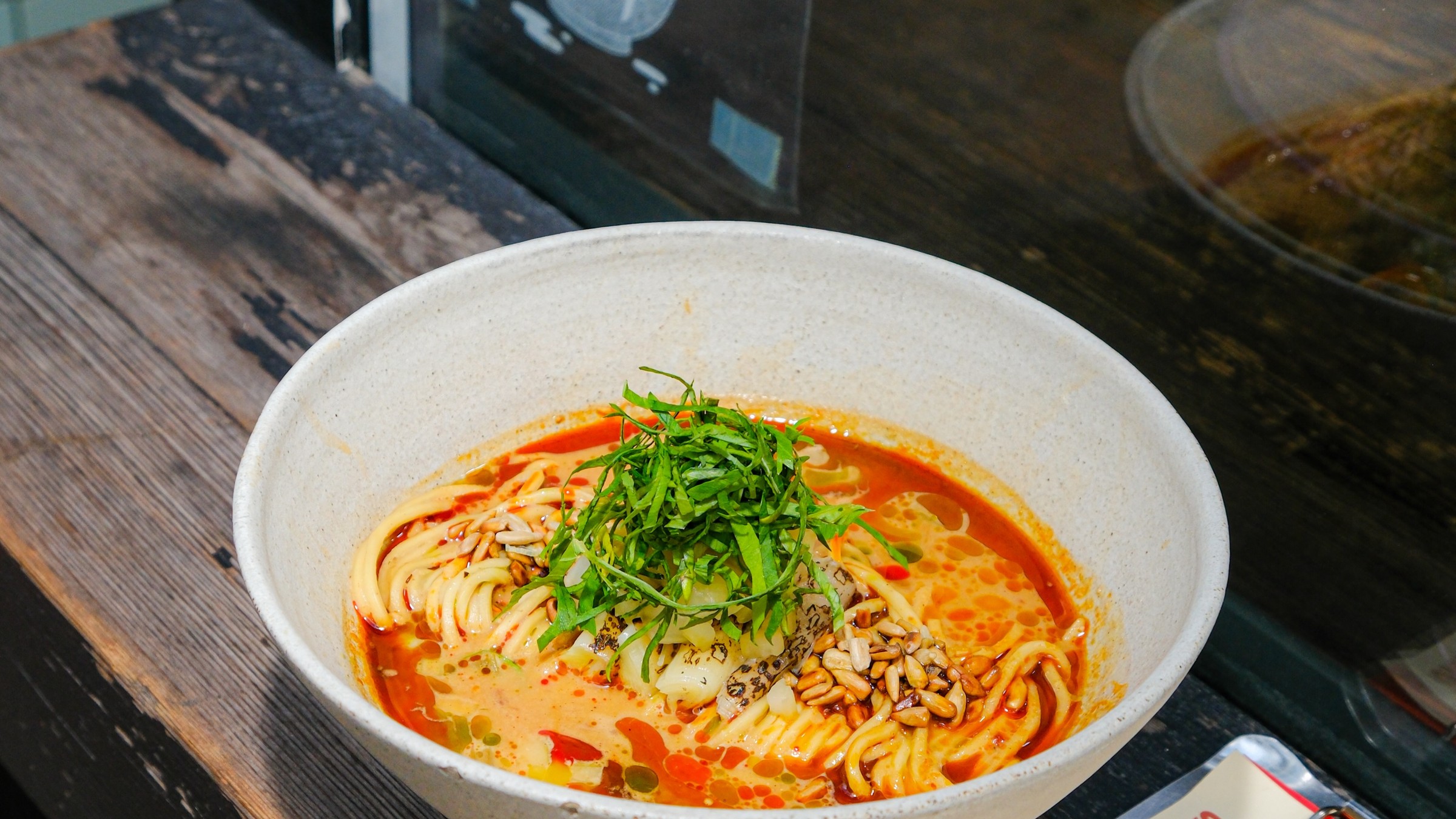
Both opening-year write-ups describe the Shio. In 2017 it was a salt broth built on chashu and mussels, with lemon thyme, soft egg, negi, marigold leaves, basil and rocket. Today's Shio (185 DKK) keeps the lemon thyme, basil and rocket and swaps the mussels for smoked mackerel: a chicken and seafood broth with pork-neck chashu, a soft egg, spring onion, daikon and red peppercorns.
We describe Slurp Nansensgade as tiny, loud and full of energy, and within six years a Reddit poster was using it as a yardstick. In August 2022 a poster on r/copenhagen asked for places with "a flair like slurp" at 20 to 30 euros a head.
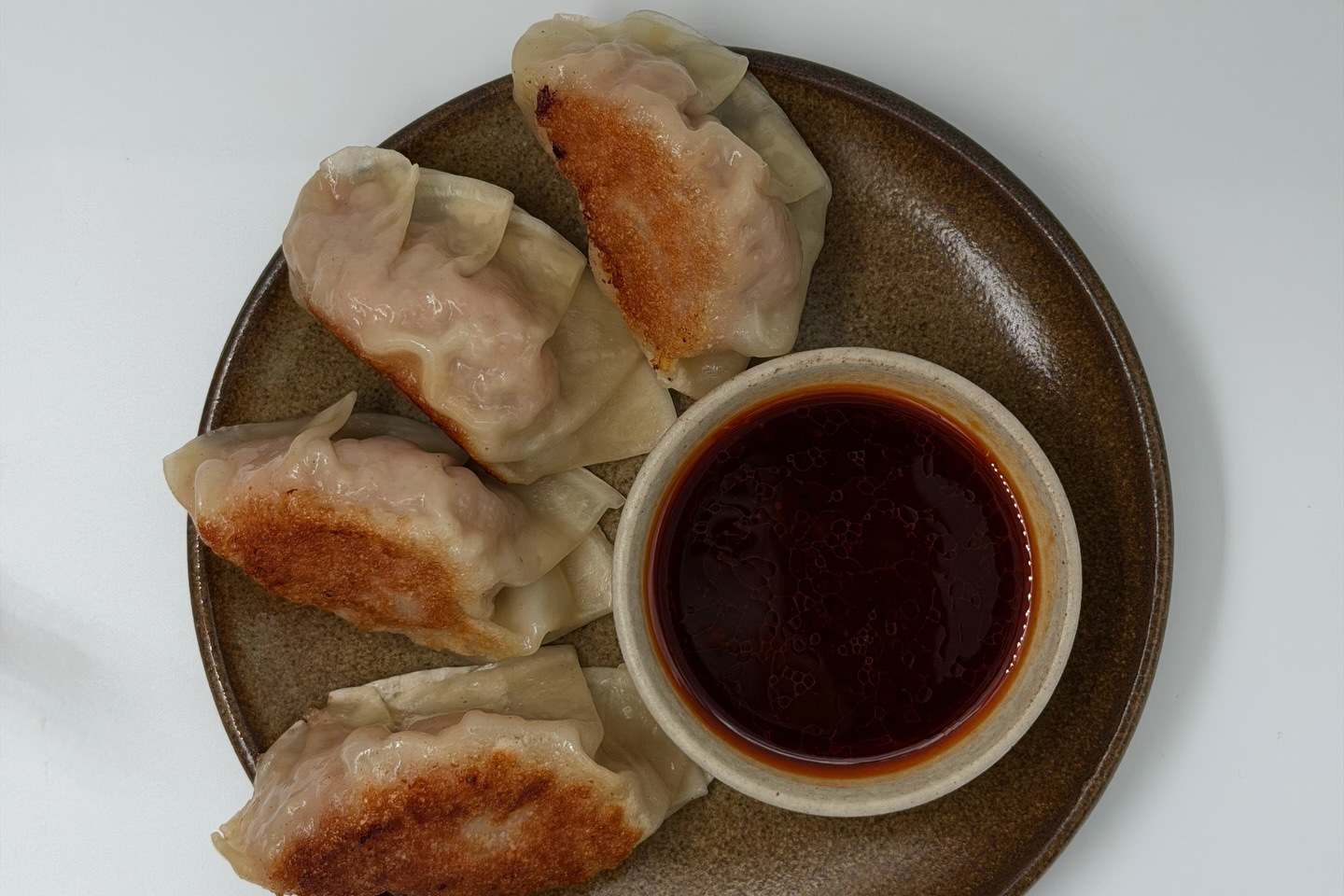
Slurp Borgergade opened in January 2025 as the second room, with more space and a few dishes of its own. Gyoza show the split. Nansensgade fills its gyoza with pork, caramelised onion and ginger and serves them with a Szechuan pepper sauce for 120 DKK. In 2017 the gyoza came three to a plate in a fermented celery juice.
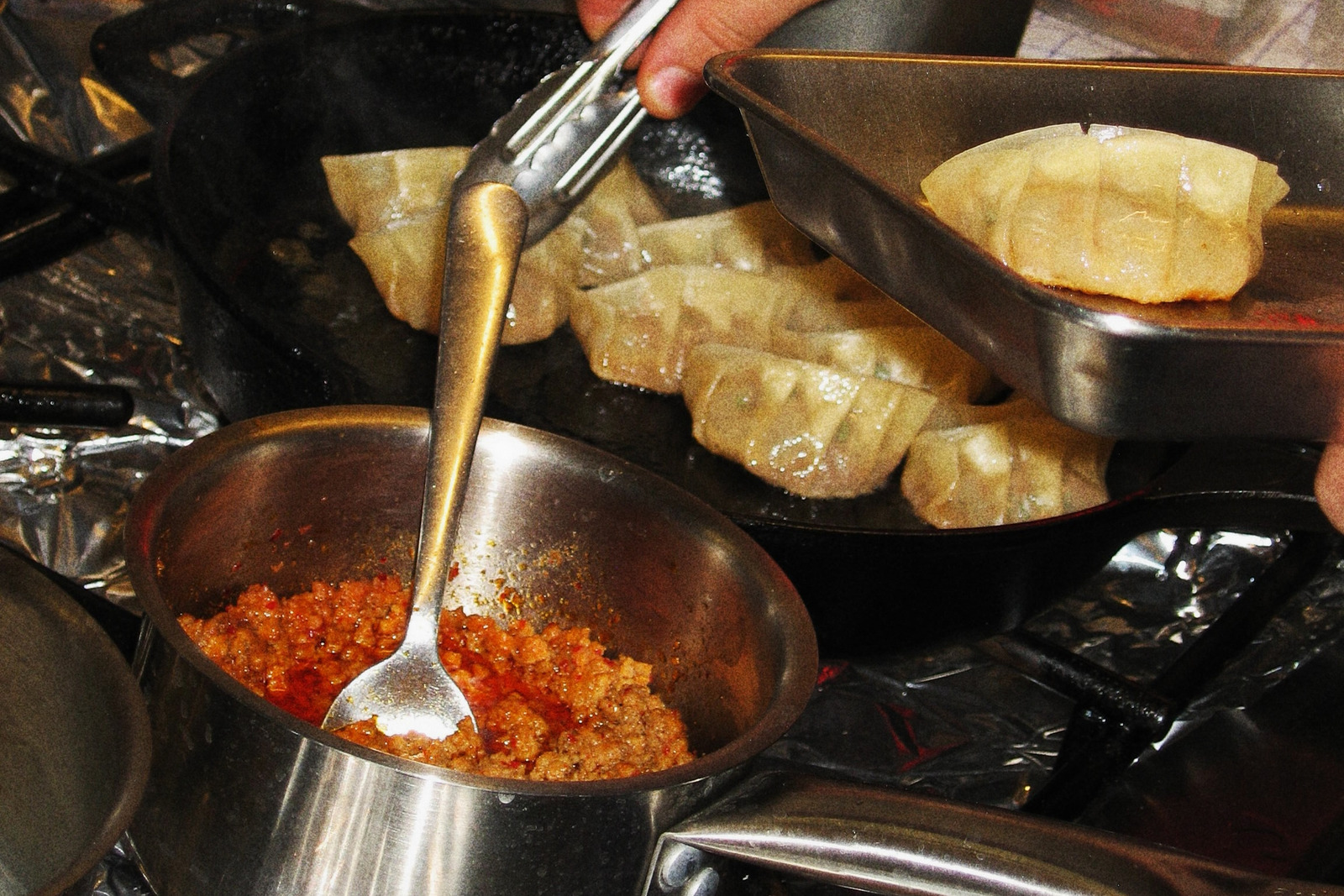
Borgergade keeps its own version for dinner: four pork gyoza with cabbage, ginger and spring onion for 95 DKK, with soy dressing on the side. Slurp announced it on 29 March 2026 as a Borgergade-only classic.
Can a Room That Opened Since 2019 Already Count as Local?
Yes, when residents treat it as theirs and the door stays open. Three of the eleven have served from their current rooms only since 2019, and each shows it in a different way: a burger counter on a weekend shopping street, a bakery that outgrew its first shop and a café that keeps half its room for whoever walks in.
Why Does a Burger Counter Belong on Værnedamsvej? Gasoline Grill
Værnedamsvej is a short shopping street between Vesterbro and Frederiksberg that many Copenhageners think of as their city's Paris, with cafés, delis and wine bars, and locals and families out at weekends. Gasoline Grill took a room there in August 2019 and asked Studio David Thulstrup for "an unusual look for a burger place", polished but unpretentious.
The studio started from 1960s Los Angeles gas stations and American diners and built a 25-seat counter around an open kitchen, with a terrazzo top, a galvanized steel ceiling over the grill and a glass wall into the room where the beef is ground. It also drew a stool for the room with e15: the Tank, solid European oak with a round seat, named for its plain shape.
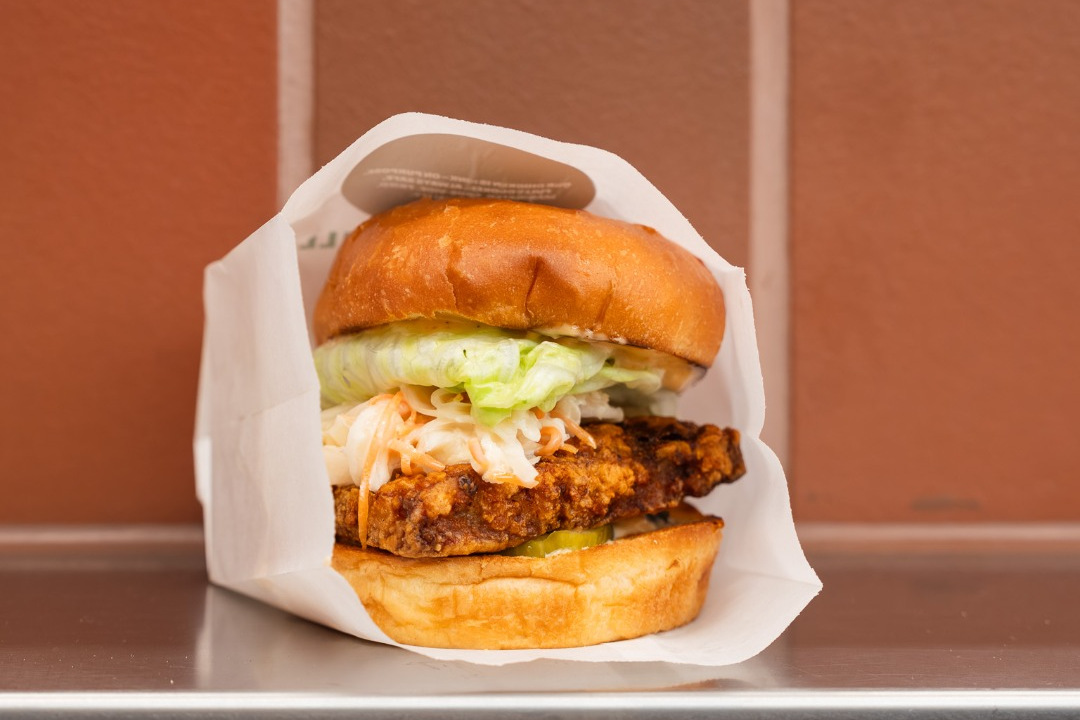
Order the Hot Chicken Sandwich, a Nashville-style fillet with a Korean accent. A chicken thigh is marinated in the house spicy mix, cooked sous-vide and fried, then served with coleslaw, pickles, lettuce and dressing, and you choose the heat. The meat stays pink on purpose, and the menu says it is fully cooked. Gasoline Grill uses deboned thigh for the texture and juiciness of brown meat. The sandwich starts at 130 DKK, the burgers cost 110 DKK, a burger, fries and a drink start at 155 DKK, and a Matr patty makes any burger vegetarian from 100 DKK.
There are no reservations, so a stool goes to whoever arrives next. The location page lists the room as serving from 11:00 until the beef is gone.
Why Did Juno Outgrow Its First Shop on Århusgade?
Juno the Bakery began in a shop unit of 35 square metres on Århusgade in Østerbro, and by 2020 it had moved a couple of doors along into 120 square metres on the ground floor of a five-storey residential building. Co-founder Emil Glaser grew up with cardamom rolls in Sweden and missed them in Copenhagen's bakeries, so they went on the counter.
Residents in the June 2025 thread single out the cardamom bun, and one warns of a long weekend queue. The bakery also sells Danish butter cookies in classic, cardamom, vanilla and oat, and, at the bakery only, a seasonal raspberry slice, a lemon cake and an apple cream bun. Juno says walk-ins are always welcome. The counter is open from 7:30 to 18:00 Tuesday to Saturday and from 7:30 to 16:00 on Sunday, and Monday is a day off.
Why Keep Half the Room Free at Auren's Deli?
Auren's Deli on Godthåbsvej in Frederiksberg opened in July 2022 as a grocery, café and bar, run by Henry and Pernille. In November 2025 the grocery moved 100 metres away to a Cornerstore, which left number 35 as a café and wine bar, and half of its dining room is held for walk-ins. The same 2025 thread already counted it among the places residents would miss, for its wine, food and service.
The menu changes daily around a fixed shape: something light, something snack-sized, something filling and something sweet, built mostly from vegetables with a few larger meat and fish dishes, all to share. On the lunch menu of 26 September a quiche with Comté, ham and chard cost 140 DKK, a chickpea stew with chard, radicchio and goat's curd 145 DKK and a chicken, leek and potato pie 170 DKK. The café opens Tuesday to Saturday from 12:00 to 23:00, with lunch to 15:30, an aperitivo hour from 15:30 and dinner from 17:30 to 21:00.
11 Neighbourhood Places Compared for 2026
Gasoline Grill and Slurp come first. The rest follow in order of age, not as a ranking.
| Place | Neighbourhood | What to order | Price marker | How you get in |
|---|---|---|---|---|
| Gasoline Grill Værnedamsvej | Vesterbro and Frederiksberg border | Hot Chicken Sandwich or a burger | 130 DKK a sandwich, 110 DKK a burger | No reservations; from 11:00 until sold out |
| Slurp (Nansensgade and Borgergade) | By the lakes, and the city centre | Shio or Veggie ramen; gyoza | 175 to 195 DKK a core bowl; dinner specials 200 and 210 DKK | No reservations; 22 and 36 seats; lunch orders to 14:45 |
| H3 Amager Fiskehus | Amager | Fishcake on rye or moules frites | 125 to 255 DKK | Walk-ins welcome; 28 seats |
| Harry's Place | Nørrebro | Børge with Krudt | No price list online | Order at the shed, 10:00 or 11:00 to 21:00 |
| Dyrehaven | Vesterbro | Smørrebrød or eggs Benedict | 120 to 160 DKK | No reservations on weekend days |
| La Fiorita | By the lakes | Margherita or Napoletana pizza | 87 to 97 DKK a pizza | No reservations; order at the till |
| Ingolfs Kaffebar | Amager | Mushroom toast or onglet steak | 115 to 210 DKK | Book or turn up |
| Aamanns Deli | Østerbro | Herring, shrimp or roast beef smørrebrød | 75 to 90 DKK a piece | Counter for smørrebrød to go, 10:30 to 19:30 |
| Absalon | Vesterbro | Communal dinner at 18:00 or lunch at the bar | 60 to 100 DKK | No table reservations; tickets online to 16:00, at the door from 17:00 |
| Juno the Bakery | Østerbro | Cardamom bun or seasonal slice | No price list online | Walk-in bakery counter; closed Mondays |
| Auren's Deli | Frederiksberg | Shared plates from the daily menu | 140 to 170 DKK a dish | Half the dining room kept for walk-ins |
Which Japanese Restaurant in Copenhagen Can You Walk Into Without a Reservation? Slurp Takes No Bookings
Slurp is the one to walk into: neither of our two ramen rooms takes reservations, at Nansensgade 90 or Borgergade 16, so every seat goes to whoever turns up. Both open at 11:30 every day of the week. Lunch orders run until 14:45, and dinner orders until 20:45 at Nansensgade and 21:45 at Borgergade.
The best way in is to arrive before we open and take one of the first seats. Slurp Nansensgade has 22 seats and is best for solo diners and small groups, while Borgergade has 36, where a busy hour means a short wait. Neither room suits big groups, and a larger party may be split up. In January 2025 the line outside number 90 on an ordinary weekday evening was long but usually moved quickly. For more places that work for one, see our guide to eating alone in Copenhagen.
Both rooms serve those noodles, cut that morning, in four core bowls: Shoyu and Shio at 185 DKK, Veggie at 175 DKK and Nduja Miso at 195 DKK, with extra noodles for 25 DKK. Dinner adds one special to each room, an Unagi ramen at Nansensgade for 200 DKK in limited portions and a pork tonkotsu at Borgergade for 210 DKK, 15 bowls a day.
Two limits are worth knowing before you queue. The kitchen cannot cook for guests who avoid gluten, and Nansensgade has no guest toilet. The Veggie bowl can be made vegan, and dogs are welcome in both rooms. Both rooms close between lunch and dinner, at 15:00, and reopen at 16:00 on Nansensgade and 17:00 on Borgergade.
Which Neighbourhood Place Should You Choose Tonight?
Choose by the hour and the craving. Juno's counter opens at 7:30 for the bakery morning, and the Aamanns to-go counter from 10:30. For a Danish lunch, H3 Amager Fiskehus serves fish on rye, Dyrehaven serves smørrebrød at the old bar, and Absalon's 60 DKK plate comes from the bar from 12:00. For something fast without a plan, a Børge at Harry's Place, a pizza at La Fiorita or a hot chicken sandwich at the Værnedamsvej counter all work.
If you want company, Absalon's 18:00 dinner seats strangers together and Auren's Deli suits wine with shared plates. Ingolfs Kaffebar works from lunch to dinner, and a bowl at either Slurp room fits when the craving is ramen rather than Danish food. For a wider list of tables you can walk into, see our guide to eating in Copenhagen without a reservation.
Check closing days before you cross town. Juno, H3 Amager Fiskehus and La Fiorita close on Mondays, H3 on Sundays too, and both Slurp rooms pause between lunch and dinner.
Sources
- Harry's Place: the history of Harry, Børge and Krudt
- Harry's Place address and hours
- r/copenhagen thread on what locals would miss, June 2025
- Amager Fiskehus history
- H3 Amager Fiskehus hours and seating
- H3 Amager Fiskehus lunch menu
- Dyrehaven site, hours and reservations
- Dyrehaven lunch menu
- VisitCopenhagen on Café Dyrehaven
- VisitCopenhagen street guide to Sønder Boulevard
- La Fiorita
- La Fiorita menu
- Nansensgade on Wikipedia
- Dronning Louises Bro on Wikipedia
- Ingolfs Kaffebar
- Ingolfs Kaffebar menu
- Aamanns: about
- Aamanns 20 year anniversary
- Aamanns Deli Østerbro menu, hours and address
- Folkehuset Absalon: about the house
- VisitCopenhagen on communal dining in Copenhagen
- Absalon dining, prices and weekly menu
- Absalon questions and answers
- HellesKitchen review of Slurp, June 2017 (archived copy)
- Dagens Næringsliv, 2 November 2017: Slurp opened February 2017
- Ramen Adventures on Slurp's opening
- Slurp menu
- Slurp Nansensgade: seats, hours, reservations, groups and dietary questions
- r/copenhagen thread on restaurants like Slurp, August 2022
- Slurp Borgergade
- Slurp post on the Borgergade gyoza, 29 March 2026
- migogkbh.dk on Slurp's second room, 27 January 2025
- VisitCopenhagen street guide to Værnedamsvej
- Yellowtrace on the Gasoline Grill Værnedamsvej interior, 31 January 2020
- Gasoline Grill Værnedamsvej ordering menu
- Gasoline Grill post on its hot chicken sandwich, 18 May 2026
- Gasoline Grill Værnedamsvej page
- Juno the Bakery history, hours and address
- Dezeen on the Juno the Bakery interior, 16 November 2020
- VisitCopenhagen on Juno the Bakery
- Auren's Deli: about
- Auren's Deli café and bar
Frequently Asked Questions
Look at how long it has fed one neighbourhood, whether its site is in Danish or names its regulars, whether its prices are posted openly, and whether it has a counter, a no-reservation rule or seats held for walk-ins. Absalon, Dyrehaven, Ingolfs Kaffebar and H3 Amager Fiskehus each meet the checks: all four run Danish-language sites, name their neighbourhood or their regulars, post prices and take walk-ins.
Absalon and La Fiorita take no table reservations at all. Dyrehaven takes none on Saturday and Sunday during the day, Auren's Deli keeps half its dining room for walk-ins, and H3 Amager Fiskehus asks for notice only from groups of more than eight. Ingolfs Kaffebar lets you book or turn up, and Gasoline Grill Værnedamsvej and both Slurp rooms take no reservations either.
Most single dishes cost between 60 and 255 DKK on the menus checked on 17 October 2026. Absalon's lunch is 60 DKK and its communal dinner 75 DKK from Sunday to Wednesday, smørrebrød starts at 75 DKK at Aamanns Deli, La Fiorita's pizzas start at 87 DKK, Gasoline Grill burgers cost 110 DKK and its hot chicken sandwich 130 DKK, Slurp's core bowls 175 to 195 DKK, its dinner specials 200 and 210 DKK and H3's moules frites 255 DKK.
No. Slurp serves ramen rooted in Japanese technique and shaped by local produce and the seasons. For smørrebrød or fish, Aamanns Deli, Dyrehaven, Ingolfs Kaffebar and H3 Amager Fiskehus are the better call, and Slurp fits when you want a bowl of ramen without a reservation.