Vegetarian Japanese Restaurants in Copenhagen: Sushi, Tempura and Noodles Beyond Veggie Ramen in 2026
The green leaf on a Japanese menu promises less than it seems. The better vegetarian dinners in Copenhagen come from kitchens that write down what goes into the stock.

TL;DR
Pick the kitchen that names its stock. Sticks'n'Sushi's allergen sheet shows fish dish by dish and its Green Keeper set has none, Jah Izakaya makes its agedashi tofu vegan on request, and Slurp's Veggie ramen sits on a mushroom and celeriac broth. Anywhere else, ask whether dashi or bonito goes into a dish before you order it.
Updated 2 November 2026
Four of you squeeze onto stools at a sushi counter, and the friend who doesn't eat fish orders last. A plate of cucumber rolls arrives for them while everyone else works through the nigiri, and the dinner you planned together has quietly become two dinners.
A vegetarian Japanese meal in Copenhagen starts with the stock, and only then with the dish. Choose a kitchen that tells you what its broth, dipping sauce or dashi is made from, then pick the format: a sushi counter, a tempura set, small plates or a noodle bowl.
What does vegetarian mean on a Japanese menu?
On a Japanese menu, vegetarian means little until you know the stock. Dashi, the stock at the heart of Japanese cooking, turns up in dips, hot pots and broths. The simplest is plant-based, made from kombu seaweed or dried shiitake; the most common, awase dashi, adds katsuobushi, bonito that has been dried, fermented and shaved (Japan National Tourism Organization). So a dish can show no fish and still carry bonito, which is why the same tourism body's vegetarian guide advises naming dashi when you order and warning the restaurant when you book a set menu.
So the question to ask is short: is there fish or dashi in this? Fish is one of the 14 food allergens, and Danish restaurants and cafés are obliged to tell you, in writing or out loud, which allergens are in their food (sundhed.dk). A good answer names the stock: kombu and shiitake, or bonito with an offer to leave it out. A guess is not an answer.
How strict you are changes what you need to hear. A pescatarian can eat fish stock, so a tempura set with a bonito dip is a full dinner. A strict vegan also asks about egg in batter and mayonnaise, and anyone avoiding gluten needs a separate conversation about soy sauce and miso.
How do eight Japanese kitchens compare for a vegetarian in 2026?
Five of these eight kitchens tell you about the stock before you order. The table puts written stock or allergen detail first, then a label without stock detail, then ask the staff, then the one that cannot cater, alphabetically within each group. Menus and prices were checked on 1 November 2026; the Sticks'n'Sushi price is from its August 2026 menu card.
| Kitchen | Format and area | Vegetarian route | What you learn about the stock |
|---|---|---|---|
| Jah Izakaya | Izakaya small plates, Vesterbro | Vegan agedashi tofu, sautéed mushrooms with pumpkin, vegan gyoza | House dashi named; vegan versions marked |
| Men O Ramen | Ramen, Vestergade | Vegan Ramen, 118 DKK | Vegetable broth; soy sauce without gluten |
| Restaurant Tokyo | Tempura and hot pot, Vesterbrogade | Veggie tempura, vegetarian udon hot pot, tofu nabe | Dip and udon stock use fish bouillon |
| Slurp | Ramen, Nansensgade and Borgergade | Veggie ramen, 175 DKK, vegan without the egg | Mushroom and celeriac broth |
| Sticks'n'Sushi | Sushi and grill, Nansensgade and Borgergade | Green Keeper set, 295 DKK on the August 2026 card | Allergen sheet lists fish dish by dish |
| Selfish | Sushi counter, Elmegade | Vegi Special, 255 DKK | Labelled "vigan" (vegan); no stock detail |
| Damindra | Omakase and sushi, Sankt Annæ Plads | Vegetarian or vegan menu on request | Ask the waiter |
| Sushi Anaba | Omakase counter, Nordhavn | None | Cannot cater for vegetarians or vegans |
Two of the five kitchens that disclose their stock are ramen counters, because in ramen the broth is the dish. Sushi and tempura kitchens use stock in the background, in a dip or a soup that comes with the set, which is where a vegetarian gets caught out.
Which sushi counters give a vegetarian more than cucumber rolls?
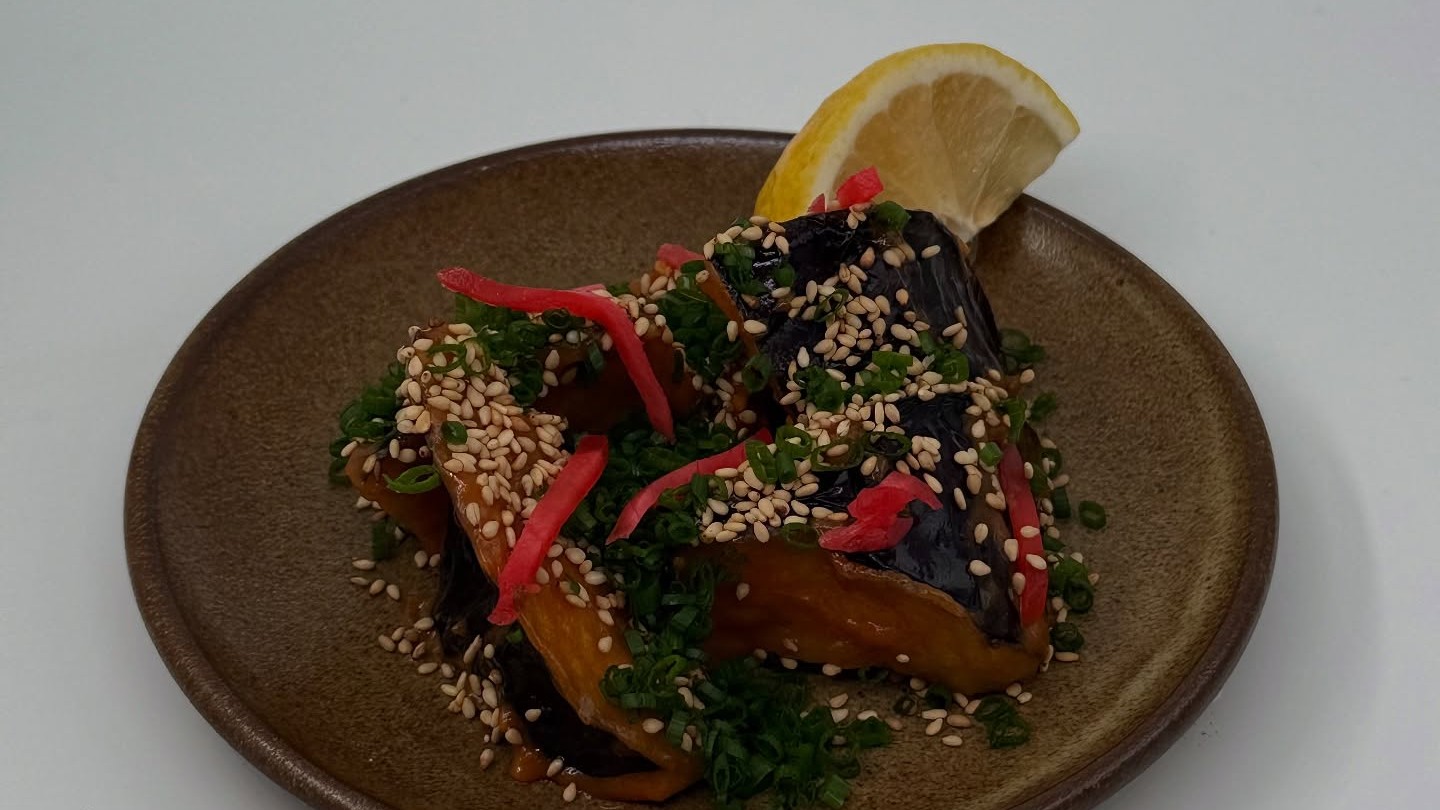
Of the sushi kitchens here, Sticks'n'Sushi gives a vegetarian the most complete meal, because it writes down what is in it. The group began in a small basement at Nansensgade 59, still open with its kitchen serving from 11:00; Borgergade 13 is the other central branch. Its Green Keeper set, 295 DKK on the August 2026 menu card, runs from edamame with spicy miso and seaweed salad to fried cauliflower with black truffle goma, inari tofu with ginger and shiitake, a roll of grilled red pepper and avocado, king oyster mushroom with miso, and teriyaki sweet potato.
The useful part is the allergen sheet for the October 2026 menu, which has a column for fish, egg and milk against every dish. The Green Keeper line has no mark in any of the three, while it does list cereals, soy, sesame, mustard, sulphites, garlic and onion. The kitchens share fryers and the group cannot guarantee any dish is free of an allergen, so tell the waiter at the start, and reserve if you can.
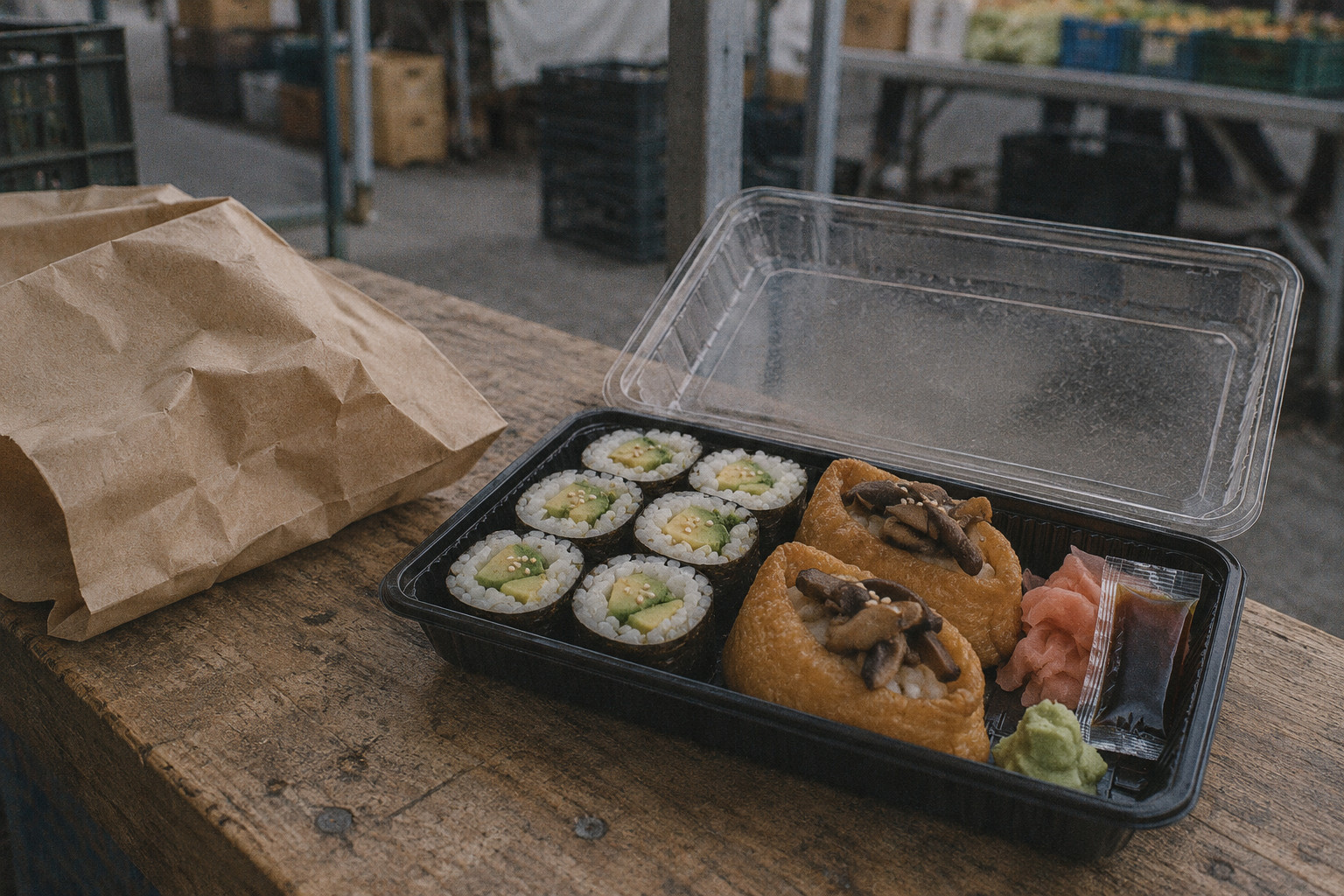
On Elmegade in Nørrebro, Selfish is a small sushi counter open Tuesday to Saturday from 12:00 to 21:30. Its Vegi Special, 255 DKK, is eight maki and five nigiri, labelled "vigan" on the menu, which reads as vegan, and steamed vegetable gyoza cost 90 DKK. The label is thin and the stock is not described, so a strict vegan should check with the staff, and ask about the miso soup before adding it.
The counter not to choose for a mixed table is Sushi Anaba at Mariehamngade 23. Its 1,900 DKK nigiri and otsumami menu cannot accommodate vegetarians, vegans or any allergy except lactose, and the kitchen cannot cater for coeliac guests because of its soy sauce and miso. Save it for a night when everyone eats fish.
Where do tempura, hot pots and small plates work for a vegetarian?
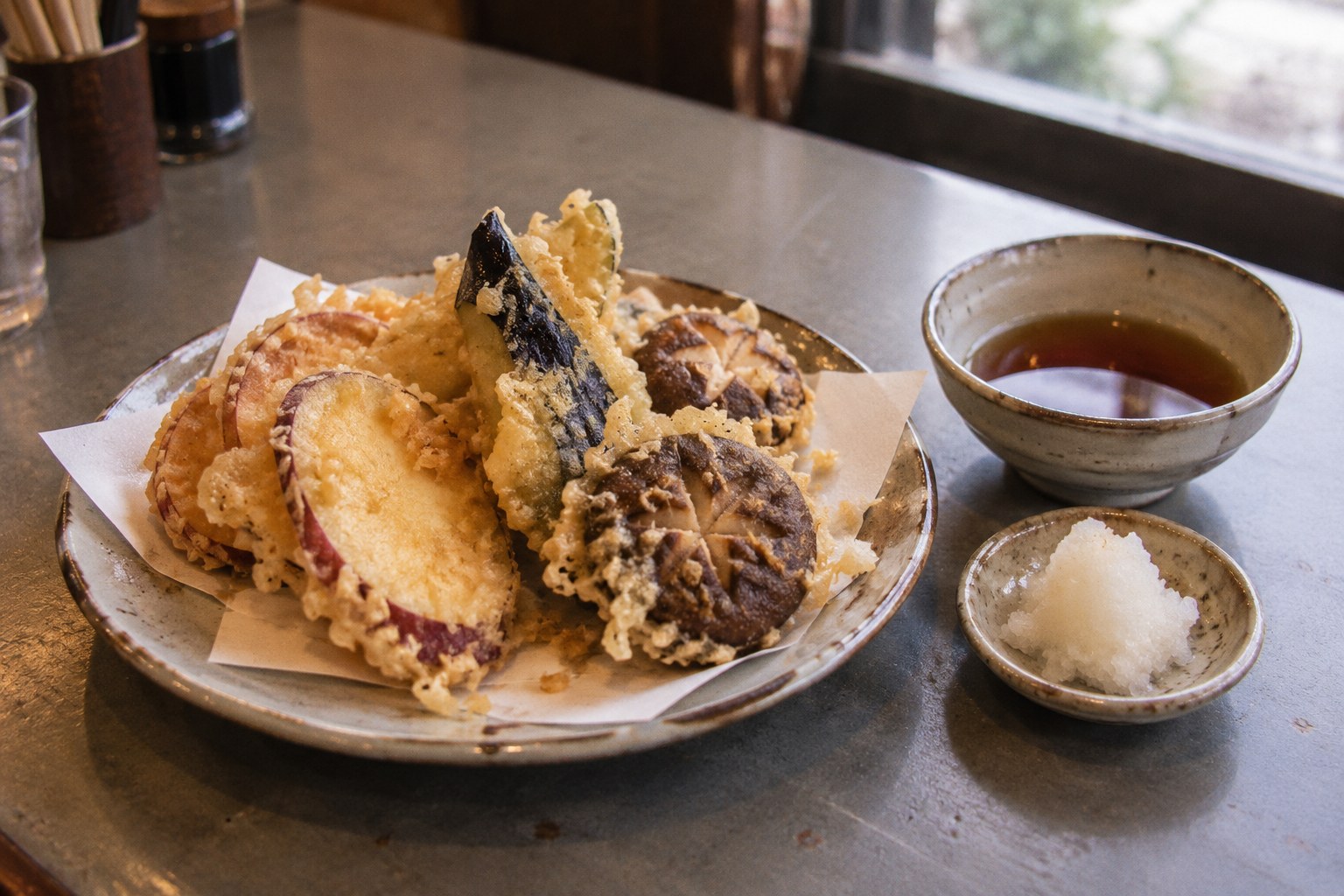
Tempura and small plates give a vegetarian the most variety, as long as you ask about the dip. Restaurant Tokyo, a Japanese kitchen since 1964 at Vesterbrogade 77, shows why the question matters. Its Udonsuki, a hot pot of thick wheat noodles and vegetables, carries a vegetarian tag and is cooked in fish bouillon and kombu-based light soy. The Veggie Tempura, 250 DKK on its own or 315 DKK as a menu, comes with tentsuyu made the same way.
That makes Restaurant Tokyo a generous dinner for a pescatarian. A strict vegetarian should ask for the tofu version of the spicy nabe hot pot, and what its soup and the set menu's starters and miso soup are made from. Dinner runs Tuesday to Saturday from 17:00, kitchen closing at 20:45, and the restaurant takes bookings. At lunch, Thursday to Saturday, vegetarian curry rice costs 120 DKK and comes with miso soup.
For small plates, Jah Izakaya on Gasværksvej 21 is the clearest vegetarian menu of these eight, an izakaya built for ordering a few plates at a time. Its agedashi tofu, 95 DKK, comes in the house dashi by Shinya Ito as standard and in a vegan version on request. Sautéed mushrooms from Funga Farms with pumpkin, 120 DKK, and five vegan gyoza filled with mushrooms and tofu, 110 DKK, are marked vegan. Jah opens at 17:30 every day and takes its last food order at 22:00; book by phone or email.
Damindra at Sankt Annæ Plads 16 suits a longer, formal evening of omakase and sushi. Its evening menus are ordered for the whole table, with à la carte only at lunch, so ask for the vegetarian or vegan menu when you book. It opens Tuesday to Saturday, 12:15 to 14:00 and 17:00 to 22:00.
Is ramen the easy answer for a vegetarian?
Ramen is where most people look first, and it is the smallest part of this map. A good ramen menu answers the broth question for you, so what is left is usually the egg.
Men O Ramen now serves from Vestergade 4 to 6, after its Aboulevard branch closed when the lease ended. The Vegan Ramen, 118 DKK, is a vegetable broth seasoned with a Japanese soy sauce without gluten and topped with fried tofu, seasonal greens and seaweed.
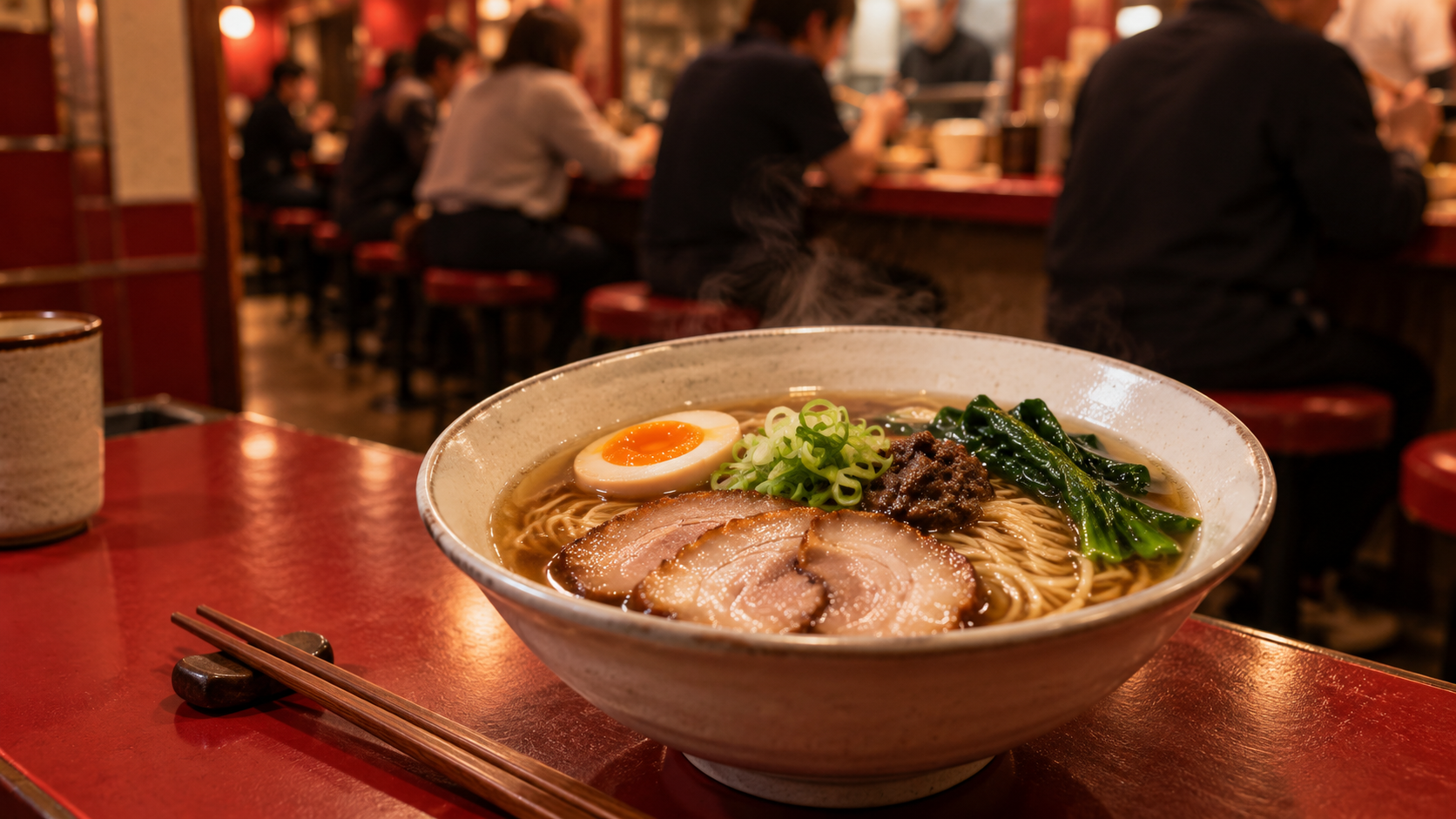
Slurp began as a 22-seat ramen counter on Nansensgade in 2017, opened by Austrian chef Philipp Inreiter after Noma and Tokyo's RyuGin, and added a second room on Borgergade in January 2025. At Slurp we write the broth on every bowl. The Shio is chicken with smoked mackerel and seafood, the Nduja Miso finishes with an anchovy lemon dressing, and the Veggie sits on mushroom and celeriac. Anyone who avoids meat and fish knows at once which bowl is theirs.
Neither Slurp Nansensgade nor Slurp Borgergade takes reservations, so both suit one to three people who can walk in, and dogs are welcome in both. For the broth, tare and noodle questions to ask at any ramen counter, our five checks for vegan and vegetarian ramen go bowl by bowl.
What does a vegetarian order at Slurp?
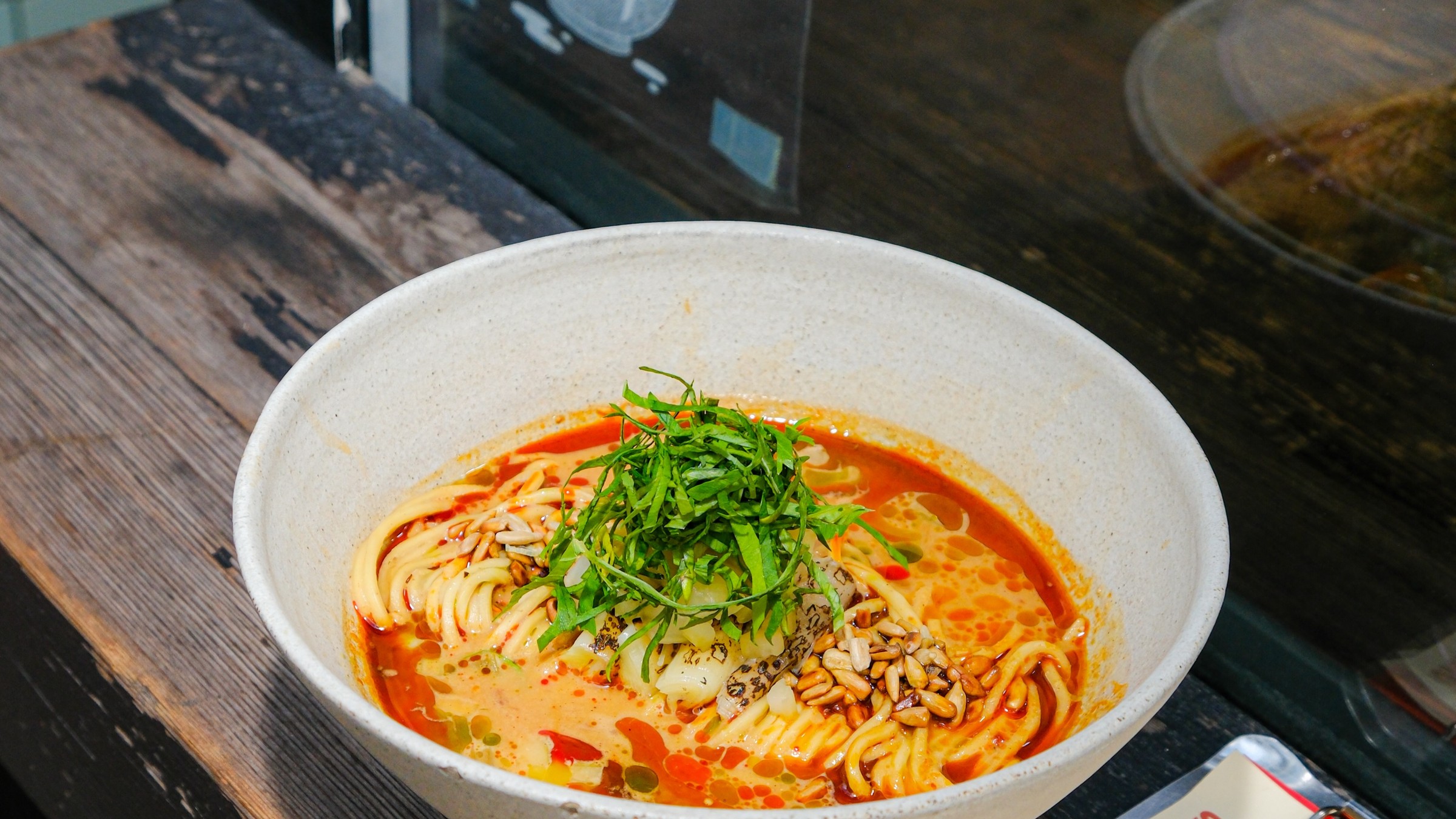
At Slurp, a vegetarian orders the Veggie ramen, 175 DKK in both rooms: a mushroom and celeriac broth with oyster mushroom, kale, pickled fennel, red onion, lemon thyme and an egg. Leave the egg out and the bowl is vegan. Add the vegan Amazu plate, and at Slurp Nansensgade the vegetarian Danish onigiri.
The Amazu plate, 60 DKK at both Slurp restaurants, is pickled carrots, daikon and cucumber, sharp enough to cut through a rich broth on the next stool. The Danish onigiri, two for 90 DKK at Slurp Nansensgade only, are cracked wheat rice balls with egg salad, Japanese mayonnaise and chilli oil: vegetarian, not vegan.
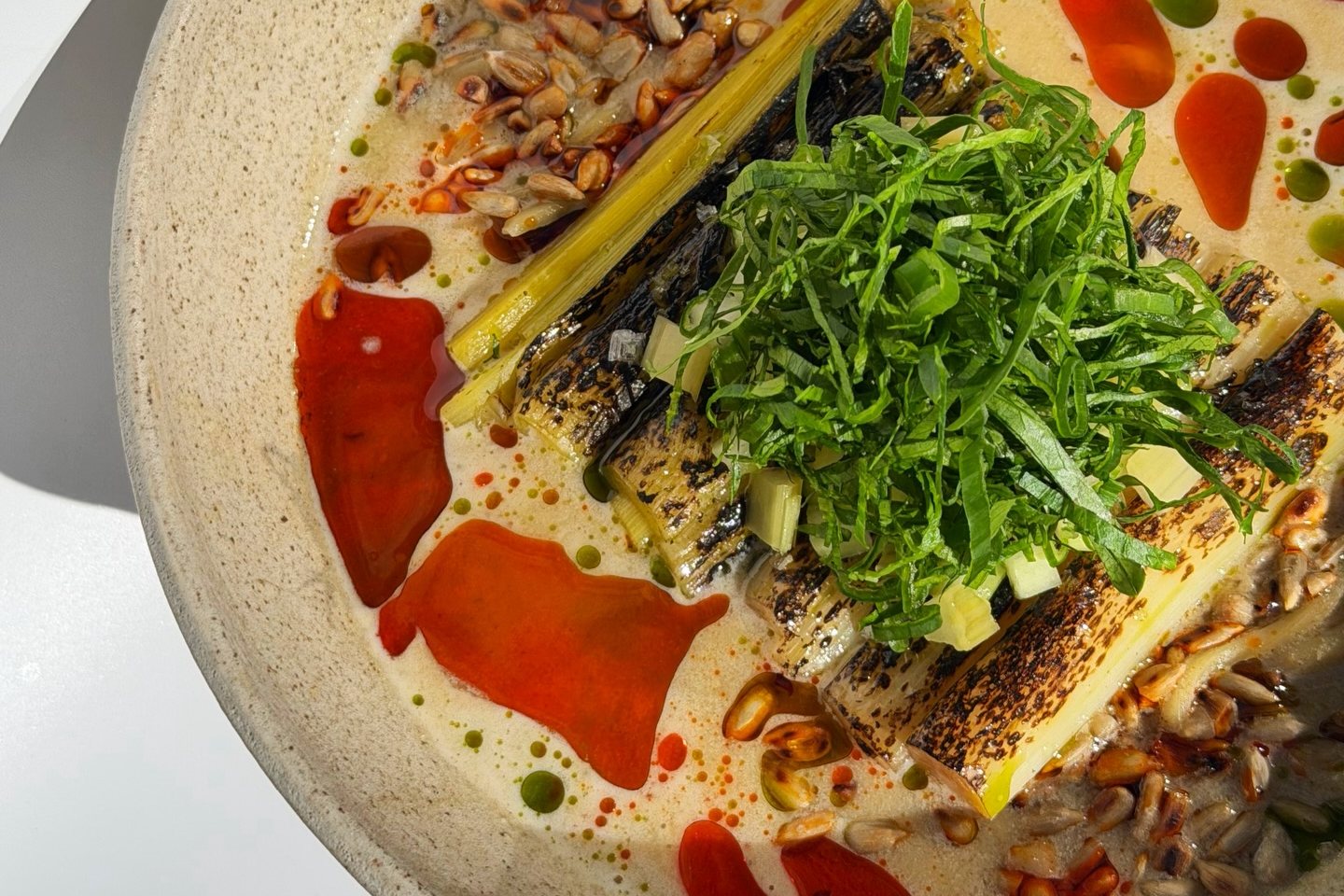
Slurp Nansensgade has also served a vegetarian Himawari Miso on a creamy miso and sunflower-seed broth, now in our menu archive. What Slurp cannot do, for the time being, is cater for a gluten exclusion, so tell us about any allergy when you order at Slurp. Lunch orders run to 14:45 in both rooms; dinner orders run to 20:45 at Nansensgade and 21:45 at Borgergade. Each bowl's broth is written out on the Slurp menu.
How should a mixed table choose a Japanese dinner?
Choose for the strictest eater at the table, then let everyone else order around them. The reverse, picking the meat-eaters' favourite and hoping, is how the vegetarian ends up with cucumber rolls.
- A strict vegan with meat-eaters: Jah Izakaya, where vegan agedashi tofu and gyoza share the table with karaage and sashimi, or Slurp, for a bowl each.
- A pescatarian in the group: Restaurant Tokyo, where the tempura and its bonito dip make a full dinner.
- A sushi night: Sticks'n'Sushi, with the Green Keeper set beside the nigiri.
- Everyone eats fish: Sushi Anaba, and only then.
For other cuisines, see the Slurp guide to vegan and vegetarian casual dining in Copenhagen; for the wider field, the best Japanese restaurants in Copenhagen. Wherever you sit, ask about the stock, pick the format, then pick the room.
Sources
- Japan National Tourism Organization on types of dashi; its vegetarian guide.
- sundhed.dk on allergen information in Danish restaurants.
- Sticks'n'Sushi Nansensgade history and hours.
- Sticks'n'Sushi menu card with the Green Keeper set.
- Sticks'n'Sushi allergen sheet, October 2026 menu.
- Selfish menu, address and hours.
- Sushi Anaba menu and dietary policy.
- Restaurant Tokyo dinner menu and hours.
- Restaurant Tokyo lunch menu.
- Jah Izakaya menu, address and hours.
- Damindra menus, dietary note and hours.
- Men O Ramen menu; current address and closed branch.
- Slurp menu; Slurp dietary and allergy information.
Frequently Asked Questions
Because of the stock. The most common dashi is made with bonito flakes as well as kombu seaweed, and it can sit in a dip, a soup or a hot pot without being visible. Plant-based dashi from kombu or dried shiitake exists, so ask for no dashi or fish stock when you order.
Yes. The Green Keeper set is 295 DKK on the August 2026 menu card, with edamame, seaweed salad, fried cauliflower, inari tofu, a red pepper and avocado roll, king oyster mushroom and sweet potato. Its allergen sheet for the October 2026 menu shows no fish, egg or milk mark for the set.
Jah Izakaya serves its agedashi tofu in a vegan version on request, alongside vegan gyoza and mushrooms. Men O Ramen's Vegan Ramen uses a vegetable broth. Slurp's Veggie ramen has a mushroom and celeriac broth and is vegan without the egg.
Sushi Anaba in Nordhavn cannot accommodate vegetarians, vegans or any allergy except lactose. At Damindra, evening menus are ordered for the whole table, so ask about a vegetarian or vegan menu when you book.